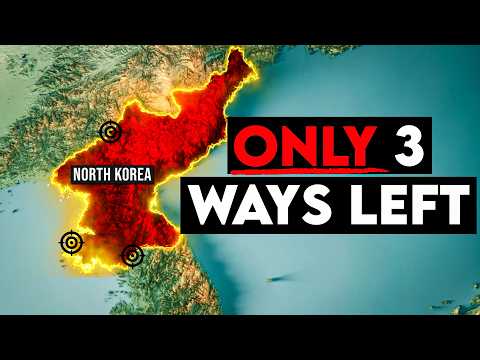
In 2026, escaping North Korea remains a perilous endeavor with few successful attempts. This article explores rare escape routes including crossing the heavily mined DMZ, braving typhoon seas, and fleeing war zones in Russia. It highlights the extreme risks defectors face, the evolving security measures, and the desperate lengths to which North Koreans go to find freedom.
North Korea remains one of the most isolated and tightly controlled countries in the world. For those trapped inside, escaping is a matter of life and death, fraught with unimaginable risks. In 2026, the methods and challenges of fleeing North Korea have evolved, but the desperation of defectors has only grown stronger. This article delves into the harrowing stories of individuals who risked everything to escape, the deadly obstacles they faced, and the shifting landscape of escape routes.
The Demilitarized Zone (DMZ) between North and South Korea is often called the scariest place on earth. Former President Clinton once described it as such, and for good reason. This 4-kilometer-wide buffer zone is laden with millions of landmines, multiple fences including electrified ones, and constant military patrols.
Park, a North Korean guard, noticed over the years where animals triggered hidden mines and used this knowledge to build a mental map of safe paths. In 2025, despite a record low number of successful escapes, Park decided to risk his life.
On October 19th, 2025, Park left his post under the pretense of using the latrine near the first electrified fence. Due to North Korea's failing power grid, the fence's voltage was often low or off, which Park tested using a piece of rubber tire. He dug a small hole under the fence and slid through without touching the wire.
Park then entered the DMZ, knowing he had a 15-minute window during the Sunday morning shift change when guards were less alert. His first major obstacle was the new anti-tank concrete walls, which funneled escapees into "kill boxes" heavily mined areas. Park chose to climb over the wall, risking sniper fire rather than stepping on mines.
Inside the central sector of the DMZ, the most heavily mined area, Park moved cautiously. A wild boar triggered a mine nearby, causing an explosion that distracted the guards. Park used this moment to cross the Military Demarcation Line (MDL), technically entering South Korea but still in danger.
South Korean thermal radar detected Park, and soldiers prepared to shoot. Park froze when ordered to stop but identified himself as a defector. Due to South Korean landmines, soldiers could not immediately reach him and guided him via loudspeaker to a safe path. As North Korean soldiers pursued him, South Korean forces fired warning shots to repel them.
Park sprinted to the final double-layered fence topped with barbed wire. South Korean soldiers opened a gate just in time, pulling him to safety. Exhausted and covered in mud, Park had successfully escaped the DMZ alive.
For many North Koreans without insider knowledge of the DMZ, escape by sea is another option, though extremely dangerous due to coastal patrols and sniper fire.
In October 2023, under a typhoon warning, Kim saw an opportunity. The North Korean Navy recalled its small patrol boats due to dangerous 4-meter waves, creating a brief window to escape.
Kim, with his pregnant wife, brother, and unborn child, boarded a rotting wooden fishing boat powered by a loud, old diesel tractor engine. His family hid in the fish storage compartment to avoid detection.
Despite the storm's fury, Kim headed into the open ocean. A North Korean patrol boat spotted them and gave chase, but the storm's massive waves forced the patrol to abandon pursuit.
Hours later, the engine sputtered and died, leaving the boat vulnerable to capsizing in the rough seas. Kim and his family frantically bailed water while he worked to fix the engine, even swallowing toxic diesel sludge in the process.
After hours of struggle, Kim restarted the engine and steered the boat toward South Korean waters. Due to GPS jamming by North Korea, navigation was difficult, and the family drifted in darkness, hallucinating from exhaustion.
At dawn, they spotted a South Korean destroyer. Waving a white tarp to signal surrender, they were rescued and brought to safety, finally free from the regime.
Historically, many defectors fled across the northern borders into China or Russia, then traveled thousands of kilometers to Southeast Asia before reaching South Korea. However, in 2025, this route became prohibitively expensive and dangerous.
Hiring smugglers to cross the northern border now costs between $15,000 and $20,000, unaffordable for most. China has implemented advanced AI facial recognition and tracking, returning caught defectors to North Korea. North Korea has also built concrete barriers topped with barbed wire along riverbanks, making crossings more difficult.
Rey, a North Korean soldier, was sent to fight in the Russia-Ukraine war as part of the "Great Patriotic Assistance" mission. Promised glory, food, and modern equipment, he found himself malnourished, poorly equipped, and used as a human shield.
During a chaotic Ukrainian offensive, Rey's unit was scattered. With orders to detonate grenades rather than be captured, Rey faced a grim choice. When a Ukrainian drone appeared overhead, instead of attacking, it seemed to beckon him.
Rey surrendered, following the drone to a Ukrainian base. After signaling surrender and removing his explosives, he was taken into custody by Ukrainian forces. Eventually, he was granted asylum and transferred to South Korea to start a new life.
As of 2026, the traditional escape routes have shifted dramatically. The DMZ, once nearly impossible to cross, has seen rare successful escapes by those with insider knowledge. The northern borders are heavily fortified and monitored with advanced technology, making smuggling routes costly and risky.
Meanwhile, desperate defectors are taking unprecedented risks, including fleeing through war zones or braving violent seas during storms. These stories highlight the extreme lengths North Koreans will go to for freedom.
Escaping North Korea in 2026 is a deadly gamble. Whether crossing minefields in the DMZ, navigating stormy seas, or fleeing war-torn regions, defectors face life-threatening challenges at every turn. The regime's tightening grip has made escape routes more dangerous and expensive, but the human spirit's desire for freedom continues to drive courageous individuals to risk everything.
These accounts serve as a powerful reminder of the ongoing humanitarian crisis in North Korea and the resilience of those who dare to dream of a better life beyond its borders.