Ryan Kaji's parents built a billion-dollar YouTube empire starting from his toy unboxing videos at age 3. Despite massive earnings, lack of legal protections for child influencers and ethical concerns led to federal investigations and revenue loss. As Ryan grew older and lost interest, the brand struggled, culminating in a failed movie and shifting focus to his younger sisters. New laws now protect child influencers, inspired by Ryan's story.
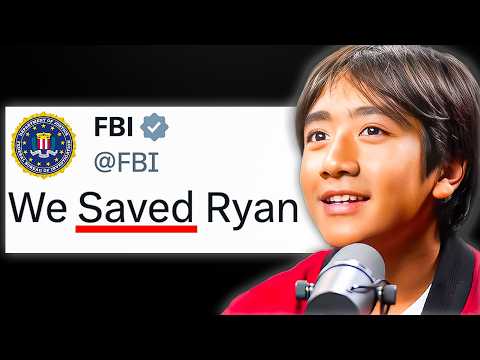
Ryan Kaji, known as Ryan's World, made his parents over $34 million by the time he was just four years old. Over the next decade, their empire grew into a billion-dollar brand, but now it is crumbling under the weight of controversy, legal scrutiny, and changing audience interests. This article explores how Shian and Lon Kaji built this empire around their son and how their decisions led to its downfall.
In 2015, three-year-old Ryan was fascinated by YouTube channels like Evan Tube HD, where kids unbox toys and play games. Inspired, Ryan told his mother he wanted to do the same. They filmed Ryan unboxing a Lego train set, and the channel grew slowly at first, just a family having fun.
The turning point came with a video featuring a giant Lightning McQueen surprise egg filled with over 100 Disney car toys. Ryan's genuine excitement captivated viewers, and the video amassed over 1.2 billion views. Overnight, the Kaji family transformed from a regular household in Texas to the creators of one of the biggest kid YouTube channels.
At this critical juncture, Ryan's parents faced a choice: treat this as a fun, lucky moment for their child or capitalize on the opportunity. They chose the latter, quickly scaling the channel's growth.
Within months, brand deals, sponsorships, and merchandise offers poured in. Shian and Lon, a structural engineer and a high school chemistry teacher respectively, quit their jobs to focus entirely on Ryan's channel.
The Kajis formed Sunlight Entertainment, a full production company employing over 30 people at its peak. They managed more than 10 channels simultaneously, producing up to 25 videos weekly. Their home was converted into professional filming sets with lighting rigs, cameras, and props.
Ryan's life became work; every moment, from breakfast to playtime, was filmed and monetized. By 2018, Ryan was the highest-paid YouTube creator, earning $26 million at just seven years old. He held this title for three consecutive years, with earnings from YouTube and a vast product empire including Walmart toy lines, Colgate toothpaste collaborations, mobile games, and even a Macy's Thanksgiving parade balloon.
Despite the massive earnings, Ryan had no legal protections like child actors in Hollywood. All earnings legally belonged to his parents, with no trust fund or guardian protecting Ryan's financial interests.
As the channel grew, content shifted from genuine play to sponsored segments and undisclosed advertisements. Ryan's young audience, mostly toddlers and preschoolers, could not distinguish between genuine enjoyment and advertising, raising ethical and legal concerns.
In 2019, the Federal Trade Commission (FTC) and New York Attorney General launched a major enforcement action against Google and YouTube for violating the Children's Online Privacy Protection Act (COPPA). YouTube was fined $170 million for collecting personal data from children without parental consent and serving targeted ads.
This ruling forced YouTube to disable comments on children's content, restrict targeted advertising, and recalibrate its recommendation algorithm. For the Kajis, this meant a catastrophic 70% drop in revenue overnight, devastating Sunlight Entertainment's operations.
In response, the Kajis rebranded Ryan Toys Review to Ryan's World, expanding content to include science experiments and challenges. However, this was more damage control than genuine evolution.
As Ryan grew older, his original audience moved on to other content, and his peers lost interest in watching a 12-year-old unbox toys meant for younger children. Despite Ryan's apparent disinterest, his parents continued to push him to produce content, leading to public criticism and memes questioning why he was still making videos.
Ignoring Ryan's wishes, his parents produced a $10 million movie, "The Titan Universe Adventure," intended to evolve the brand beyond YouTube. The film was a massive flop, grossing only $600,000 and losing $9.4 million.
The movie received one of the lowest IMDb ratings of the year and was widely seen as a cash grab. Theater screenings in multiple countries reported zero attendees. This failure publicly confirmed the brand's decline.
As Ryan appeared less in content, the spotlight shifted to his younger sisters, Emma and Kate, both seven years old. They became stars of their own animation series and merchandise lines.
The internet reacted with outrage, accusing the Kajis of exploiting their children by moving on to the next siblings once Ryan lost interest.
Ryan's story highlighted the lack of protections for child influencers. In 2023, Illinois passed a law requiring parents who profit from their children's online content to set aside a portion of earnings in a protected trust accessible when the child turns 18. California and Washington followed with similar laws.
These laws aim to close the gap that allowed the Kajis to exploit Ryan financially. Ryan's experience is now a catalyst for protecting future child influencers.
Ryan's story is not unique. Child actors like Macaulay Culkin have faced similar exploitation and legal battles over earnings. The Olsen twins built a billion-dollar empire but walked away from acting once they gained control.
The pattern is clear: talented children exploited by parents seeking profit, with insufficient legal safeguards, leading to psychological and financial consequences.
The Kajis relocated to Hawaii in 2021, where Ryan attends private school. His daily life now includes tennis, skateboarding, swimming, and a passion for animation.
Ryan is listed as a creative director at Sunlight Entertainment, mainly doing voiceover work and occasional appearances. He has expressed a desire to pursue animation and create content behind the camera, seeking freedom from the brand that defined his childhood.
Ryan's World, once a YouTube powerhouse, is now a cautionary tale about the exploitation of child influencers. While the brand continues with his siblings, Ryan himself seems to be quietly building a life beyond social media.
The future may see Ryan launching his own animation studio or a new channel aligned with his interests. His story has already influenced legislation to protect child creators, ensuring that future generations have safeguards he lacked.
The rise and fall of Ryan's World remind us of the complex intersection between childhood, family, business, and ethics in the digital age.