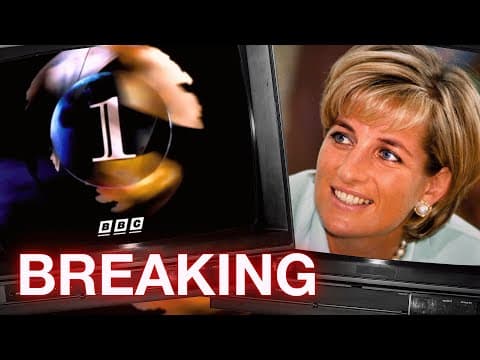
In the early hours of August 31, 1997, the BBC faced the daunting challenge of breaking the tragic news of Princess Diana's death. This article recounts how the BBC carefully navigated the unfolding events, balancing the urgency of the news with the need for accuracy and sensitivity, ultimately providing comprehensive coverage that united a grieving nation and the world.
The summer of 1997 was a time of optimism as the world approached the 21st century. However, on the early morning of August 31, 1997, a piece of news broke that would cause the world to stop in its tracks: the death of Diana, Princess of Wales. This article tells the story of how the BBC broke this tragic news and managed the coverage of one of the most significant moments in modern British history.
Princess Diana was known as the "people's princess" for her unique ability to connect with ordinary people, a trait that many senior royals struggled to achieve. She brought much good to the world but was also constantly under the scrutiny of the press and paparazzi, which granted her and her children, William and Harry, little privacy. Diana was adept at using the press but was also often pursued relentlessly, especially in Paris, where this unhealthy relationship culminated in tragedy.
In 1997, the BBC was preparing for a major transformation in anticipation of the digital age and the new millennium. The corporation was set to rebrand its channels and revamp its entire structure. However, the unprecedented event of Diana's death delayed these plans as the BBC shifted focus to cover the breaking news.
At just after midnight on August 31, viewers tuning into BBC 1 were watching the classic 1970 French gangster film Borcelino. Shortly after 1:45 a.m., the film was interrupted for an important announcement:
"This is BBC 1. We've interrupted our programs for a news report. We now go over to Martin Lewis in the news studio."
Martin Lewis reported that Diana had been badly injured in a car crash in Paris, with the accident occurring in a tunnel in western Paris. The princess was reported to have been taken to hospital. The report was cautious, emphasizing that the information was unconfirmed.
After the brief report, the film resumed, but viewers were left on edge, awaiting further updates.
Normally, BBC 1 would have closed down for the night after the film, but given the gravity of the situation, the channel began live rolling news coverage. This coverage was largely a simulcast of BBC World News, with reporters like Nick Gowing providing updates.
The atmosphere in the studio and for viewers was tense. The BBC was cautious about the information circulating on the internet and from unofficial sources, wary of unverified claims that Diana had died.
It was not until around 4:40 a.m. that reports from the Press Association suggested that Diana had died, citing unnamed British sources. The BBC carefully withheld confirmation for another 20 minutes.
Just after 5:00 a.m., Martin Lewis returned to the BBC 1 news desk to deliver the devastating news:
"Diana, Princess of Wales, has died after a car crash in Paris. The French government announced her death just before 5:00 this morning. Buckingham Palace confirmed the news shortly afterwards."
This bulletin shocked the world. At only 36 years old, the people's princess was gone. Martin Lewis maintained professionalism despite the emotional weight of the announcement, a task he later admitted was challenging.
Following the announcement, BBC 1 suspended normal programming to provide continuous coverage of the tragedy. The channel adapted its schedule to include tributes to Diana and focused on the unfolding story.
A tribute program presented by David Dimbleby was aired, and further news reports were scheduled throughout the day. The BBC committed to providing reliable, informative, and respectful coverage, allowing the nation to mourn collectively.
On September 6, 1997, the BBC led the coverage of Diana's funeral, which was watched by billions worldwide. Millions gathered in the streets of London to pay their respects. The funeral was marked by unprecedented spontaneous applause, reflecting the deep affection the public held for Diana.
Diana's death was a tragedy that deeply affected the world. The BBC's coverage was widely praised for its sensitivity, accuracy, and respectfulness. Moments like these highlight the BBC's role as a trusted broadcaster during times of national crisis.
In the decades since, the BBC has faced similar challenges with the deaths of other prominent figures such as the Queen Mother, Prince Philip, and Queen Elizabeth II. However, the shock and unpreparedness felt in 1997 remain unique to the death of the People's Princess.
The BBC's handling of the news of Princess Diana's death was a remarkable example of responsible journalism under pressure. Balancing the need for timely information with the imperative of accuracy and respect, the BBC provided a platform for a grieving nation and the world to come together. This coverage remains a defining moment in broadcast history, illustrating the power and responsibility of the media in moments of profound public significance.
They loved her. She was the people's princess.
The biggest disease this world suffers from is people feeling unloved. Diana gave love freely and inspired millions to do the same.
Thank you to all who supported the coverage and the show that recounted this story.