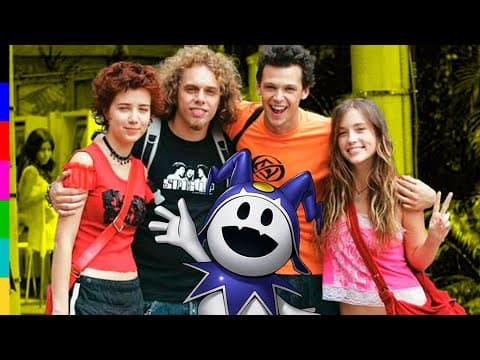
Malhação, a long-running Brazilian teen drama, shares striking similarities with the Shin Megami Tensei (SMT) game series, especially its spin-off Persona. Both feature young protagonists balancing everyday life with supernatural challenges. This article explores the parallels between Malhação's characters and SMT's personas, highlighting how Brazilian culture and pop icons are integrated into a hypothetical SMT Malhação game concept.
Malhação was one of the longest-running and most iconic Brazilian television soap operas, aired by TV Globo from 1995 to 2020. Initially created as a teen drama set in a gym, it evolved over the years into a school-based setting to connect more directly with its audience. The show explored themes such as friendship, love, family conflicts, and social issues.
Each season featured a new set of protagonists. In 2004, the season starred Juliana Didone and Guilherme Berenger as Letícia and Gustavo, respectively. Gustavo came from a wealthy family, was a guitarist in a band called "vagabanda," and had a bad boy temperament but was fundamentally a good guy. Letícia, in contrast, came from a poor family, was an exemplary daughter with a strong sense of justice, and a disciplined student.
The band also included antagonists Catraca and Natasha. Natasha was infatuated with Gustavo and schemed to separate the main couple, while Catraca tried to evade accusations related to an accident that left a classmate in a coma.
Persona is a spin-off of the Shin Megami Tensei (SMT) franchise that has grown to become even more popular than the original series. Persona games typically revolve around a group of students who control magical creatures called personas, based on Jungian psychological archetypes.
Since Persona 3, the gameplay balances the protagonists' daily lives—studies, friendships, part-time jobs—with supernatural adventures involving alternate dimensions and hidden threats. The RPG elements are combined with social simulation, where relationships directly influence the growth of personas' abilities.
The series is known for its investigative narratives, deep themes, and impeccable art direction, earning acclaim and a strong fanbase in the West.
Drawing parallels between Malhação and SMT, one can imagine a game titled "Shin Megami Tensei Malhação," structured similarly to Persona 2 with two campaigns and a protagonist couple.
In this imagined game, personas represent the internal selves of characters and incorporate Brazilian pop culture references:
Gustavo's Persona: A musical, rebellious demon inspired by Speedy from Devil Summoner, with a pop culture homage to Chorão from Charlie Brown Jr., reflecting Gustavo's rebellious personality.
Natasha's Persona: A seductive woman who transforms into a snake, inspired by Rita Lee, a strong-willed Brazilian rock singer known for songs about poison. Her persona is named Rita.
Catraca's Persona: A red-haired humanoid demon similar to D’ághda from SMT IV Apocalypse, named Barba Ruiva (Red Beard), inspired by a tragic Brazilian folklore figure associated with water and imprisonment, paralleling Catraca's character.
The comparison between Malhação and the Shin Megami Tensei series reveals fascinating overlaps in storytelling, character dynamics, and thematic depth. Both explore the complexities of youth, relationships, and hidden struggles beneath everyday life.
Imagining Malhação as an SMT game enriches the cultural tapestry by blending Brazilian pop culture with the psychological and supernatural elements that define the SMT franchise. This fusion highlights the universal appeal of coming-of-age stories intertwined with fantasy and personal growth.
Whether through television or video games, these narratives continue to captivate audiences by reflecting the challenges and triumphs of adolescence in compelling and imaginative ways.