Backrooms, a low-budget indie horror film directed by 20-year-old YouTuber Cain Parsons, has taken the box office by storm, grossing over $80 million on its opening weekend. The film's unique atmosphere, rooted in the internet's creepy pasta lore, and strong character-driven storytelling offer a fresh alternative to the often formulaic and expensive Hollywood blockbusters currently underperforming.
Life has a sense of humor, especially when it comes to the entertainment industry. While $200 million corporate blockbusters like The Mandalorian and Grou are bombing at the box office, and other big titles like Supergirl and Masters of the Universe are expected to follow suit, the box office is being dominated by a pair of low-budget indie horror films made by YouTubers. Among these, Backrooms is making the biggest waves, pulling in more than $80 million on its opening weekend and showing no signs of slowing down.
Backrooms is based on the famous internet creepypasta and directed by 20-year-old YouTuber Cain Parsons. This film is a fascinating example of internet culture crossing over into mainstream entertainment and shaking things up. But what exactly is Backrooms about, and does it live up to the hype?
Set in the early 1990s, the story follows Clark, a divorced alcoholic furniture store owner struggling to keep his business afloat. One night, while investigating strange electrical problems in the basement, Clark accidentally walks through a wall and finds himself in the "back rooms."
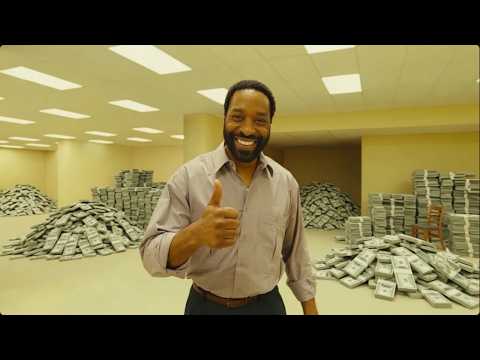
The back rooms are a mysterious alternate dimension consisting of an endless maze of rooms and corridors filled with random objects and furniture, all painted the same sickly yellow color and lit by neon strip lights. The laws of architecture and spatial reality do not apply here, and the maze seems to have no end. Clark soon realizes he is not alone in this strange place.
Eager to explore and document the back rooms, Clark enlists the help of his two employees to film their journey. However, things quickly spiral out of control.
Clark's therapist, Mary, receives a creepy message from him and follows him to the store, eventually finding herself trapped in the back rooms as well. The film then explores what happens to Clark, Mary, and the others, and what might be lurking in the maze with them.
The original backrooms creepypasta is the quintessential example of a liminal space — a superficially normal location filled with familiar objects but with an eerie sense of wrongness. The film captures this feeling perfectly.
The back rooms are portrayed as a strange, unnerving network of rooms and corridors that follow no logical pattern and seem endless. The uniform yellow paint and neon lighting create a crushingly claustrophobic conformity.
Unlike typical horror settings like dark basements or dense forests, the back rooms are bright, sterile, and tediously normal-looking. This creates a deeper, more primal fear — the realization that the place makes no sense because it refuses to be understood, and the paranoia that something else is lurking just out of sight.
The set design is impressive, relying mostly on practical sets with minimal CGI, making the environment feel tangible and immersive rather than soulless or artificial.
Clark is an architect by profession, an expert in design and construction, but everything he encounters in the back rooms defies his knowledge. His fixation on exploring and understanding the back rooms pits his rational mind against an irrational reality, ultimately leading to his undoing.
Mary, his psychiatrist, struggles to help Clark through his personal issues, including a messy divorce and alcoholism. She also has her own problems that tie into the back rooms' concept, adding depth to the narrative.
The lead actors, Edgier 4 and Renati Renie, deliver solid performances that bring their characters to life. Edgier 4, known for his dependable acting, finally gets a role that rewards his talents.
While the film takes inspiration from the back rooms lore and related video games, it alters some elements to fit a character-driven movie format. This includes changes to the creatures inhabiting the back rooms and the environment's symbolic meaning.
Fans of the original lore might be upset by these changes, but for general audiences, the film offers an immersive and engaging experience.
Like many horror films, Backrooms struggles somewhat in the third act, where the tension built up during the film gives way to a more straightforward climax. The finale boils down to the main character being chased through a maze by a scary monster, which feels like a missed opportunity to explore more complex ideas.
Despite this, Backrooms and another indie horror film, Obsession, represent the kind of movies the industry desperately needs: interesting, daring, and artistically ambitious projects made by passionate creatives. These films rely on strong ideas and efficient filmmaking rather than massive budgets and exhausting promotional campaigns.
The buzz around these indie films is not just organic; it reflects a decade of repressed audience hunger for quality entertainment. When Hollywood fails to deliver, independent creators step in to fill the void, proving that good storytelling and creativity can triumph over big budgets.
Backrooms is a refreshing and compelling horror film that challenges the dominance of big-budget Hollywood productions. Its unique atmosphere, strong performances, and creative storytelling make it a standout success and a sign of changing times in the film industry.
If you're a fan of horror or just looking for something different from the usual blockbuster fare, Backrooms is definitely worth watching.
That's all for today. Go away now.