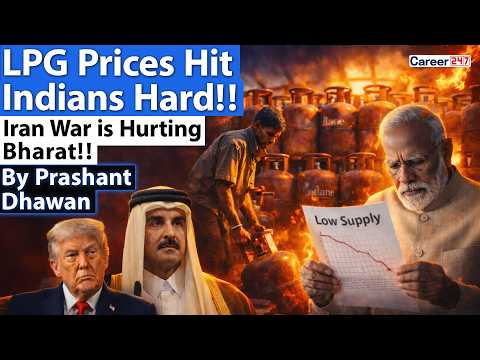
The ongoing war involving Iran has severely disrupted India's supply of cooking gas cylinders, leading to shortages and price hikes across major cities. India's heavy dependence on Middle Eastern LPG imports, particularly through the Strait of Hormuz, has been impacted by geopolitical tensions. This shortage affects households, schools, and businesses, with inflation and supply chain challenges expected to persist for months.
India is currently facing a significant shortage of cooking gas cylinders, with prices soaring and supply becoming scarce in many regions. This crisis is largely attributed to the ongoing war involving Iran, which has disrupted the supply chain of liquefied petroleum gas (LPG) that India heavily depends on.
Cooking gas cylinders, essential for millions of Indian households, have become increasingly difficult to procure. Prices have surged dramatically, with reports of black market prices reaching up to ₹1500 in Delhi and Bengaluru, and even ₹33000 in Mumbai. This shortage is not limited to India alone but is also affecting other Asian countries reliant on Middle Eastern LPG imports.
Top private schools in Delhi have even warned of "no lunch risk" amid the LPG shortage, highlighting the severity of the crisis. Many households are struggling to find cylinders, and some have resorted to alternative cooking methods such as electric stoves.
India imports a significant portion of its LPG from the Middle East, primarily through the Strait of Hormuz. The ongoing conflict involving the US and Israel against Iran has led to disruptions in this supply route. The war has created uncertainty about how long the shortage will last, with no clear end in sight.
The conflict has also led to increased prices of crude oil, with warnings that prices could reach $200 per barrel. This escalation directly affects the cost and availability of cooking gas cylinders in India.
Apart from LPG, India also imports liquefied natural gas (LNG), primarily from Qatar, which is crucial for fertilizer production. The war has disrupted LNG imports as well, raising concerns about India's ability to produce fertilizers in large quantities, which could impact agricultural productivity.
The shortage of cooking gas and potential fertilizer production issues contribute to inflation and could slow down India's economic growth. Restaurants and hotels are also affected, potentially leading to reduced services and higher prices.
The conflict has extended beyond physical warfare to cyberattacks. An Iran-linked hacker group recently launched a significant cyberattack on US military systems, disrupting devices using Microsoft Intune. US and Israeli intelligence agencies have reported that Russia and China are supporting Iran in these cyber operations.
This cyber warfare adds another layer of complexity to the geopolitical situation, potentially prolonging the conflict and its economic repercussions.
The Indian government is taking steps to mitigate the crisis by increasing LPG production by 25% and engaging with international partners to boost imports. However, the ground reality remains challenging, with many citizens still facing difficulties in obtaining cylinders.
Experts suggest that even if the war ends soon, it will take months for global oil supplies to stabilize and for the LPG supply chain to recover fully. The conflict is expected to last several months, with significant impacts on energy security and inflation.
Many Indians across states like West Bengal, Maharashtra, Haryana, and Karnataka are experiencing the shortage firsthand. The black market prices and scarcity have become common topics of discussion, with people sharing their struggles and coping mechanisms.
A recent survey in the US indicated that most Americans were not surprised by the military strikes on Iran, reflecting a broader understanding of the geopolitical tensions. However, only a quarter viewed Iran as an immediate threat, suggesting a complex perception of the conflict's necessity.
The Iran war has triggered a multifaceted crisis affecting India's cooking gas supply, energy security, and economic stability. With India's heavy reliance on Middle Eastern imports, the disruption in LPG and LNG supplies poses significant challenges.
While the government is actively working to address the shortage, the situation remains fluid and uncertain. Citizens are encouraged to share their experiences and stay informed as the conflict and its consequences continue to evolve.
The coming months will be critical in determining how India navigates this energy crisis and its broader economic implications.