
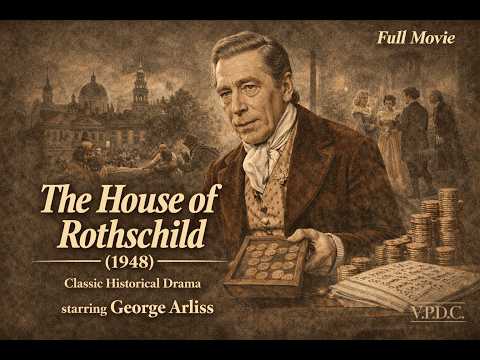
This article explores the historical drama of the Rothschild family, highlighting their rise from a persecuted Jewish family to a powerful banking dynasty. It covers their strategic establishment of banking houses across Europe, their pivotal role in financing wars against Napoleon, and their fight for dignity and equality amidst widespread anti-Semitism.
The story of the Rothschild family is one of resilience, intelligence, and strategic acumen. Set against the backdrop of 19th century Europe, this narrative unfolds the journey of a Jewish family navigating through prejudice, war, and financial challenges to establish one of the most powerful banking empires in history.
The Rothschild family begins in a Jewish ghetto, where they face constant threats from tax collectors and societal discrimination. The family patriarch, Nathan Rothschild, is depicted as a shrewd businessman who understands the harsh realities of being a Jew in Europe. Despite being taxed heavily and restricted from owning land or learning trades, Nathan emphasizes the importance of money as a weapon for defense and survival.
Nathan's father imparts a crucial strategy to his five sons: to establish banking houses in different major European cities such as Paris, Vienna, and London. This network would allow them to transfer money safely through letters of credit rather than physical gold, which was vulnerable to theft and war. This unity and cooperation among the brothers become the foundation of the Rothschild banking empire.
The Rothschilds play a pivotal role in financing the Allied powers during the Napoleonic Wars. They provide substantial loans to support military campaigns, understanding that money is the key to winning wars and securing peace. Nathan Rothschild in London becomes the head of the family business, coordinating efforts across Europe.
Despite facing exclusion and anti-Semitic barriers, such as being denied participation in major loans due to their Jewish identity, the Rothschilds persist. Nathan ingeniously manipulates the stock market to undermine competitors and secure financial advantages for his family.
The drama also delves into the personal lives of the Rothschild family members, particularly the romantic relationship between Julie Rothschild and Captain Fitzroy, a Gentile. Their love faces opposition due to religious and societal prejudices, highlighting the challenges Jews faced beyond financial discrimination.
The Rothschilds' financial acumen contributes significantly to the defeat of Napoleon. Nathan Rothschild's timely information and bold market moves help stabilize England's credit and support the war effort. However, even after their contributions, the family continues to face social exclusion and prejudice.
Throughout the narrative, a recurring theme is the Rothschilds' desire not just for wealth but for dignity and equality for their people. They demand freedom to trade, own land, and live with respect. Their financial power becomes a means to fight for these rights.
The Rothschilds emerge as a symbol of Jewish perseverance and success against adversity. Their story is not only about accumulating wealth but also about using that wealth responsibly to influence peace and social change in Europe.
This historical drama encapsulates the complexities of finance, war, and social justice in 19th century Europe through the lens of the Rothschild family. Their journey from the confines of the ghetto to the heights of financial power is a testament to their strategic vision, unity, and unwavering commitment to their people.
The House of Rothschild's story is a powerful narrative of overcoming systemic barriers through intelligence, unity, and strategic financial operations. Their legacy continues to influence the world of banking and serves as an inspiring tale of resilience and hope for equality.



















