The Unified Martial Arts Network (UMAN) OG League emerged from the founder's vision to create a competitive karate environment in New York that transcended local limitations. Starting with the New York's Finest Karate Academy in the late 1980s, the league fostered a community where martial artists from diverse backgrounds could compete and grow, challenging traditional styles and emphasizing passion and real fighting skills over rigid systems.
The Unified Martial Arts Network (UMAN) OG League has its roots deeply embedded in the Bronx, New York, specifically at 2351 Westchester Avenue in the Zerega section. This league represents a significant chapter in the evolution of competitive karate, particularly in New York City, where martial arts had traditionally been fragmented and limited in scope.
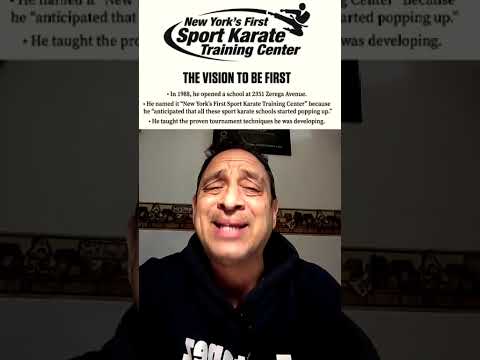
Before UMAN, there was the New York's Finest Karate Academy, established around 1988. Interestingly, the academy was originally named the "New York's First Sport Karate Training Center," a lengthy and somewhat awkward title that served as a descriptive label rather than a catchy brand. Despite this, the name worked because it clearly communicated the academy's focus.
Within a year, the academy attracted around 200 students from all over New York City and beyond, including Queens, Brooklyn, Manhattan, and even New Jersey. Notable students included Steve, the Rock, Cats, Robbie, and the late Clay, who traveled from Queens to train.
What set this academy apart was its emphasis on competition, a focus that was uncommon among karate schools at the time. The founder recognized that New York's martial arts scene was somewhat insular and limited, often compared to being a "big whale in a goldfish bowl." Instead, the goal was to be a "whale in the ocean," competing on a larger, more diverse stage.
The founder's personal experience highlighted the challenges of competing within New York's fragmented martial arts community. Different styles often acted like gangs, creating divisions rather than fostering unity. Coming from a Taekwondo background, the founder felt like an outsider in open tournaments but was driven by a strong desire to become a champion.
The founder drew inspiration from national champions like Keith My, who was recognized as the number one fighter in the nation. Mimicking Keith's sparring style, even without fully understanding the tactical reasons behind certain moves (such as keeping the hand down to protect the groin), was part of the learning process.
In 1981, the founder competed at the US Open in Florida, winning first place in both fighting and forms. The forms competition was freestyle and invented on the spot, reflecting the spontaneous and erratic nature of true martial arts, as opposed to rigid, systematized patterns.
Initially, training involved repetitive and somewhat "corny" exercises, which the founder disliked but endured to reach the core of fighting skills. Despite the physical challenges, including knee injuries, the commitment to training and competition never wavered.
The founder observed that many martial artists made excuses to avoid rigorous training, but true greatness required pushing beyond these limitations.
The creation of UMAN was driven by a passion for martial arts and a desire to break free from the limitations of local styles and politics. It was about fostering a community where passion and real fighting ability were prioritized over rigid systems and territorial disputes.
The founder emphasized that martial arts should not be about fear or being in love with the system but about genuine passion and the courage to compete and grow.
The Unified Martial Arts Network OG League stands as a testament to the founder's vision of creating an inclusive, competitive, and passionate martial arts community in New York. By focusing on competition, embracing diverse styles, and encouraging spontaneous and real fighting skills, UMAN has helped shape the landscape of martial arts in the region, inspiring countless practitioners to pursue excellence beyond local boundaries.