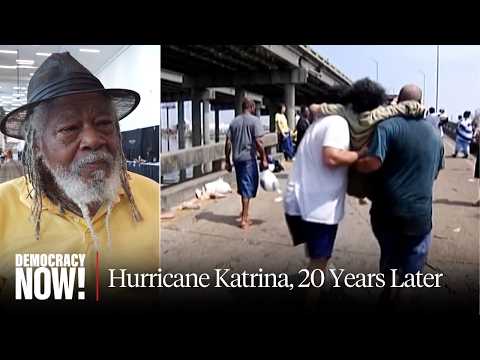
As we mark the 20th anniversary of Hurricane Katrina, we reflect on the devastation it caused, the failures in response, and the ongoing recovery efforts in New Orleans. Voices from the past highlight the struggles faced by residents and the resilience of the community. Malik Rahim and others share insights on the lessons learned and the importance of addressing systemic issues that contributed to the disaster's impact.
This week marks the 20th anniversary of Hurricane Katrina, the catastrophic storm that struck the Gulf Coast in 2005, resulting in over 1,800 fatalities and displacing more than a million people. As we look back at the events surrounding this disaster, we also examine the current state of New Orleans and the lessons learned from this tragedy.
On August 29, 2005, Hurricane Katrina made landfall, leading to unprecedented destruction. New Orleans was particularly hard hit, with at least 80% of the city submerged underwater. The aftermath left the city without electricity and clean drinking water, rendering it uninhabitable for weeks. The urgency of the situation was captured in the words of then-New Orleans Mayor Ray Nagin, who ordered an immediate evacuation of the city.
In the days following the storm, chaos ensued. Many residents were unable to evacuate due to various barriers, including age, health, and lack of transportation. Reports emerged of thousands of people stranded, desperate for help. Eyewitness accounts described scenes of desperation, with individuals pleading for food and water, while others attempted to break into stores to survive.
One poignant moment captured during the crisis was the frustration expressed by residents regarding the lack of organized assistance. Many felt abandoned by government officials, with the Federal Emergency Management Agency (FEMA) criticized for its slow response. The head of FEMA, Michael Brown, admitted on national television that his agency was unaware of the thousands of refugees trapped in the convention center.
In the absence of a timely government response, local citizens and volunteers stepped up to provide aid. Reports highlighted the efforts of individuals who took it upon themselves to rescue stranded residents and distribute food and water. Malik Rahim, co-founder of the Common Ground Collective, emerged as a key figure in these grassroots efforts, emphasizing the importance of community solidarity in times of crisis.
The media portrayal of the events following Hurricane Katrina also drew criticism. Many felt that the coverage perpetuated racial stereotypes, depicting Black residents as looters while framing white residents as merely seeking food. This narrative contributed to a broader discussion about systemic racism and the inequities faced by marginalized communities during disasters.
As we revisit the coverage from 20 years ago, it is essential to acknowledge the voices of those who lived through the disaster. Malik Rahim's reflections on the aftermath highlight the ongoing struggles faced by the community. He pointed out that the narrative of anarchy and lawlessness was a false portrayal used to justify the neglect of the city's residents.
Rahim emphasized that many individuals sought refuge not only from the hurricane but also from a "hurricane of corruption" and systemic racism that had long plagued the city. He noted the dire conditions faced by those who were trapped, particularly children, who suffered needlessly in the aftermath of the storm.
As we commemorate the 20th anniversary of Hurricane Katrina, it is crucial to reflect on the lessons learned from this disaster. The importance of preparedness, equitable response, and community resilience cannot be overstated. The experiences of New Orleans serve as a reminder of the need for systemic change to address the vulnerabilities that exacerbate the impact of natural disasters.
Malik Rahim's ongoing advocacy for the community underscores the importance of remembering the past while striving for a better future. The resilience demonstrated by the people of New Orleans in the face of adversity is a testament to the strength of community and the necessity of collective action in times of crisis.
In conclusion, as we look back on the events of Hurricane Katrina, we must honor the lives lost and the struggles endured while also recognizing the progress made and the work that remains. The legacy of Hurricane Katrina is not just one of devastation but also of resilience, hope, and the enduring spirit of a community determined to rebuild and thrive.