
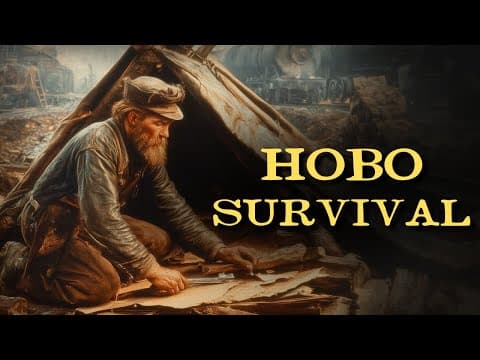
During the Great Depression, hobos developed sophisticated survival techniques to navigate extreme poverty. They mastered food procurement, shelter construction, transportation, and community support systems, allowing them to thrive without money. This blog explores these methods, showcasing human ingenuity in the face of adversity.
The Great Depression, spanning from 1929 to 1939, was a time of unprecedented economic hardship in the United States. With over 15 million Americans losing their jobs and unemployment soaring to 25%, many found themselves homeless and wandering the country in search of work. In this dire situation, hobos developed ingenious survival techniques that allowed them to sustain life without spending a single cent. This blog explores the sophisticated methods they employed to find food, construct shelters, navigate transportation, and build supportive communities.
The economic collapse led to widespread unemployment, with banks failing at an alarming rate and families losing their homes due to unpaid mortgages. As grocery stores became inaccessible and soup kitchens overwhelmed, over 2 million Americans became homeless. Hobos, as they were called, needed effective survival strategies to endure harsh conditions, including extreme temperatures and the constant threat of starvation.
One of the most critical survival skills for hobos was finding food without money. Experienced hobos, like Frying Pan Jack, developed a systematic approach to food procurement based on an understanding of urban food waste cycles and agricultural surplus patterns. Jack meticulously mapped out bakeries, restaurants, and grocery stores near major rail yards, noting their disposal schedules.
Successful food procurement required approaching establishments at specific times when managers were present but not overwhelmed. Jack's technique involved entering through back doors shortly before closing, dressed neatly to present himself as a temporary worker rather than a beggar. His polite request for food that was going to waste often succeeded, with a success rate of 70%.
When direct requests failed, hobos employed a method known as dumpster archaeology, which involved scavenging for edible food while minimizing health risks. They targeted specific types of waste, avoiding anything that could lead to food poisoning. Many hobos also maintained food caches near rail junctions, storing non-perishable items for future use.
Hobos also foraged for edible plants in vacant lots, identifying dandelion greens, wild onions, and purslane. The pinnacle of hobo food preparation was the communal cooking method known as mulligan stew, where groups pooled their food findings to create a nutritious meal.
Hobos constructed shelters using discarded materials, transforming abandoned lots into small cities of ingenious structures. Boxcar Willie, a skilled hobo, built a weatherproof shelter that protected him through harsh winters and scorching summers. The foundation of effective shelter construction involved careful site selection, ensuring proper drainage, wind protection, and concealment.
Willie's shelter featured a layered wall construction system that maximized insulation and weatherproofing. The roof was engineered to shed water while maintaining structural integrity, and interior climate control relied on a small wood-burning stove and thermal mass systems to retain heat.
In larger hobo camps, shared facilities improved living conditions. Communal kitchens, tool storage, and group meeting spaces fostered collaboration and resource sharing among residents.
Hobos relied on freight trains for transportation, requiring a deep understanding of railroad operations and security patterns. Veteran hobo Railroad Pete studied train schedules and learned to select the right cars for safe travel.
Successful boarding required precise timing and athletic ability. Hobos often concealed themselves with blankets and remained motionless during inspections. They developed escape routes and hiding spots at major rail yards to avoid detection.
A communication system using symbols carved into posts conveyed crucial information about safety and conditions. Hobos adapted their travel techniques to seasonal weather, ensuring they were prepared for both winter and summer conditions.
The hobo jungle outside Spokane, Washington, exemplified a sophisticated community where individuals contributed specialized skills for collective survival. Mother Jones, the camp's unofficial leader, coordinated resource sharing and conflict resolution.
The community operated on a skill exchange system, where individuals traded expertise and resources without money. This included maintaining communal kitchens, gathering firewood, and sharing tools and clothing.
Daily meetings facilitated information sharing about job opportunities and local conditions. The community also maintained relationships with sympathetic employers, enhancing their chances of finding work.
Community security systems protected against external threats, while conflict resolution procedures ensured cohesion. Medical care was organized using knowledge of folk remedies and basic first aid techniques.
As economic conditions began to improve in the early 1940s, the hobo community adapted to help members transition back to conventional employment. The survival techniques developed during the Great Depression showcased human ingenuity and community cooperation, proving effective even in the most desperate circumstances. Today, modern emergency preparedness experts study these methods for insights into sustainable living and resource management during economic crises. The hobo experience during the Great Depression serves as a powerful reminder of the resilience of the human spirit in the face of adversity.



















