
Unit 731, a covert biological warfare research facility in Japan during World War II, conducted horrific human experiments under the leadership of Dr. Ishii Shiro. This blog post explores the dark history of Unit 731, its operations, and the aftermath of its atrocities.
Warning: The following content may be disturbing for some viewers as it sheds light on a rarely discussed dark chapter in Japanese history. This post delves into the operations of Unit 731, a covert biological warfare research facility established by the Japanese military during World War II, and the horrific human experiments conducted there.
In 1938, on a seemingly mild summer day in China, the grounds of Unit 731 were bustling with activity. Professors, scientists, and military doctors were engaged in research while children played nearby, blissfully unaware of the horrors that awaited many others in the barracks. For those imprisoned, there was no escape from the cruel fate that loomed ahead.
The backdrop of Unit 731's establishment is rooted in the aftermath of World War I, which had ended nearly a decade earlier, claiming 17 million lives. Japan, having fought alongside the Allies, enjoyed a thriving economy and good international relations. However, the political landscape shifted dramatically with the rise of ultra-nationalist sentiments and the onset of the global economic crisis.
In 1925, Japan signed the Geneva Protocol, which prohibited the use of biological and chemical weapons. However, this treaty sparked a different reaction in Dr. Ishii Shiro, a military doctor who saw the potential for biological warfare as a means to gain an advantage over enemy states. He believed that if other nations were developing such weapons, Japan must do so as well.
Dr. Ishii, described as intelligent yet ruthless, devoted his life to researching biological warfare. He proposed the creation of the Institute for Epidemic Prevention, which would later evolve into Unit 731. His ambitions found fertile ground in the militaristic climate of Japan, where the government was eager to expand its military capabilities.
In 1932, Ishii's Institute began its work, experimenting with various pathogens, including anthrax and plague. The institute's research was divided into two categories: A-type (offensive) and B-type (defensive). While vaccine research could be conducted in Japan, A-type research required human subjects, which Ishii sought to test on a large scale.
With Japan's aggressive expansion into Manchuria in 1931, Ishii saw an opportunity to relocate his institute to a more remote area where he could conduct his experiments without interference. In 1936, Emperor Hirohito issued a decree to expand Ishii's institute, which became known as Unit 731.
Unit 731 was established in Pingfang, a remote area in Manchuria. The facility included research laboratories, prisons, and even an airfield. Here, Ishii and his team conducted unspeakable experiments on prisoners, many of whom were political dissidents or suspected anti-Japanese individuals. The average life expectancy of these prisoners was about one month.
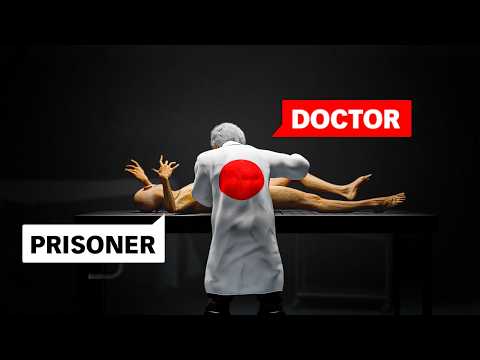
Between 1936 and 1945, thousands of prisoners were subjected to horrific experiments. They were deliberately infected with diseases like plague and anthrax, dissected alive without anesthesia, and subjected to extreme conditions to study the effects on the human body. The experiments included testing how long a person could survive in freezing temperatures and how diseases could be transmitted from mother to child.
Unit 731 also produced large quantities of biological weapons, including plague and cholera bacteria. They tested these weapons in the field, contaminating water supplies and conducting bomb tests on live subjects. At its peak, the unit's production capabilities could potentially wipe out the entire world population multiple times over.
As World War II drew to a close, Unit 731 scrambled to destroy evidence of its crimes. In a desperate attempt to cover up their actions, they executed remaining prisoners and destroyed their facilities. However, many of the researchers, including Ishii, managed to escape prosecution.
After the war, the United States sought the data from Unit 731 for its own bioweapons program. In exchange for immunity from prosecution, Ishii and his colleagues provided valuable information to the U.S. military. While Nazi doctors faced trials for their war crimes, many Japanese researchers lived out their lives without facing justice.
The atrocities committed by Unit 731 remained largely unacknowledged for decades. It wasn't until 2002 that a Japanese court officially recognized the country's engagement in biological warfare. Despite overwhelming evidence of the crimes, no compensation was awarded to the victims' families.
The story of Unit 731 serves as a chilling reminder of the depths of human cruelty and the lengths to which individuals will go in the name of scientific advancement and military power. The legacy of these horrific experiments continues to haunt the collective memory of those affected and raises important ethical questions about the conduct of war and the treatment of human subjects in research.



















