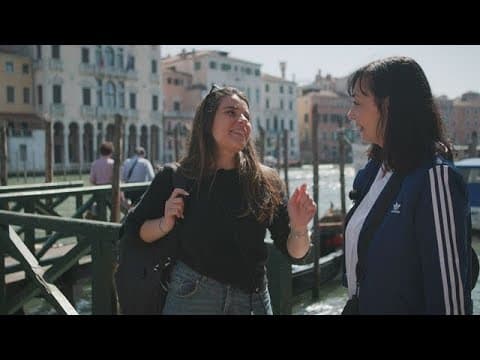
This blog post explores the daily life of true Venetians like Carlotta, who navigate their unique city amidst the overwhelming presence of tourists. It highlights their routines, the challenges they face due to mass tourism, and the cultural richness of Venice that remains hidden from the average visitor.
Venice, a city renowned for its stunning canals and rich history, is often overrun by millions of tourists each year. However, amidst the throngs of visitors, there exists a vibrant local culture that is often overlooked. This blog post delves into the life of true Venetians, like Carlotta, who navigate their daily routines in a city that is both their home and a global tourist attraction.
In Venice, traditional traffic rules are replaced by water-based transportation. Locals cross the city's waterways using public ferries, known as "faergondeln," which cost only 70 cents. This mode of transport is essential for residents, especially for those like Carlotta, who commute daily from the island of Lido to the mainland for work. The Vaporetto, or water bus, serves as the primary means of public transport, providing a unique commuting experience that combines the beauty of the canals with the hustle of daily life.
Venice comprises around 120 islands, each with its own character. While tourists flock to the historic center, Carlotta's home on Lido offers a different perspective. Unlike the crowded Centro Storico, Lido allows for cars and bicycles, making it a more practical living space for families. Carlotta shares her experiences growing up on Lido, where she enjoys the local beach, a spot frequented mainly by residents rather than tourists.
One of the most intriguing aspects of Venetian life is the existence of the only cemetery island in the world, San Michele. Carlotta expresses her deep affection for this serene place, which serves as a final resting spot for many Venetians. The island is not just a burial ground; it is a sacred space that reflects the city's history and the connection its residents have with their ancestors. Filming and photography are generally prohibited here, emphasizing the island's sanctity.
As the number of tourists in Venice continues to rise, the city has implemented measures to manage the influx. For the first time, Venice has introduced an entry fee for day visitors, which is set to increase in the coming years. Carlotta shares her mixed feelings about this initiative, recognizing the need to preserve the city's integrity while also acknowledging the challenges it poses for locals.
Carlotta's educational journey took place in a stunning palazzo that serves as a school. The building is adorned with Murano glass chandeliers and exquisite frescoes, making it a privilege for students to learn in such an environment. However, the school also faces challenges, such as the need for safety measures to protect students from falling debris, a reminder of the building's age and the ongoing maintenance it requires.
The high cost of living in Venice is a significant concern for many residents. With property prices averaging around 6000 euros per square meter, many locals are forced to move to the mainland or other islands. Carlotta reflects on the difficulties of finding affordable housing as a young professional, highlighting the stark contrast between the beauty of the city and the economic realities faced by its inhabitants.
Despite the challenges posed by tourism and high living costs, Venetians maintain a strong sense of community. Carlotta introduces us to her aunt Claudia, who lives in a charming apartment overlooking the canals. The daily routines of locals, including waste collection and community interactions, showcase the resilience and adaptability of Venetian life.
Parenting in Venice presents its own set of challenges, particularly with young children. Carlotta shares insights from a local family about the physical demands of navigating the city's bridges and canals with a stroller. However, children in Venice learn to swim at an early age, and parents instill safety practices to prevent accidents in the waterways.
High water, or "acqua alta," is a common occurrence in Venice, especially during winter. Locals have adapted to this phenomenon, often wearing special high boots or using raised walkways to navigate flooded streets. The city has invested in a flood protection system called MOSE, designed to mitigate the impact of rising waters due to climate change.
As the day winds down, Carlotta invites us to her home for a traditional dinner prepared by her grandmother. The meal features authentic Spaghetti Carbonara, showcasing the culinary heritage of Venice. This intimate family gathering highlights the importance of food and tradition in Venetian culture.
As the sun sets over the canals, Carlotta reflects on the beauty of living in Venice. Despite the challenges posed by mass tourism, the city remains a vibrant home for its residents. Through the eyes of locals like Carlotta, we gain a deeper understanding of Venice, not just as a tourist destination, but as a living, breathing city filled with history, culture, and community.