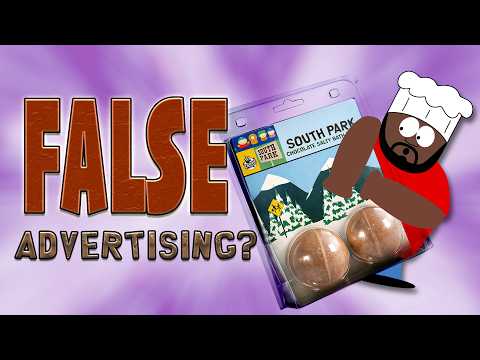
This article explores the controversy surrounding South Park's chocolate salty bath bomb, clarifying misconceptions about its ingredients. While initially thought to lack chocolate, it is revealed that the fragrance compounds may mimic chocolate scent. However, an actual smell test showed no scent, leaving the true nature of the product uncertain.
Recently, there has been some discussion and confusion regarding the authenticity and composition of South Park's chocolate salty bath bomb. Some viewers suggested that a previous video discussing the bath bomb might have contained factual inaccuracies. This article aims to clarify those points and delve deeper into the ingredients and the nature of this intriguing product.
In the original video, it was stated that the bath bomb had absolutely nothing to do with the song it was based on. Upon examining the ingredients, it was noted that the bath bomb was made up of sodium bicarbonate, citric acid, pam, and caramel. However, a glaring question arose: where was the chocolate?
The ingredient list did not explicitly mention chocolate or cocoa, which seemed like a significant oversight given the product's name and theme. This led to the conclusion that the creators of the bath bomb might have "messed that one up," as the chocolate element appeared to be missing.
Since the initial video, further research has shed light on the ingredient labeled as "pam." It turns out that "pam" is not a single ingredient but rather a mixture of fragrance compounds. These compounds are specifically designed to mimic certain smells, including chocolate.
This means that even though there is no actual cocoa or chocolate listed in the ingredients, the chocolate scent could theoretically be created artificially through these fragrance compounds. This revelation changes the perspective on the bath bomb's composition, suggesting that the chocolate element might be present in a synthetic form.
Given the ambiguity surrounding the ingredients, the best way to determine whether the bath bomb truly embodies the chocolate scent is through an actual smell test. The question remains: does the bath bomb smell like chocolate, or is it merely a misleading product that capitalizes on the South Park brand without delivering on its promise?
Upon conducting the smell test, it was found that the bath bomb did not smell like anything at all. This lack of scent could be attributed to the product's age, as it is over 25 years old. The passage of time may have caused the fragrance compounds to dissipate or degrade, leaving the bath bomb scentless.
The investigation into South Park's chocolate salty bath bomb reveals a complex picture. While the product does not contain actual chocolate, the fragrance compounds labeled as "pam" may have been intended to mimic the chocolate scent artificially. However, the absence of any detectable scent in the tested bath bomb leaves the true experience of the product uncertain.
Ultimately, whether the bath bomb was a clever use of fragrance technology or a misleading marketing tactic remains unclear. The age of the product complicates the matter further, making it difficult to assess its original qualities. This case highlights the importance of transparency in product ingredients and the challenges of evaluating vintage items.
This exploration into the bath bomb's composition and scent underscores the complexities of product formulation and consumer expectations, especially for novelty items tied to popular culture.