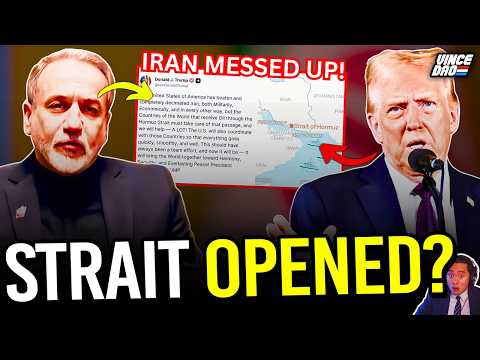
Iran has reversed its stance on blocking the Strait of Hormuz, stating it remains open to all ships except those from America and Israel. This shift follows US military strikes on Iran's oil infrastructure and international pressure, including from China. Despite Iran's claims, recent attacks on various oil tankers contradict their statements, highlighting ongoing regional instability and complex geopolitical dynamics.
Recent developments in the Persian Gulf have brought renewed attention to the strategic Strait of Hormuz, a critical chokepoint for global oil shipments. After a period of heightened tensions where Iran appeared to be closing the strait, the Iranian government has now issued statements claiming the strait remains open to all ships except those belonging to America and Israel. This blog post explores the background, the recent military actions, Iran's rhetoric, and the broader geopolitical implications.
The Strait of Hormuz is a narrow passage connecting the Persian Gulf with the Gulf of Oman and the Arabian Sea. It is one of the world's most important maritime routes for oil transport, with a significant percentage of global oil shipments passing through it. Any disruption in this strait can have profound effects on global energy markets.
In recent weeks, Iran appeared to be attempting to close or disrupt passage through the Strait of Hormuz. This included attacks on multiple oil tankers, some of which did not belong to America or Israel, contradicting Iran's later claims that their conflict is only with these two countries. These actions sparked fears of a prolonged global energy crisis and increased tensions in the region.
In response to Iran's actions, the United States, under President Donald Trump, launched military strikes on Har (Carg) Island, a key location where 80 to 90% of Iran's oil is prepared for shipment. This was a clear warning shot signaling that the US would retaliate against any interference with global oil supplies.
President Trump emphasized that while the US has severely weakened Iran militarily and economically, the security of the Strait of Hormuz is a global responsibility. He called for coordinated efforts among countries receiving oil through the strait to ensure safe passage and stability.
In an interview with MSNBC, Iran's Foreign Minister stated that the Strait of Hormuz remains open and is only closed to American and Israeli ships and tankers. He claimed that other countries are free to pass through without interference. However, this statement contradicts recent Iranian actions, including attacks on tankers from Iraq and Thailand, countries not involved in the conflict.
The Foreign Minister also accused the US of using neighboring countries' territories to launch attacks against Iran, highlighting the complex regional dynamics.
Iran's attempts to disrupt oil shipments have been widely viewed as strategic mistakes. By attacking oil tankers indiscriminately, Iran risks alienating not only Western countries but also regional neighbors and allies such as China.
China, a major recipient of Iranian oil, has expressed rare condemnation of Iran's actions, signaling dissatisfaction with Tehran's reckless behavior that threatens its own energy security.
The US military's show of force and the diplomatic pressure from global powers, including China, appear to have influenced Iran's recent rhetorical pivot to claim the strait remains open.
There is significant uncertainty about who truly controls the Iranian government. Reports suggest the Supreme Leader may be incapacitated or deceased, with the Revolutionary Guard and other factions vying for power. This internal disarray contributes to inconsistent messaging and unpredictable actions from Iran.
If Iran genuinely restricts passage only to American and Israeli ships, the global oil market might stabilize, as the US imports only a small fraction (4-5%) of its oil from the Persian Gulf. The key concern is maintaining the free flow of oil to other countries, especially China.
However, given Iran's past actions, skepticism remains about whether this policy will be upheld in practice.
Iran's recent reversal on the closure of the Strait of Hormuz reflects a complex interplay of military pressure, international diplomacy, and internal political challenges. While the Iranian government claims the strait remains open to most countries, their recent attacks on various oil tankers cast doubt on these assurances.
The United States has demonstrated its commitment to securing the strait through military presence and calls for international cooperation. Meanwhile, global powers like China are urging Iran to reconsider its aggressive tactics to avoid further isolation and economic harm.
The situation remains fluid, and the international community must remain vigilant to ensure the stability of this vital maritime corridor.
What do you think about Iran's recent statements and actions regarding the Strait of Hormuz? How should the international community respond to ensure peace and stability in the region? Share your thoughts in the comments below.
Until next time, peace and stay informed.