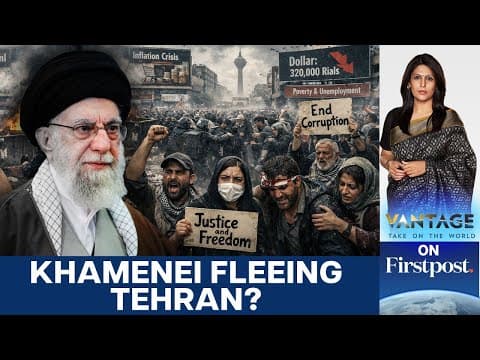
Iran is experiencing widespread protests triggered by a collapsing currency and soaring inflation, leading to political unrest. The government has responded with a mix of concessions and crackdowns. International concerns are rising, including warnings from the US and safety alerts for Indian students. Reports suggest Ayatollah Khamenei may have contingency plans to leave Tehran if the situation worsens, while the Iranian diaspora shows solidarity with protesters.
Iran is currently on edge as protests across the country have entered their second week. What began as an economic outcry has evolved into a significant political challenge for Tehran's leadership.
The protests erupted in late December 2025, sparked by the rapid collapse of Iran's currency, the Riyal. Over the past year, the Riyal has lost more than a third of its value against the US dollar. This devaluation has caused prices of food, fuel, and daily essentials to skyrocket, with inflation running above 40%. For many Iranians, life has become unaffordable, prompting widespread demonstrations.
Shopkeepers initially closed their stores to protest mounting losses. Soon, university students joined the movement, and within days, people from all walks of life took to the streets.
Iran comprises 31 provinces, and reports indicate that demonstrations have occurred in 23 of them. The unrest has resulted in at least 16 deaths and hundreds of detentions. Security forces have been deployed across major cities, with clashes reported almost daily.
The Iranian leadership faces a complex situation. Their response has been mixed, acknowledging the hardships faced by citizens while warning against protests. Supreme Leader Ayatollah Ali Khamenei stated:
"We talk to the protesters, they should talk, the authorities should talk to the protesters. But there is no point in talking to the rioters. The rioters should be put in their place."
This stance has been echoed by Iran's judiciary, which has declared no leniency for those accused of violence.
In an attempt to ease economic pressure, the government announced a monthly allowance for citizens. Individuals can receive approximately 1 million Tomens (around 7 US dollars) per person per month, credited to their accounts for four months covering the Iranian months of Day, Bahman, Esfand, and Farvardin.
This credit is intended solely for purchasing a series of goods and aims to reduce economic hardship. The plan was set to begin around January 10th, allowing people to make monthly purchases with the deposited amount.
Whether this measure will calm the protests remains uncertain.
The unrest in Iran has raised concerns globally, including in India, where nearly 3,000 Indian medical students reside in Iran. These students largely depend on local hostels and infrastructure. A student body has appealed to the Indian government to ensure their safety and prepare an emergency plan if necessary.
In response, New Delhi has issued an advisory urging its citizens to avoid non-essential travel to Iran and to closely monitor the situation.
The United States has used the protests to increase pressure on Tehran. President Donald Trump issued a warning, stating:
"We’re watching it very closely. If they start killing people like they have in the past, I think they’re going to get hit very hard by the United States."
Although Trump did not specify what actions the US might take, his repeated warnings have raised alarms.
Iranian officials accuse the US and Israel of inciting unrest. A statement from Iran said:
"Actions or statements by the prime minister of the Zionist regime, as well as by certain radical US officials regarding Iran’s internal affairs, are nothing but incitement to violence, terrorism, and killing in the language of international norms."
Recent reports suggest that Ayatollah Ali Khamenei may have a contingency plan to leave Tehran for Moscow if the situation spirals out of control. While Iran has not confirmed this, the report has gained traction due to recent regional history. For example, in 2024, Syria’s former president Bashar Al-Assad fled to Russia after losing control at home.
Despite these reports, Iran's leadership insists it remains in control. Banners throughout Tehran warn foreign powers against any military action.
The Iranian diaspora has also made their voices heard, holding rallies in the UK to express solidarity with protesters back home. One activist emphasized the importance of international support:
"It is really important that we show our solidarity with the people of Iran because the Iranian regime tried to say, because of the censorship and so on, they try to say that we are alone. You have got no hope. But we are trying to say that no. We are here. We are your voice, and in fact we are trying to make a bridge between the people inside Iran and outside of Iran."
Iran is facing a critical moment as economic hardship fuels widespread protests that challenge the political status quo. The government's mixed response, international warnings, and reports of contingency plans highlight the gravity of the situation. Meanwhile, the global community watches closely, and the Iranian diaspora continues to support those demanding change within the country.