The Iranian regime is undergoing a historic collapse with the Islamic Revolutionary Guard Corps (IRGC) showing signs of defections and loss of cohesion. US-Israeli forces have reportedly flattened Iran's parliament building, and Saudi Arabia is deploying military forces against Iran. This marks a significant shift in Middle Eastern geopolitics, signaling the dismantling of Iran's military and proxy networks.
The Iranian regime is currently unraveling under intense military pressure from the United States and Israel, with significant developments indicating a historic shift in Middle Eastern geopolitics. The Islamic Revolutionary Guard Corps (IRGC), Iran's most feared military force and the backbone of the Islamic Republic, is showing unprecedented signs of internal fractures, including defections and loss of command cohesion.
The IRGC is not merely a military entity; it controls Iran's economy, intelligence services, and domestic security. The Supreme Leader depends heavily on the IRGC for maintaining the regime's power. However, recent strikes have decimated the IRGC's leadership and infrastructure. Over 49 senior leaders have been eliminated, and the chain of command is severely disrupted.
Iran's own foreign ministry has admitted that several military units have lost control and are operating on outdated orders due to severed command lines. Analysts report that Iranian security personnel are abandoning missile launchers and retreating after minimal engagement, indicating a breakdown in coordination and morale. This slow disintegration of the IRGC is a critical sign of military collapse.
Operation Epic Fury began on February 28th with coordinated US cyber, missile, and air strikes alongside Israel's assassination of Ayatollah Kamei. Within 24 hours, over a thousand Iranian targets were hit, including command centers, IRGC facilities, and the Natanz nuclear site.
By the fourth day, US and Israeli forces had established local air superiority and continued deep strikes into Iranian territory. Iran's retaliatory efforts have been limited and desperate, involving missile and drone attacks across the region targeting US embassies and bases in Riyadh, Kuwait, Bahrain, and other Gulf states.
US losses include six soldiers killed and multiple wounded in Kuwait, with three F-15s downed by friendly fire. Hezbollah has opened a front in Lebanon, prompting Israeli air strikes and ground incursions, leading to dozens of Lebanese casualties. The Lebanese government has declared Hezbollah illegal and demanded the surrender of their weapons, signaling an administrative and military dismantling of the group.
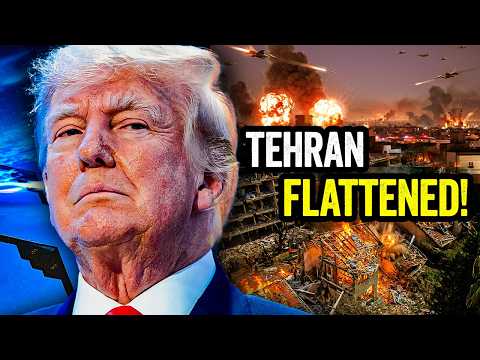
One of the most symbolic blows to the Iranian regime has been the reported flattening of the Majlis, Iran's parliament building, by US-Israeli air strikes. Although this has yet to be fully corroborated, it follows the destruction of Iran's Assembly of Experts building in Tehran during a gathering to select a new Supreme Leader.
These strikes send a clear message: the regime's infrastructure will not be allowed to rebuild. Any successor regime must comply with US-brokered agreements, including the Abraham Accords, which require Iran to normalize relations with the United States, Sunni Arab states, and Israel.
In a significant escalation, Saudi Arabia has deployed military forces in preparation for direct engagement against the IRGC. This move follows Iranian drone attacks on Saudi oil facilities, including the massive Ras Tanura refinery, which Saudi officials have declared a red line.
Crown Prince Muhammad bin Salman has authorized military responses to any further Iranian incursions, signaling the Gulf states' unified stance against Iran's aggression. This development marks a strategic blunder for Iran, as its retaliatory strikes have only galvanized the Gulf states to join the conflict against Tehran.
This conflict is not just a military operation but a remaking of the global order. The US, Israel, Saudi Arabia, UAE, Bahrain, Qatar, and Kuwait are effectively allied against Iran, a coalition that would have been unthinkable a decade ago.
Iran has been the lynchpin of the anti-American and anti-Western axis, supporting proxies across the Middle East. The dismantling of Iran's military and proxy networks weakens this axis and, by extension, the influence of Russia and China, who rely on Iran and Venezuela for oil supplies.
A weaker Beijing, due to disrupted oil supplies, strengthens other regional powers like Tokyo and New Delhi, reshaping civilizational alliances.
The Iranian regime is facing a historic collapse with its military backbone cracking, key infrastructure destroyed, and regional powers mobilizing against it. The flattening of Iran's parliament building, the loss of naval and air capabilities, and the entry of Saudi Arabia into the conflict signify a decisive moment in Middle Eastern history.
From the Gulf to the streets of Hormuz, a new era is emerging, one that could redefine global geopolitics. This moment underscores the profound impact of coordinated military and diplomatic efforts in reshaping the world order.
Note: This article is based on breaking news and analysis as reported by Dr. Steve, a commentator on Middle Eastern affairs.