A significant escalation is underway in Iran as reports emerge of assassinations and bombings targeting IRGC commanders and besieged forces, signaling growing armed resistance by Persian civilians. Concurrently, the US has imposed a naval blockade severely restricting Iran's oil exports, intensifying economic pressure. Internal strife and intelligence leaks within the regime further compound its challenges, suggesting a potential breaking point for the Iranian government.
The situation in Iran is rapidly evolving with a surge in targeted attacks against commanders of the Islamic Revolutionary Guard Corps (IRGC) and besieged forces. This marks a significant shift as Persian civilians appear to be taking matters into their own hands, intensifying the resistance against the regime.
Recent reports from the Iran Watcher account reveal that Muhammad Shir Mammudian, the head of a besieged base in district 18, was assassinated by unidentified attackers. This incident is part of a growing wave of targeted attacks against IRGC personnel and their allied forces.
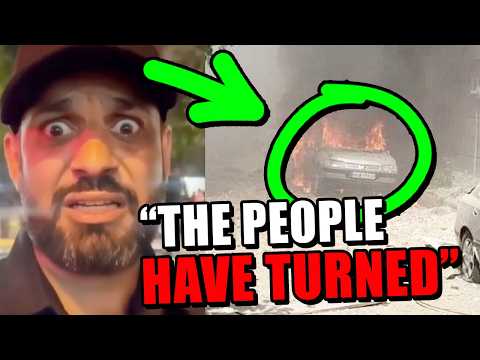
In addition to assassinations, two car bombs exploded near a besieged post in Tan, specifically on Imam Kmeni Street. Witnesses in district 10 described multiple explosions, with one blast strong enough to shake nearby buildings. An on-the-ground testimony from a besieged member blamed "internal traitors" for the bombing, confirming the expansion of armed resistance within the country.
The besieged forces, often quasi-civilian mercenaries, are central to the Iranian regime's oppression campaign. They man checkpoints and posts that control the population. However, their morale is deteriorating due to continuous attacks from external forces such as Israeli and US air campaigns, as well as internal attacks from Persian civilians.
Moreover, the financial support for these forces is drying up, further weakening their resolve. This combination of military pressure and economic hardship is creating a precarious situation for the regime's enforcers.
The United States has announced a formal naval blockade of Iranian ports and coastal areas in the Persian and Oman Gulf regions. This blockade aims to prevent vessels from entering or leaving Iranian ports, with warnings that ships attempting to breach the blockade will be boarded, interdicted, and seized. The US Navy is prepared to use force to enforce compliance.
This blockade effectively restricts 90% of Iran's economy, which is heavily dependent on oil exports. The inability to export oil is pushing Iran towards an economic death spiral, with storage capacities nearing their limits and oil wells potentially needing to be capped.
The blockade's impact is compounded by internal strife within the regime. Reports indicate that intelligence leaks and local civilians are providing information to US and Israeli forces, facilitating targeted strikes on regime checkpoints. This suggests the emergence of an intelligence resistance network operating within Iran.
Furthermore, Gulf nations are cooperating with the US by freezing regime-linked bank accounts and investigating funds held within their banking systems. Secondary sanctions are being applied to countries buying Iranian oil, increasing financial pressure on the regime.
Scott Besson, a commentator on the situation, highlighted that the economic pressure campaign, dubbed "Operation Economic Fury," has been ongoing for over a year. The recent bombing of Gulf Cooperation Council (GCC) neighbors by Iran has led these nations to be more transparent and cooperative in freezing Iranian funds.
The Iranian regime faces a critical dilemma. Many of its supporters may be motivated more by economic necessity than ideological conviction. As funds dry up and the blockade continues, loyalty within the regime's ranks may weaken, leading to further internal fractures.
Despite tough rhetoric from Iranian officials, there has been no significant response to the blockade, indicating that the regime may be cornered with limited options. Meanwhile, global markets show strength, with the S&P 500 and NASDAQ hitting record highs and American petroleum product exports reaching 7.2 million barrels per day.
The pressure campaign against Iran is multi-faceted, involving military, economic, and internal resistance components. The regime's survival depends on whether it can withstand these combined pressures or if it will be forced to negotiate or collapse.
The recent assassination of IRGC commanders and bombings of besieged posts mark a new phase in the Iranian resistance movement, with civilians actively engaging in armed opposition. Coupled with the US naval blockade and economic sanctions, the Iranian regime is under unprecedented pressure from multiple fronts.
Internal dissent and intelligence leaks further weaken the regime's control, suggesting that a breaking point may be near. The coming weeks and months will be critical in determining whether the regime can maintain its grip on power or if significant change is imminent.
This evolving situation demands close attention as it has profound implications for regional stability and international relations.