On April 3, 2026, during Operation Epic Fury, Iran shot down a U.S. F-15E Strike Eagle, marking a significant event amid ongoing military strikes. One crew member has been rescued, while the search for the second continues. Iran claims to have used its advanced Bavar 373 missile system. The incident highlights the ongoing conflict, strategic military operations, and geopolitical tensions involving Iran, the U.S., and allies.
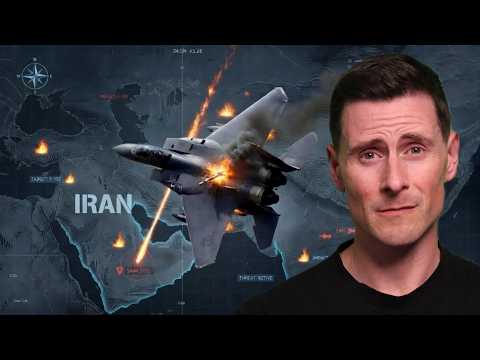
On April 3, 2026, day 35 of Operation Epic Fury, Iran announced that it had successfully shot down a U.S. F-15E Strike Eagle fighter jet. The aircraft was identified as belonging to the 494th Fighter Squadron based out of RAF Lakenheath, as confirmed by the distinctive red stripe on the tail visible in crash site photos. Iranian state media and the Islamic Revolutionary Guard Corps (IRGC) hailed this event as a significant victory for their air defenses.
Initially, Iranian propaganda claimed the downed aircraft was an F-35, but later evidence, including tail wreckage, confirmed it was an F-15E. However, some images of ejection seats released by Iran did not match those used in the F-15E, suggesting possible misinformation.
One of the two crew members of the downed F-15E has been safely rescued, likely through a daring operation involving U.S. Air Force pararescue teams and special operators. The search for the second crew member is ongoing, with a multi-aircraft search and rescue (SAR) operation underway. This operation includes HH-60G Pave Hawk helicopters refueled mid-mission by HC-130 tankers, demonstrating the high priority placed on recovering personnel.
The F-15E Strike Eagle typically carries a pilot in the front and a weapons systems officer in the back, both of whom ejected after the aircraft was struck. The rescue of one crew member is a significant success amid the ongoing conflict.
While Iran celebrates the downing of the F-15E, U.S. forces have been conducting precision strikes on Iranian infrastructure. Notably, the B1 Bridge near Karage, Iran's tallest suspension bridge at 136 meters high, was recently destroyed by American airstrikes, cutting a vital military supply route in half. These strikes aim to disrupt the IRGC's financial and logistical capabilities.
The U.S. Marine Expeditionary Unit and the USS Gerald R. Ford carrier strike group have increased their presence in the region, enhancing combat capabilities and maintaining pressure on Iran. These forces are preparing to potentially open the Straits of Hormuz, a critical chokepoint for global oil supply.
Iran claims to have used the Sciad 4B missile, launched from the Bavar 373 air defense system, to shoot down the F-15E. The Bavar 373 is a two-stage, solid-fuel missile system with a reported range of approximately 400 kilometers (about 100 miles) and speeds reaching Mach 5. It features an active radar seeker for terminal phase precision targeting and is designed to counter fourth-generation fighter jets like the F-15E.
This system is highly mobile, resistant to electronic warfare, and is considered Iran's domestic answer to Russia's S-400 missile system. Russia and China have reportedly assisted Iran in upgrading and adapting its air defense capabilities.
The F-15E is a fourth-generation fighter known for its heavy weapons load, speed, and maneuverability, but it lacks stealth capabilities. This makes it more vulnerable to advanced air defense systems compared to stealth aircraft like the F-35 or F-22.
Iran likely employed a tactic of keeping its radar systems off to avoid detection, activating them only when the F-15E was within close range. The Sciad 4B missile's rapid acceleration and precision targeting left the pilot with minimal reaction time. The mountainous terrain in central Iran may have also concealed the missile launcher until the last moment.
Factors contributing to the successful missile strike could include saturation of defenses, multiple missile launches, possible use of man-portable air-defense systems (MANPADS) as distractions, and temporary degradation of U.S. electronic jamming.
The IRGC is using this event as a propaganda victory to bolster domestic morale and demonstrate control amid ongoing military pressure. Despite this, the downing of a single F-15E does not alter the overall air superiority held by U.S. forces in the region.
The U.S. continues to conduct extensive precision strikes, having targeted over 12,300 sites, including critical infrastructure supporting Iran's war machine, such as drone and ballistic missile production facilities.
The SAR operation is a testament to the skill and dedication of U.S. pararescue teams (PJs), who are elite combat medics trained to operate in hostile environments. Their mission includes stabilizing injured personnel and extracting them under fire.
The use of HH-60G Pave Hawk helicopters and HC-130 tankers extends the reach of these rescue missions deep into enemy territory. The successful recovery of one crew member highlights the effectiveness of these operations.
The conflict with Iran is deeply rooted in geopolitical tensions involving Iran's pursuit of nuclear capabilities, its alliance with Russia and China, and its control over the Straits of Hormuz. The U.S. aims to prevent Iran from gaining nuclear weapons that could threaten Israel and U.S. interests.
Iran's control over the Straits of Hormuz is strategically significant, as it is a vital passage for global oil shipments. The U.S. and its allies seek to maintain influence in this region to deter aggression and ensure the free flow of energy resources.
Public figures like Joe Rogan have expressed confusion and frustration over the unclear objectives of the conflict. However, military experts emphasize the long-standing threat posed by Iran's missile and drone capabilities and the potential dangers of a nuclear-armed Iran.
President Trump has been briefed on the incident and has indicated a focus on recovering the remaining crew member and maintaining pressure on Iran's infrastructure.
The downing of the U.S. F-15E Strike Eagle by Iran is a complex event with significant military, strategic, and geopolitical ramifications. While Iran gains a temporary propaganda victory, the U.S. maintains operational momentum through continued strikes and rescue efforts.
The incident underscores the risks faced by U.S. aircrews operating in contested airspace and highlights the evolving nature of modern warfare involving advanced missile systems and electronic warfare.
The ongoing search and rescue operations, combined with sustained military pressure on Iran's infrastructure, will shape the next phase of this conflict.
What do you think will happen next in this conflict? Will we see increased strikes on Iran's energy infrastructure? Share your thoughts and insights.
This analysis aims to provide a comprehensive understanding of the recent downing of the U.S. F-15E Strike Eagle over Iran, the ongoing military operations, and the broader strategic context.