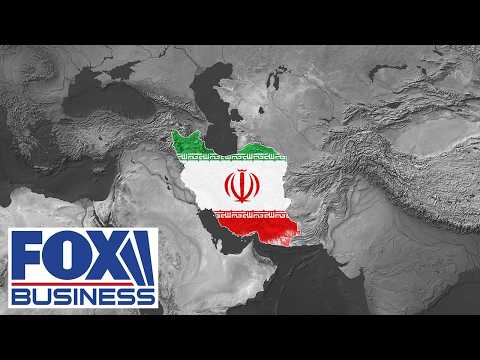
The recent US and Israeli strikes on Iran have escalated tensions in the Middle East, prompting the US to urge Americans to leave the region. Iran's counterattacks on neighboring Arab countries are seen as a strategic mistake that is unifying Gulf Cooperation Council (GCC) countries against Tehran. Experts discuss the implications of this conflict and the potential for a Middle East alliance akin to NATO.
Breaking news has emerged as the United States urges its citizens to leave the Middle East amid intensifying Iranian counterattacks. The State Department has closed numerous embassies across the region due to escalating violence following US and Israeli strikes on Iran. This article explores the unfolding conflict, expert analysis on Iran's strategic errors, and the broader implications for regional stability.
The US and Israeli military operations against Iran have entered their fifth day, with significant attacks on Iranian cities including Tehran. American and Israeli aircraft have targeted government military installations, prompting retaliatory strikes by Iran across the Middle East.
Several Arab countries, including Iraq, the UAE, Bahrain, Egypt, Lebanon, Saudi Arabia, and Pakistan, have been hit by Iranian attacks. This has led the US State Department to call for all Americans to leave more than a dozen countries in the region. However, air travel disruptions at key Gulf airports have complicated evacuation efforts.
As of now, approximately 9,000 Americans have been evacuated since the start of Operation Epic Fury, with 1,500 requesting assistance. The US is working to secure military and charter aircraft to facilitate further evacuations.
The conflict has expanded beyond Iran, with Israeli forces striking locations in Lebanon in response to missile attacks by Hezbollah, an Iranian proxy. Israeli ground troops have also taken positions within Israel, including Jerusalem, which has been targeted.
The death toll across the region has reached around 1,000, underscoring the severity of the conflict. The funeral for the killed Supreme Leader Ayatollah Ali Khamenei has marked a somber moment amid ongoing hostilities.
Iran expert Shahar Ovesi provided insight into the situation, emphasizing that the Iranian regime is wounded and desperate to maintain power. Iran's strategy of targeting neighboring Arab countries aims to pressure the United States into seeking an off-ramp from the conflict.
However, this approach appears to be backfiring. Instead of weakening US resolve, Iran's attacks are unifying the Gulf Cooperation Council (GCC) countries against Tehran. This unification is seen as a significant strategic mistake by Iran, potentially leading to its undoing.
The conflict has sparked discussions about the possibility of a Middle East alliance similar to NATO. The idea, previously articulated by Israeli Prime Minister Benjamin Netanyahu, seems more attainable given the current regional dynamics.
Shahar Ovesi expressed hope for a more secular and democratic Iran, which could contribute positively to regional and global security. He highlighted Iran's history as the largest state sponsor of terror over the past 47 years, funding groups such as Hezbollah, Hamas, and the Houthis.
Ovesi shared his personal experience with the Iranian regime's brutality. Born in the US in 1979, his father was the commander-in-chief of the Shah's Imperial Army and a close ally to Israel. In 1984, his father was assassinated through proxies of the Iranian government, forcing his family to flee to the United States.
This personal history underscores the deep wounds inflicted by the regime on Iranians both inside and outside the country.
Regarding the future leadership of Iran, Ovesi emphasized the importance of the Iranian people deciding who represents them. He expressed respect for Crown Prince Reza Pahlavi, who has dedicated his life to supporting the Iranian diaspora and advocating for a transition plan.
Pahlavi is seen as a leading voice both inside and outside Iran for facilitating a peaceful transition away from the current regime.
The Trump administration defended the decision to strike Iran during a congressional briefing. The president stated that the strikes were necessary to prevent a nuclear war, asserting that Iran would have attacked first if the US had not acted.
He acknowledged that the US might have forced Israel's hand but emphasized that both countries were prepared and that the strikes have decimated Iranian capabilities.
The conflict continues to widen, with missile exchanges between Israel and Hezbollah in Lebanon. Israeli forces have reported successful strikes on security headquarters across the region.
Ovesi expressed condolences for the service members lost and reiterated the historical threat posed by Iran as a state sponsor of terrorism. He warned that enabling Iran would spread terrorism globally, including to Europe and the United States.
The ongoing conflict between the US, Israel, and Iran has escalated into a broader regional crisis. Iran's strategy of attacking its neighbors has inadvertently unified its enemies, potentially reshaping alliances in the Middle East. The situation remains volatile, with significant humanitarian and geopolitical consequences.
Experts and officials continue to monitor developments closely, hoping for a resolution that ensures regional stability and security.
This comprehensive overview captures the current state of the Middle East conflict, expert perspectives, and the human impact of the ongoing crisis.