The conflict involving Iran intensifies as Iraqi forces allied with Iran suffer heavy casualties from US airstrikes at the Iran border. Despite reports of diplomatic negotiations, Iran's military appears desperate, importing foreign militias amid collapsing morale. The situation remains volatile with a looming ultimatum from President Trump, signaling potential escalation or decisive resolution soon.
The ongoing conflict involving Iran has taken a dramatic turn as Iraqi forces, reportedly allied with Iran, attempted to enter Iranian territory but were met with devastating airstrikes. This development comes amid a complex backdrop of diplomatic maneuvers, military operations, and strategic posturing that continues to dominate headlines and social media discussions.
Recently, France made a controversial decision to engage in a deal with Iran, a move that has sparked widespread debate. Many commentators suggested this development signaled a shift in the conflict, with some declaring the war effectively over and President Trump having lost leverage. However, a closer analysis reveals that this diplomatic engagement may not have significantly altered the strategic landscape.
France's decision to negotiate with Iran, despite its NATO commitments and treaties with the United Arab Emirates, appears to undermine the coalition opposing Iran's aggressive actions. Yet, Iran's leverage, primarily based on its ability to disrupt global oil supply by threatening the Strait of Hormuz, seems to be diminishing as it allows passage to non-US allied countries. This paradox suggests that Iran may have inadvertently weakened its own strategic position.
The reality on the ground paints a starkly different picture from the diplomatic narratives. Iran's military, particularly the Islamic Revolutionary Guard Corps (IRGC), is reportedly in a state of collapse. Morale is low, and the regime appears to be in panic mode as it faces relentless airstrikes and mounting casualties.
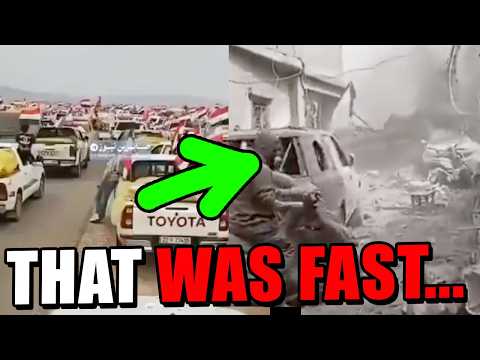
In a desperate bid to bolster its dwindling manpower, Iran has begun importing foreign Shia militants from neighboring countries, including Iraq, Afghanistan, and Pakistan. These militias, often described as terror cells, are being deployed in an attempt to sustain the regime's military efforts. However, the initial deployment of a large Iraqi contingent ended disastrously, with US airstrikes at the Salamche crossing inflicting heavy casualties and effectively decimating the forces upon entry.
The US maintains complete air control over the region, enabling it to conduct precise and devastating strikes against Iranian and allied forces. Videos and reports from the conflict zone show the aftermath of these strikes, highlighting the severe losses suffered by the Iraqi Popular Mobilization Forces (PMF) and other militias allied with Iran.
While some mainstream media outlets, such as CNN, portray a narrative of ongoing Iranian missile capabilities and question the effectiveness of US operations, on-the-ground reports and leaked documents tell a different story. A leaked IRGC aerospace force document reveals that missile launch crews face a greater than 50% chance of death with each launch, indicating significant vulnerabilities within Iran's missile operations.
This document exposes the regime's entire missile operation system, including launch site locations, command chains, and procedures, making personnel involved in missile launches highly vulnerable. Such revelations underscore the severe impact of US military actions on Iran's strategic capabilities.
President Trump has issued a clear ultimatum to Iran, demanding negotiations and signaling a potential escalation if Iran fails to comply. A 10-day grace period was given for Iran to come to the negotiating table, with the deadline approaching rapidly. Failure to meet this ultimatum could lead to intensified strikes targeting Iran's energy infrastructure, aiming to cripple the regime's economic and military capabilities.
Military movements, including a significant deployment of C17 transport aircraft to the Middle East, suggest preparations for a possible escalation. Additionally, Russia's evacuation of staff from a nuclear power plant in the region hints at growing concerns about the conflict's trajectory.
Support for the conflict remains mixed, influenced by domestic issues such as economic challenges, cultural shifts, and the aftermath of the COVID-19 pandemic. Many Americans feel disconnected from foreign conflicts, and the media's coverage has contributed to skepticism about the war's progress and objectives.
President Trump, who campaigned on an America First platform and opposition to prolonged foreign wars, faces significant pressure to deliver a swift and decisive resolution. The operation's success or failure will likely have profound implications for his political standing and the broader geopolitical order.
The situation in Iran and its border regions remains highly volatile and complex. Despite diplomatic overtures and media narratives suggesting a stalemate or shift in momentum, the military realities indicate a regime under severe pressure and a conflict that could escalate dramatically in the coming days.
The approaching deadline for Iran to respond to President Trump's ultimatum represents a critical juncture. The coming week is poised to be decisive, potentially reshaping the regional balance of power and influencing global geopolitical dynamics.
As events unfold, the world watches closely to see whether diplomacy will prevail or if the conflict will intensify, with significant consequences for all parties involved.