Is the Swiss Franc the World’s Safest Currency?
The Swiss Franc has gained strength amidst global economic uncertainty, driven by Switzerland's political neutrality, strong financial institutions, and historical ties to gold. As fears of recession rise, investors are increasingly viewing the Swiss Franc as a safe haven currency, potentially positioning it as the world's safest currency.
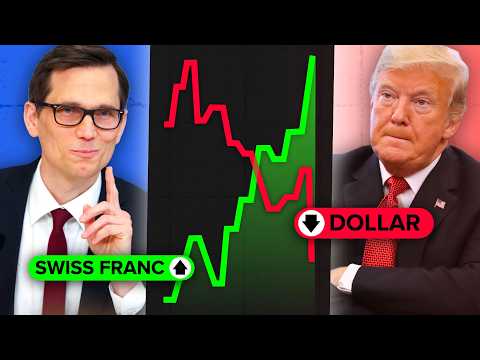
In recent weeks, global stock markets have faced significant turmoil, particularly following aggressive tariff announcements from the Trump administration. The US dollar has fallen to a six-month low against the euro, while the Swiss Franc has strengthened to its highest level against the dollar since October. This shift comes amid rising fears of recessions in both the US and globally, prompting investors to seek safe haven assets like the Swiss Franc. In this article, we will explore the history of the Swiss Franc, the reasons behind its current strength, and whether it can be considered the world’s safest currency.
A Brief Economic History of Switzerland
Switzerland's economic landscape has transformed dramatically over the past two centuries. Two hundred years ago, it was primarily a poor, rural agricultural economy. However, from the mid-19th century, Switzerland began to industrialize, leading to the introduction of the Swiss Franc in 1850. This was a pivotal moment, as the Swiss Federal Constitution established a more centralized federal state, removing barriers to the movement of people, goods, and money.
Prior to the introduction of the Swiss Franc, Switzerland had a fragmented currency system with hundreds of different coins in circulation. By 1820, there were approximately 8,000 distinct coins in use. The establishment of the Swiss Franc facilitated trade and economic growth, laying the groundwork for Switzerland's renowned neutrality in foreign relations.
The Swiss banking sector began to develop around this time, with Credit Suisse being founded in 1856. In 1865, Switzerland, along with France, Belgium, and Italy, formed the Latin Monetary Union, which standardized currency values among the member nations, easing trade and reducing currency fluctuations. However, this union collapsed in the late 19th century due to economic downturns.
After World War II, Switzerland joined the Bretton Woods system, pegging the Swiss Franc to the US dollar until 1970. This period saw rapid economic growth, driven by labor migration and a booming export market, particularly in watches, pharmaceuticals, and chemicals. Today, exports account for more than 75% of Switzerland's GDP, with financial services playing a significant role.
The Swiss Franc's Growing Strength
The Swiss Franc's recent strength can be attributed to several factors, particularly its historical ties to gold. Between 1920 and 2000, the Swiss Franc was legally required to be backed by at least 40% in gold reserves. This connection provided stability and value, allowing the Swiss Franc to be exchanged for gold, which was universally accepted.
In 2000, this requirement was terminated, and the Swiss Franc became a fiat currency, meaning its value is derived from Switzerland's economic strength and public trust rather than physical commodities. Despite this decoupling from gold, the Swiss Franc has maintained its reputation as a safe haven currency due to several key characteristics: