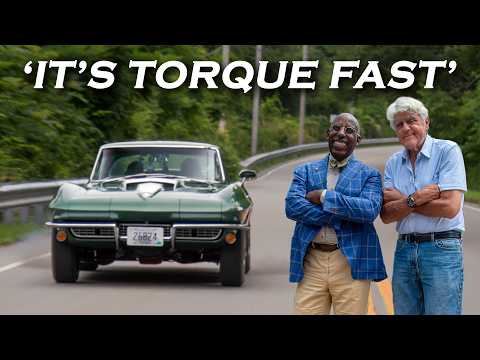
Jay Leno takes a detailed look at the 1967 427 Corvette, highlighting its powerful 435-horsepower engine, practical features like power windows and steering, and its place in American automotive history. He contrasts it with the 427 Cobra, discusses its design, performance, and cultural significance, and reflects on its enduring appeal among car enthusiasts.
The 1967 427 Corvette stands as one of the most expressive and iconic examples of American performance cars ever created. Jay Leno, a renowned car enthusiast and collector, offers an insightful exploration of this classic vehicle, its specifications, and its place in automotive history.
This Corvette is equipped with a 427 cubic inch big block engine featuring tri-power carburetors—three carburetors working in unison. Officially rated at 435 horsepower, the actual output was likely higher, but the figure was kept conservative for insurance purposes. This powerful engine was the pinnacle of Chevrolet's big block performance at the time.
During this era, the 427 Cobra was considered the king of performance cars. However, despite its speed, the Cobra was impractical for everyday use. It was expensive, difficult to park, and lacked basic comforts, making it more of a summer toy than a practical vehicle.
In contrast, the 427 Corvette combined high performance with practicality. It offered creature comforts such as power steering, power windows, and a radio. Although air conditioning was not available with the 435 horsepower engine due to compressor limitations, the Corvette was still a more usable and comfortable car.
The 1967 Corvette's design is refined and aggressive, featuring fender vents, a big stinger hood, and side pipes. The combination of a smooth body shape with aggressive styling elements creates a unique and appealing aesthetic.
Jay Leno notes his preference for the undercar pipes over the side pipes, which, while loud and impressive, can be a bit much. The car's green color is highlighted as a favorite combination.
The Corvette also featured advanced components for its time, such as four-wheel disc brakes and the F41 suspension package, which included stiffer front springs and an additional leaf in the rear springs. The car's rear end ratio allowed for comfortable cruising at highway speeds.
Unlike the 427 Cobra, the Corvette was designed for everyday driving, including winter use in colder climates like New England. It had a heater and defroster, making it a normal car suitable for year-round use.
The Corvette was also accessible to many Americans, including servicemen returning from duty who could afford to treat themselves to such a car. It was considered the best performance bargain, offering capabilities comparable to exotic cars like Ferraris and McLarens but at a fraction of the price.
The Corvette was more than just a car; it was an aspirational symbol for many Americans. It was the car of choice for successful individuals who wanted performance and style without the exclusivity and impracticality of European sports cars.
Jay Leno recalls Martin Milner, star of the TV show "Route 66," who famously drove a Corvette. The show featured two adventurers traveling across the country, embodying the spirit of freedom and exploration that the Corvette represented.
This particular 1967 Corvette is a fine example, certified by the National Corvette Restorers Society (NCRS) and Bloomington Gold, organizations dedicated to preserving the originality and provenance of classic Corvettes.
These groups are meticulous about maintaining authenticity, ensuring that every detail, down to the correct type of washers and components, is preserved. This dedication helps protect the legacy of these rare and valuable cars.
Jay Leno describes the driving experience as torque-rich, with power available from low RPMs. The car runs cool and is easy to work on. The dashboard is beautifully designed, featuring easy-to-read dials and a stylish side radio with vertically reading stations, including FM.
Despite the powerful engine and side pipes, the car remains comfortable enough for conversation with the windows down. The steering wheel is thin and classic, lacking modern safety features like airbags, but retaining a timeless appeal.
The 1967 Corvette is noted for its manageable size, which Jay Leno appreciates compared to modern sports cars that have grown larger due to safety requirements. The car handles broken roads well, with a solid fiberglass structure that had been refined to reduce rattles by 1967.
Jay and his companion muse about the possibility of a smaller Corvette model, similar to Porsche's Boxster and Cayman, though they acknowledge it is unlikely due to safety and market considerations.
They also joke about a modern "Route 66" adventure, driving a 1967 Corvette across the country, capturing the spirit of the original show.
The 1967 427 Corvette remains a symbol of American automotive excellence, blending high performance with practicality and style. Its enduring appeal lies in its powerful engine, thoughtful design, and cultural significance as an accessible yet aspirational sports car. Jay Leno's exploration highlights why this classic continues to captivate enthusiasts and collectors alike.