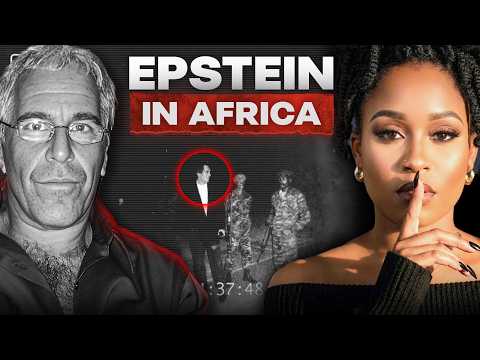
Newly released documents expose Jeffrey Epstein's extensive network across 14 African countries, revealing his exploitation of political instability, involvement in surveillance deals, and use of Africa as a hub for trafficking and exploitation. The files detail connections with high-level political figures, intelligence agencies, and illicit financial schemes, shedding light on a largely overlooked aspect of Epstein's global operations.
Jeffrey Epstein, a name synonymous with scandal and abuse, was known for his exploitation of young girls and his connections to powerful figures worldwide. While much of the public focus has been on his activities in America and Europe, newly released documents have uncovered a vast and disturbing network that Epstein operated across Africa. This article explores the revelations from over 3 million pages of documents, emails, videos, and images released by the US government, exposing Epstein's deep ties to African political figures, trafficking networks, and financial schemes.
Born in Brooklyn in 1953, Epstein's early career included teaching at the Dalton School in Manhattan, which opened doors to Wall Street. His wealth was mysterious, but his access to presidents, billionaires, royalty, and intelligence figures was undeniable. Epstein was known as an intellectual who understood money and power. Despite a controversial plea deal in 2008 that saw him serve only 13 months in jail, he was arrested again in 2019 on sex trafficking charges involving underage girls. Six weeks later, he was found dead in his jail cell under suspicious circumstances.
In November 2025, the US Congress passed the Epstein Files Transparency Act, leading to the release of millions of documents that revealed the full extent of Epstein's operations, including his activities in Africa.
The documents reveal Epstein's involvement in 14 African countries, including Morocco, Ivory Coast, Senegal, Nigeria, Kenya, South Africa, Tanzania, and Equatorial Guinea. His operations included:
Epstein viewed Africa not as a continent of leaders but as a territory ripe for exploitation.
In July 2019, one day before his arrest, Epstein attempted to purchase a palace in Morocco for nearly $15 million. The deal was canceled after his arrest, but the timing suggests Morocco was part of his escape plan. Epstein had been building his network in Morocco for nearly two decades, attending King Muhammad VI's wedding in 2002 and socializing with Qatari royals and Israeli intelligence figures. His connections to Israeli Mossad and Moroccan security services were significant, overlapping with his broader African operations.
In June 2012, Epstein hosted the son of Ivorian President Alassane Ouattara in New York while the former Israeli Prime Minister Ehud Barak met with Ouattara in Jerusalem to discuss security cooperation. Epstein and Barak pushed a plan to sell Ivory Coast a comprehensive surveillance system modeled on Israeli technology used in occupied Palestinian territories.
Nina Keta, niece of President Ouattara and a former model, acted as Epstein's fixer in Abidjan, coordinating meetings and facilitating access to women. Epstein's network intertwined with political figures such as Karim Wade, son of Senegal's then-president, whom Epstein financially supported during legal troubles.
Nigeria, Africa's largest economy, was a major commercial target for Epstein's network. Using the Boko Haram insurgency as a pretext, Epstein and Barak promoted Israeli surveillance technology as a solution. Epstein also connected influential businessmen to Nigerian officials to pursue port and infrastructure deals.
The network even eyed Nigeria's booming film industry, proposing a "Somaliwood" studio in Somaliland, a semi-autonomous region with minimal regulation. This project raised concerns due to its potential use as a recruitment pipeline for trafficking.
Juliet Bryant, a South African aspiring model, publicly recounted her recruitment and trafficking by Epstein starting in 2002 during a humanitarian tour involving Bill Clinton and celebrities. Bryant's story highlights how Epstein used legitimate events as cover for exploitation.
Additionally, Epstein's network organized private dinners for South African President Jacob Zuma during official visits, linking to broader financial schemes involving frozen Libyan assets after the fall of Muammar Gaddafi. Epstein's associates discussed plans to access billions in frozen funds through private intelligence networks.
In Kenya, Epstein's close business partner Sultan Ahmed bin Sullem had access to President Uhuru Kenyatta and discussed major logistics projects involving Kenya and neighboring countries. However, Kenya and Somalia were also flagged in the documents as major hubs for pedophile activity, with Malindi described as a haven for pedophiles.
In Tanzania, luxury travel to exclusive resorts like Member Island in Zanzibar was noted in Epstein's communications, with references to young girls excited about trips, some just turning legal. These messages reflect a pattern of exploitation hidden behind business and leisure activities.
Equatorial Guinea, ruled by President Teodoro Obiang and his son Theodorin, is known for extreme wealth disparity and corruption. Theodorin, convicted in France for embezzlement, maintained a personal friendship with Epstein for over 20 years. They explored joint ventures in oil and leisure industries, highlighting Epstein's preference for partners who offered impunity rather than legitimacy.
Epstein's files mention a proposal involving Joy Itto of the MIT Media Lab to help design a new Zimbabwean currency amid economic crisis. FBI documents include claims that Epstein managed former President Robert Mugabe's personal wealth, which would violate US sanctions if true. No charges were filed, but the allegation appears in official investigations.
The Epstein files reveal a complex and disturbing network operating across Africa, intertwining political influence, surveillance technology, financial schemes, and human trafficking. Epstein exploited political instability and weak regulatory environments to expand his operations, using Africa as both a business playground and a space for exploitation.
While many names in the documents do not imply wrongdoing, the evidence underscores the need for further investigation into Epstein's African connections and the broader implications for global power dynamics and human rights.
The full extent of Epstein's network in Africa is still emerging, but these revelations provide critical insight into one of the darkest chapters of modern trafficking and corruption.
This article is based on the comprehensive release of Epstein-related documents by the US Justice Department and investigative reporting from multiple sources.