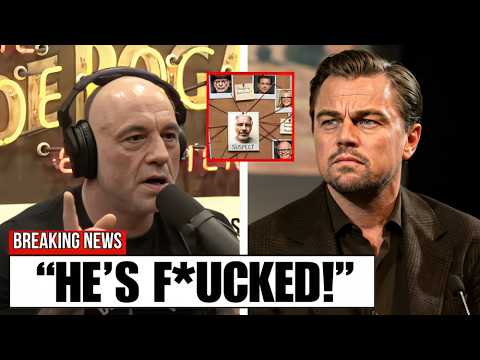
Joe Rogan discusses the shifting cultural landscape in Hollywood amid renewed public scrutiny of the Jeffrey Epstein scandal, focusing on Leonardo DiCaprio's social connections. He emphasizes the importance of transparency over blind celebrity admiration, critiques media double standards, and highlights how elite networks are being reexamined in light of new revelations.
Joe Rogan recently addressed the renewed public attention on the Jeffrey Epstein case and its impact on Hollywood's culture. He noted a clear change in how celebrities behave amid the controversy, with fewer interviews and more controlled statements. Leonardo DiCaprio's name has become central in many online discussions, prompting Rogan to explore the broader implications of the scandal.
Rogan observed that the Epstein scandal has altered the public's perception of elite social circles. Previously, exclusive parties and powerful friendships were seen as glamorous and unquestioned. Now, every past connection is scrutinized, and celebrities are more cautious about their public appearances.
He described this shift as a cultural mood where some public figures seem uneasy as conversations about powerful networks grow louder. This unease is reflected in the way celebrities manage their reputations, with publicists carefully crafting narratives and controlling interviews.
Leonardo DiCaprio has been documented as someone who enjoys attending exclusive parties, including those linked to Epstein's social circles. Rogan highlighted photos that appear suspicious, showing DiCaprio in close proximity to other men at these gatherings, raising questions about what transpired.
However, Rogan was clear that being mentioned in public discussions or moving in the same social circles as someone later exposed for crimes does not prove guilt. He emphasized the importance of transparency and cautioned against speculation without proof.
Rogan criticized the media's handling of the Epstein scandal, pointing out a double standard in coverage. Lesser-known individuals linked to controversial stories often face harsh and relentless headlines, while major celebrities receive more cautious and unclear reporting. This discrepancy increases public distrust.
He also discussed the lack of released evidence, such as videos and tapes that were reportedly extensive but have not surfaced publicly. Rogan questioned the integrity of the judicial process, suggesting possible complicity among judges, prosecutors, and the media.
The Epstein scandal revealed not just one criminal but a system that normalized elite networking without much questioning. Hollywood, finance, and politics have long celebrated proximity to power, but this culture is now being challenged.
Rogan argued that the real problem lies in the system that allowed such networks to operate quietly for years. The scandal has permanently changed how people view these elite circles, and trust has been deeply shaken.
Throughout his discussion, Rogan stressed that moving in the same circles as controversial figures is not proof of wrongdoing. However, silence from powerful names when trending online can feel louder than any statement.
He explained how reputation management in Hollywood has traditionally worked through controlled narratives and publicists. But in today's digital age, everything is recorded and preserved, old interviews resurface, and social media spreads information rapidly.
This new environment demands transparency and honesty from public figures. Audiences now expect acknowledgment and clarity rather than blind admiration.
Rogan reflected on the broader cultural shift the Epstein scandal represents. Fame alone no longer protects individuals from scrutiny. The public demands accountability and transparency.
He noted that this shift is not about attacking one actor but about changing how society views power and elite networks. The phrase "on the run" describes a psychological adjustment in Hollywood, where public figures manage appearances more carefully in response to increased public awareness.
The Epstein scandal has exposed the fragility of reputation and the importance of transparency in the modern era. Joe Rogan's commentary highlights the need for open conversations about power, influence, and accountability in Hollywood and beyond.
Whether Leonardo DiCaprio or other celebrities respond or not, the spotlight has moved. In this new era, image alone is insufficient; transparency is the only true protection for reputation.
This evolving landscape signals a significant cultural change where public trust must be earned through honesty rather than maintained through silence or carefully managed appearances.