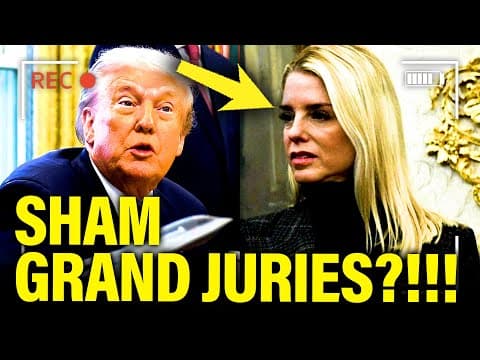
Magistrate Judge Fitzpatrick uncovered prosecutorial misconduct and conflicting affidavits in the Comey indictment case, revealing constitutional violations and potential cover-ups by DOJ prosecutors under Trump. The judge ordered full grand jury materials released to the defense, casting serious doubt on the indictment's validity and the prosecutor's conduct, threatening the entire case's collapse.
A recent 24-page memorandum opinion by Magistrate Judge Fitzpatrick has unveiled significant prosecutorial misconduct and potential cover-ups in the Department of Justice's handling of the James Comey indictment case during the Trump administration. This revelation not only highlights fundamental abuses of prosecutorial power but also raises serious questions about the integrity of the indictment process and the conduct of key DOJ figures.
The case centers around the indictment of James Comey, with prosecutors Pam Bondi and Lindsey Halligan representing the DOJ in the Eastern District. Halligan, a relatively inexperienced prosecutor with a background in automobile insurance law and minimal federal court experience, handled the grand jury proceedings largely on her own, without senior DOJ attorneys accompanying her.
Judge Fitzpatrick's opinion reveals that Halligan made critical errors during the grand jury presentation, including misrepresenting the Fifth Amendment rights of the defendant and improperly shifting the burden of proof onto Comey. These mistakes are considered fundamental violations of constitutional law and prosecutorial norms.
A major point of contention involves a two-hour gap in the grand jury transcripts. Judge Curry, presiding over a related case questioning Halligan's appointment legality, noted this missing period and questioned how Pam Bondi could ratify Halligan's actions without full knowledge of the grand jury proceedings.
In response, Halligan filed an affidavit claiming the transcript was complete and that the missing two hours corresponded solely to the grand jury's private deliberations, during which no prosecutor was present. However, Judge Fitzpatrick's review contradicts this claim, suggesting that either Halligan or Bondi is lying to the courts.
The judge points out that the then First Assistant U.S. Attorney, Maggie Clearary (who has since been fired), was reportedly informed about the grand jury's rejection of one count before the indictment was returned in open court. This raises the question of how Clearary obtained this information without contact with the grand jury, especially since Halligan claims no such contact occurred after 4:28 p.m., while the indictment was returned around 6:40 p.m.
Further complicating the matter, two inconsistent indictments were presented to the magistrate judge: one with three counts and another with two counts after the grand jury rejected the first count. Both indictments were signed by the prosecutor and the grand jury foreperson, creating confusion.
The magistrate judge had to question both the grand jury foreperson and Halligan to resolve this inconsistency, ultimately accepting the second indictment. However, the grand jury transcript and audio recordings do not reflect any communications after the grand jury began deliberating on the first indictment, leaving the second indictment's presentation unaccounted for.
Judge Fitzpatrick also found that the DOJ violated James Comey's attorney-client privilege through improper use and presentation of search warrant materials and grand jury evidence. These violations provide grounds for a motion to dismiss the indictment.
Moreover, Halligan's errors in instructing the grand jury—such as implying Comey had to testify and shifting the burden of proof—constitute constitutional infirmities that undermine the prosecution's case.
The judge's order to release the full grand jury materials to the defense marks a significant development, enabling Comey's legal team to challenge the indictment effectively. The findings suggest the indictment is on shaky ground, with potential dismissal looming.
Halligan's credibility is severely damaged, and Judge Curry is expected to consider removing her due to her questionable appointment and conduct. Pam Bondi's involvement in ratifying Halligan's actions despite incomplete knowledge further complicates the DOJ's position.
This case exposes a tangled web of prosecutorial missteps, conflicting statements, and possible cover-ups within the DOJ during the Trump administration. The revelations by Magistrate Judge Fitzpatrick not only threaten the viability of the Comey indictment but also call into question the integrity of the prosecutorial process in politically sensitive cases.
As the defense gains access to the full grand jury materials, the legal battles ahead will likely focus on these constitutional violations and procedural irregularities. The fallout may extend beyond this case, prompting scrutiny of DOJ practices and personnel.
For ongoing updates and detailed legal analysis, follow the Legal AF channel and related legal reporting platforms.