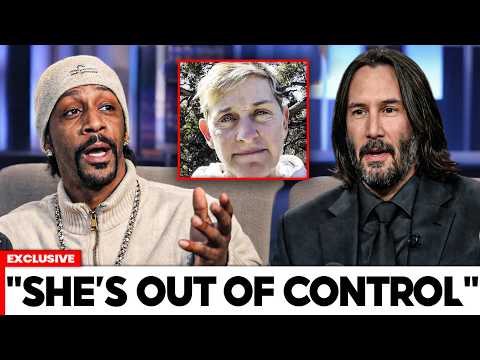
This article explores the rise and fall of Ellen DeGeneres's career, highlighting the contrast between her public 'be kind' persona and the toxic workplace allegations that led to her show's end. It also contrasts Ellen's manufactured kindness with Keanu Reeves's genuine acts of kindness and Katt Williams's outspoken critiques of Hollywood's image manipulation.
For years, Ellen DeGeneres was synonymous with kindness and positivity in American daytime television. Her catchphrase "Be kind to one another" became a cultural mantra, and her show dominated the airwaves for nearly two decades. However, behind the scenes, a different story was unfolding — one of a toxic workplace, allegations of mistreatment, and a carefully crafted public image that masked harsh realities.
This article delves into the complex narrative surrounding Ellen DeGeneres, contrasting her manufactured kindness with the genuine humility of Keanu Reeves and the blunt truths exposed by comedian Katt Williams.
Ellen Lee DeGeneres was born on January 26, 1958, in Metairie, Louisiana. Before her rise to fame, she worked various jobs including selling vacuum cleaners, painting houses, and waitressing. These experiences honed her ability to read people, a skill that would serve her well in comedy.
She began performing stand-up in 1981 and made history in 1986 as the first female comedian invited by Johnny Carson to sit on the couch after performing on "The Tonight Show." Her sitcom "Ellen" peaked in 1997 when she publicly came out as gay on the cover of Time magazine, a courageous move that led to the show's cancellation and Hollywood rejection.
After years of being sidelined, Ellen made a remarkable comeback in 2003 with "The Ellen DeGeneres Show." She returned not just as a comedian but as a symbol of kindness and positivity. The show ran for 19 years, producing over 3,000 episodes and winning more than 60 Daytime Emmy Awards.
Ellen's message of kindness became a powerful brand, extending beyond television into merchandise like scented candles, colorful socks, and inspirational courses. Her generosity on-air, such as giving $10,000 checks to single mothers or luxury cars to audiences, reinforced her image as a benevolent figure.
Ellen's kindness was not just a moral stance but a lucrative business strategy. At her peak, she earned $50 million annually from hosting, with a net worth around $500 million. Her brand, "ED Ellen DeGeneres," became an emotional bank where every tear of joy translated into financial success.
However, this kindness also served as a moral shield, making criticism difficult without appearing to oppose kindness itself.
Several moments on Ellen's show, once seen as lighthearted, have been reinterpreted as uncomfortable or even bullying:
Taylor Swift's Interview: Ellen pressured Taylor Swift to admit dating various male celebrities, despite Taylor's clear discomfort and pleas to stop, reducing her to a list of ex-boyfriends.
Dakota Johnson's Birthday Party Incident: Ellen joked about not being invited to Dakota's birthday party, but Dakota calmly corrected her, silencing the studio and revealing tension.
Mariah Carey's Pregnancy Joke: Ellen joked about Mariah Carey drinking champagne to prove she wasn't pregnant, a moment later viewed as insensitive after Mariah revealed she had suffered a miscarriage shortly after.
In 2020, former employees exposed a toxic work environment behind the scenes of "The Ellen DeGeneres Show." Reports included:
These revelations led to an internal investigation by Warner Brothers, resulting in the firing of three executive producers.
Ellen issued a public apology, admitting she was unaware of the toxic environment due to rapid growth. However, many questioned how she could remain uninvolved or choose to ignore the issues.
The scandal sparked a broader conversation about Hollywood's manufactured images and the gap between public personas and private realities.
Comedian Katt Williams has long been vocal about the entertainment industry's facade. He describes Hollywood as a marketing machine that crafts public images for artists, often masking their true selves.
Williams highlights three phases in this process:
He warns that many beloved stars are products designed to harvest emotions and trust, not genuine individuals.
In stark contrast to Ellen's brand-driven kindness, Keanu Reeves exemplifies genuine kindness without the need for publicity.
Keanu's reputation is built on small, authentic stories shared by strangers and colleagues, not media campaigns. This authenticity has earned him the nickname "the internet's boyfriend" and widespread admiration.
This contrast raises a powerful question: Would you trust the person who constantly says "Be kind" or the one who quietly stands beside you without fanfare?
The story of Ellen DeGeneres serves as a cautionary tale about the power and pitfalls of manufactured celebrity images. It reminds us that Hollywood produces brands, not always genuine people, and that kindness without sincerity is fragile.
Meanwhile, figures like Keanu Reeves and Katt Williams continue to inspire by embodying authenticity and truth.
The downfall of Ellen DeGeneres reveals the complex interplay between image, power, and reality in Hollywood. It challenges us to look beyond polished smiles and slogans to find true kindness and integrity.
Where do you believe real kindness lives — in the bright lights of television or in the quiet actions away from the cameras?
The truth about Ellen is now clear, but the stories behind many other idols remain hidden in the shadows.
Thank you for reading this comprehensive exploration of Hollywood's illusions and the contrasting realities of kindness embodied by Ellen DeGeneres, Katt Williams, and Keanu Reeves.