
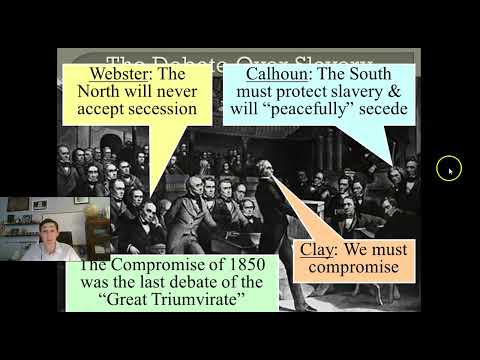
This blog post explores the key causes leading to the Civil War, emphasizing that while slavery was the primary cause, other significant factors such as the Compromise of 1850, the Kansas-Nebraska Act, and violent confrontations in Congress also played crucial roles in the sectional tensions that ultimately led to war.
Welcome to the second installment of our series on the build-up to the Civil War. In this post, we will delve into the key causes that led to one of the most significant conflicts in American history. While slavery is often cited as the primary cause, it is essential to recognize that multiple factors contributed to the tensions between the North and South.
It is impossible to discuss the causes of the Civil War without addressing slavery. While some may argue that states' rights were the primary issue, historical evidence overwhelmingly supports that slavery was the central cause of secession and conflict. Numerous primary sources from the period explicitly state that Southern states seceded due to slavery. However, it is crucial to understand that slavery was not the only factor at play.
The Compromise of 1850 was an attempt to ease tensions between free and slave states. Proposed by Henry Clay, this compromise included several provisions:
Despite these efforts, the compromise failed to resolve the underlying issues and only postponed the inevitable conflict.
Introduced in 1846, the Wilmot Proviso aimed to ban all Black individuals, free or enslaved, from the territories acquired from Mexico. This proposal was an attempt to limit the expansion of slavery and was indicative of the growing sectional divides. Although it did not pass, the debate surrounding it highlighted the fractures within national political parties, which began to align more along sectional lines.
The election of 1848 was pivotal in shaping the political landscape. Key candidates included:
Ultimately, Taylor won the presidency, but the election underscored the deepening divisions over slavery in the West.
The Kansas-Nebraska Act of 1854 further inflamed tensions by allowing the new territories of Kansas and Nebraska to decide on slavery through popular sovereignty. This act effectively repealed the Missouri Compromise and led to violent confrontations known as "Bleeding Kansas," where pro-slavery and anti-slavery factions clashed violently, marking the first significant bloodshed in the conflict.
The tensions reached a boiling point in Congress, exemplified by the brutal attack on abolitionist Senator Charles Sumner by South Carolina Representative Preston Brooks. Sumner's speech, "The Crime Against Kansas," criticized the pro-slavery stance, prompting Brooks to assault him on the Senate floor. This incident became a symbol of the barbarism associated with the defense of slavery in the South and further polarized the nation.
The build-up to the Civil War was a complex interplay of various factors, with slavery at the forefront. The Compromise of 1850, the Wilmot Proviso, the Kansas-Nebraska Act, and violent confrontations in Congress all contributed to the growing sectional tensions. As we continue this exploration, we will examine the Lincoln-Douglas debates and the role of abolitionists like Frederick Douglass in shaping the discourse around slavery and freedom. Stay tuned for more insights into this critical period in American history.



















