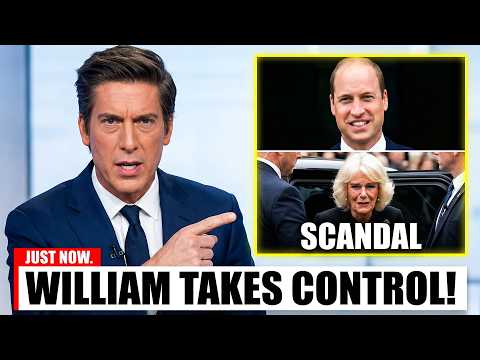
Following the arrest of Andrew Mountbatten Windsor, King Charles is transferring significant authority to Prince William, marking a major power shift within the British monarchy. This transition is accelerated by Charles's health issues and ongoing scandals, with Prince William pushing for modernization and stricter accountability. Meanwhile, Queen Camila's friendship with Sarah Ferguson causes tension, highlighting a royal family divided over the future direction of the monarchy.
The British monarchy is undergoing a significant transformation as King Charles quietly transfers final authority to his son, Prince William. This shift comes in the wake of a major scandal involving Andrew Mountbatten Windsor and has sparked tensions within the royal family, particularly between Prince William, Queen Camila, and Princess Kate.
On February 19th, 2026, Andrew Mountbatten Windsor was arrested, triggering an unprecedented change in the royal family's structure. Prince William, who had long anticipated such a crisis, has taken a central role in managing the fallout.
Sources close to the family reveal that William has been making decisive power moves, effectively leading the family despite King Charles remaining the monarch. Royal commentator Moren Callahan noted that King Charles "seems to have all but handed over the crown," preferring to avoid involvement in issues threatening the monarchy's future.
William had recognized problems with Andrew years earlier. After Andrew's controversial 2019 BBC interview regarding his association with Jeffrey Epstein, William urged King Charles and the late Queen Elizabeth to remove Andrew from royal duties immediately. Despite initial reluctance from the Queen and Charles, William's warnings about protecting the monarchy's reputation have now been validated by Andrew's arrest for allegedly sharing confidential government documents with Epstein.
Over the past six months, William has played a key role in decisions to remove Andrew's titles, evict him from Royal Lodge, and sever his ties with the institution. This strategy is led by William, not Charles acting alone.
King Charles III ascended the throne in September 2022 at age 73, the oldest new monarch in British history. His reign has faced challenges, including a cancer diagnosis in February 2024. Though the cancer type remains undisclosed, Charles has been undergoing treatment while fulfilling royal duties.
In March 2024, Princess Kate also announced a cancer diagnosis, stepping back from public duties for several months during chemotherapy.
Due to these health concerns, Charles is reportedly considering transferring some responsibilities to Prince William by 2025 or 2026. While palace officials deny rumors of a quick transition, William is increasingly taking on more duties, including the authority to issue royal warrants in 2025—a significant transfer of influence.
William is no longer just the heir; he is a partner in decision-making and often the primary decision-maker. A royal source explained that Charles is guiding William to make wise choices during this crisis, knowing the monarchy's future depends on the Wales family. At 77 and battling cancer, Charles acknowledges his reign may be short, accelerating the succession plan.
Prince William aims to modernize the monarchy, organizing it more like a modern company to increase accountability and public trust. His plan includes clearer rules and responsibilities, reducing the power of longtime courtiers, and enhancing transparency.
William has already implemented this approach with the Royal Foundation, which operates with a CEO, board of directors, clear goals, and public updates. He intends to apply this model to the monarchy.
In an October 2025 conversation with Canadian actor Eugene Levy, William acknowledged the challenge of bringing gradual change to an institution symbolizing continuity. A former royal aide compared the monarchy to a jar of Marmite—while the label remains the same, the contents have changed many times.
William's management of the Duchy of Cornwall reflects his questioning of old practices, emphasizing accountability and the monarchy's purpose to benefit others.
Queen Camila has become an unexpected obstacle to William's modernization plans, particularly due to her friendship with Sarah Ferguson, the ex-wife of Prince Andrew. William reportedly criticized Camila for maintaining this friendship, believing the monarchy must sever ties with anyone linked to scandal to protect its reputation.
Sarah Ferguson's name appears in the Epstein files released by the US Department of Justice, showing contact with Epstein and requests for financial help during business struggles. Although no wrongdoing has been proven, William views Camila's association with Sarah as damaging.
Camila, however, values loyalty and argues it is unfair to end a decades-long friendship based on guilt by association. This disagreement has caused a rift between William and Camila.
Camila also played a key role in the October 2025 decision to strip Andrew of his titles, acting independently of William's strategy. William insists on a complete break from anyone associated with Andrew, while Camila prefers a balanced approach considering both family needs and personal relationships.
Tensions are also rising between Princess Kate and Queen Camila. Kate has taken charge of crisis management following Andrew's arrest, working with palace staff and legal advisers to shape the public response and implement William's plans.
Camila reportedly dislikes Kate's involvement, feeling threatened and accusing her of making Charles and herself look weak. King Charles, however, defends Kate, recognizing her efforts to help.
This longstanding tension worsened as Kate was seen publicly supporting William during the scandal, while Camila was less visible. Calls for Charles to step down amid the scandal, though not widely supported, indicate the monarchy's fragile position.
Kate and William's partnership is shaping the monarchy's strategy, with Kate expected to have a more active and influential role as queen consort compared to Camila.
In late February 2026, William issued a strong ultimatum to Camila: publicly distance herself from Sarah Ferguson or risk damaging the monarchy's reputation. This demand marks a significant shift in palace power dynamics, with William holding final authority over decisions related to the Andrew scandal and the monarchy's image—a power granted by King Charles.
Camila's attempts to show support for abuse survivors have been met with skepticism due to her private associations, further isolating her within the royal family.
William is prepared to reduce Camila's influence if she cannot accept the need for strict separation from scandal-linked individuals, waiting until he becomes king and Kate queen consort to fully implement his vision.
The ongoing changes at Buckingham Palace reflect a reimagining of the British monarchy. Prince William is preparing for a reign that will differ significantly from the past, focusing on a smaller, more accountable monarchy with fewer working royals and no tolerance for scandals.
The monarchy will operate more like a modern company with clear reporting structures, transparency, and merit-based decisions. Family members causing damage will face removal without exceptions.
Kate's role as queen consort will likely be more influential than Camila's, as she already co-strategizes with William.
The next few months are critical. Successfully managing the Andrew scandal and demonstrating real change could strengthen the monarchy. Failure may increase calls for abolition.
As the Andrew scandal unfolds with potential criminal charges and new revelations, William's authority will continue to grow. King Charles is passing authority to William, Camila is struggling to maintain influence, and Kate is emerging as a key player.
This is not mere palace drama but a real-time reinvention of the monarchy, with the old generation officially in charge but the new generation already taking control.
The British monarchy stands at a crossroads. Prince William's decisive leadership and modernization plans contrast with Queen Camila's traditional loyalties, creating internal conflicts that reflect broader challenges facing the institution. King Charles's health and the Andrew scandal have accelerated a power transition that will shape the monarchy's future for decades to come.
What do you think? Is Prince William right to sever ties with Andrew's circle? Should Queen Camila end her friendship with Sarah Ferguson? Could these struggles lead to King Charles stepping down sooner than expected? The monarchy's evolution continues to captivate and divide public opinion.