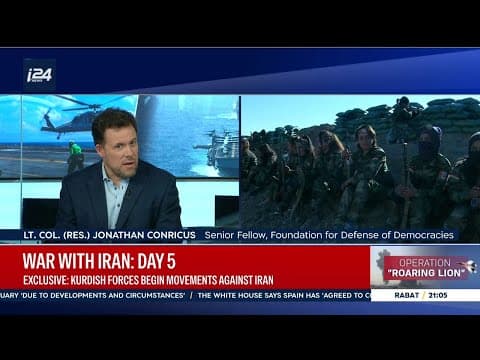
Kurdish forces based in Iraq have initiated a significant ground offensive into Iran's Mariwan mountainous border region, marking a major escalation in regional conflict. Thousands of fighters, primarily from the PJAK group, have crossed into Iran, supported by intense air strikes possibly coordinated with U.S. or Israeli forces. This move aims to pressure the Iranian regime and may inspire other ethnic groups within Iran. The situation presents complex challenges for Iran, Israel, and Kurdish-I
In a groundbreaking development, Kurdish forces based in Iraq have launched a ground offensive into Iranian territory. This significant military action began on Monday, involving thousands of Kurdish fighters crossing the border into the mountainous region of Mariwan, which lies along the Iran-Iraq border. This offensive marks a notable escalation in the ongoing tensions in the region.
The Kurdish fighters involved are primarily members of the PJAK (Party of Free Life of Kurdistan), an Iranian Kurdish group that has fled into Iraq and trained extensively for this moment. According to information from an official in the coalition of political forces of Iranian Kurdistan, these forces have taken offensive positions in the Mariwan mountainous area.
Simultaneously, there have been reports of intense air strikes targeting IRGC (Islamic Revolutionary Guard Corps) positions in Mariwan. These air strikes suggest possible coordination between the Kurdish forces and external actors, potentially American or Israeli forces.
Recent days have seen numerous reports of coordination between the Trump administration and Kurdish forces in Iraq, including direct conversations between President Trump and Kurdish leaders. Additionally, the Iranian Foreign Minister held a phone call with the president of Iraqi Kurdistan, warning against any military operations along the Iran-Iraq border.
Despite these warnings, the Kurdish ground offensive has commenced, signaling a shift in the regional dynamics.
Jonathan Conricus, an expert on the region, interprets this move as a strategic effort to apply pressure on the Iranian regime. The offensive is designed to signal that pressure will come from various ethnic groups within Iran, not just the Kurds. Iran is home to several large ethnic minorities, including the Baluchis in the southeast and the Azeris in the northeast, who may be inspired to take similar actions.
The Kurds are considered the most organized and militarily capable minority group, with a history of armed resistance. However, Conricus cautions that the Kurdish forces are not an expeditionary force; they lack the logistics, manpower, and technology to threaten major Iranian centers such as Tehran. Instead, their offensive aims to create pressure and possibly motivate other groups to rise against the regime.
A critical question remains regarding how the Iranian regime will respond. The regime could choose to engage militarily, allocating resources to counter the Kurdish offensive, or it might opt for a more measured approach, containing the situation to focus on other pressing issues.
So far, the Iranian regime has struggled to manage this operation effectively, making their forthcoming response a key factor in the conflict's trajectory.
Owen Alterman provides insight into the relationship between Israel and the Kurds, highlighting a longstanding affinity between the two. Israel also expresses solidarity with the Iranian people, particularly activists both inside Iran and in the diaspora.
This offensive presents a dilemma for Israel, as many Iranians fear the prospect of a failed state or ethnic fragmentation. The Iranian regime may attempt to exploit divisions between ethnic groups and activists to maintain control.
For Israel, the situation poses complex challenges in balancing support for Kurdish forces and Iranian activists, both of whom seek to see the current regime removed but may have differing visions for Iran's future.
The Kurdish ground offensive into Iranian territory represents a major development in Middle Eastern geopolitics. It underscores the increasing pressure on the Iranian regime from multiple fronts and highlights the intricate interplay between ethnic groups, regional powers, and international actors.
As the situation unfolds, the responses of Iran, the Kurdish forces, and external stakeholders like the United States and Israel will be crucial in shaping the region's future.
This exclusive report from i24 News, based on the work of senior producer Yulia Papagalova, provides a comprehensive overview of this evolving conflict.