This blog post recounts a firsthand journey through Ukraine, exploring the impact of the ongoing conflict on daily life, the resilience of its people, and the stark realities faced in war-torn regions, particularly in cities like Chenigov, Crivvy Rig, and Trostanets.
Three years ago, I left Kiev on the last refugee train, and now I return to witness how life is progressing in this nation during such a difficult time in its history. Join me as we investigate life in wartorn Ukraine, meeting locals, hearing their stories, and witnessing their tragedies firsthand.
Upon my return to Kiev, the atmosphere is a mix of normalcy and underlying tension. The city boasts familiar sights like McDonald's and Kentucky Fried Chicken, and aside from memorials, there are few visible signs of the ongoing conflict. However, as I prepare to head east, I know that the reality of war is just a journey away.
The metro station, once filled with refugees, is now bustling with commuters, a sign of returning normalcy in the capital. Outside, the mighty Dnipro River divides the country, marking our departure from the relative safety of western Ukraine into the war-torn east.
Our first stop is Chenigov, a city that faced attacks in the early days of the war but managed to hold on. As we travel, we pass bombed-out villages and towns, remnants of the Russian army's advance towards Kiev.
In Chenigov, I meet a local woman who recounts the horrors of the initial bombings. Despite the destruction, she chose to stay, citing her responsibilities to her family. The old Hotel Ukraine, where I once stayed, now lies in ruins, a stark reminder of the conflict's toll.
I visit a site where a Russian bomb killed 18 innocent civilians queuing for bread. This tragedy highlights the indiscriminate nature of war and the suffering of ordinary people. Regardless of differing opinions on the conflict, the Ukrainian people have undeniably been victims.
After Chenigov, we head to Crivvy Rig, where a recent attack has left the city in mourning. The atmosphere is somber as we arrive on a day dedicated to remembering the victims of the bombing.
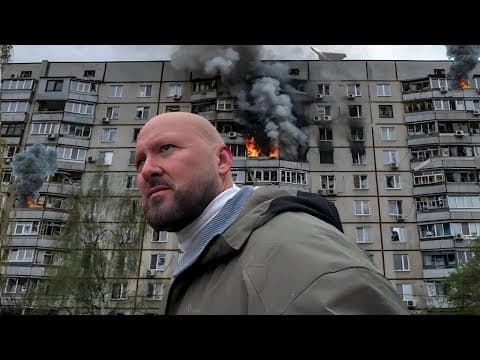
Crivvy Rig, known for its mining industry, has become a target due to its economic significance. The destruction is evident everywhere, from obliterated buildings to shattered windows. I visit a children's play park where nine children lost their lives to a missile strike, a heartbreaking reminder of the war's impact on the youngest and most innocent.
Next, we travel to Sumi, a city under heavy attack. The tension is palpable as we witness the aftermath of a recent bombing. The destruction is widespread, with shattered glass and damaged buildings marking the landscape.
In Sumi, the fear of further attacks looms large. People rush to safety as air raid sirens sound, illustrating the constant threat faced by residents. The city, once vibrant, now bears the scars of war.
Our journey continues to Trostanets, a town that suffered immensely during the conflict. The devastation is stark, with buildings reduced to rubble and signs of battle everywhere. The old Soviet war memorial stands in ruins, a testament to the town's tragic history.
Despite the destruction, the spirit of the people remains unbroken. I meet locals who share their experiences of fear and resilience, highlighting the strength of the Ukrainian people in the face of adversity. The statue of Tchaikovsky, a symbol of cultural heritage, remains intact, reminding us of the enduring spirit of those who have suffered.
This journey through Ukraine has been a poignant reminder of the resilience of its people. The Babushkas and families I encountered embody the strength and determination to endure despite the horrors of war. As the conflict continues, the stories of these individuals serve as a testament to the human spirit's ability to withstand even the darkest of times.