
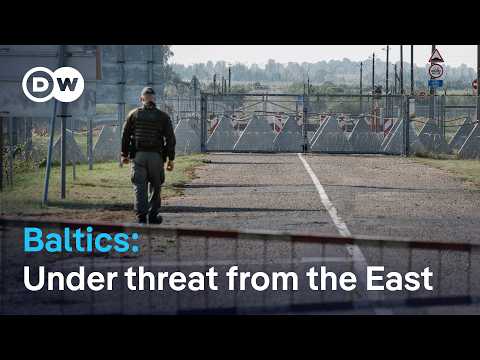
Residents of the Baltic states—Lithuania, Latvia, and Estonia—face increasing security threats due to Russia's aggressive posture. From fortified borders and NATO military presence to local defense initiatives and everyday resilience, Baltic citizens navigate a tense reality while striving for peace and normalcy in their lives.
The Baltic states—Lithuania, Latvia, and Estonia—are situated on the frontline of geopolitical tensions with Russia. For residents living near the borders, the calm they once knew has been replaced by unease and heightened security concerns. This article explores the lives of three Baltic residents—Birute Krakasuskiene from Lithuania, Andzejs Petkevics from Latvia, and Ave Ungro from Estonia—and how they cope with the growing threat from Russia.
The once peaceful neighborhoods have seen an increase in military presence and border reinforcements. Soldiers on six-month rotations are now a common sight, and the atmosphere is charged with uncertainty. The proximity to Russia and its ally Belarus, especially near the borders, means these countries are among the first potential targets if conflict with NATO were to escalate.
Andzejs Petkevics, a farmer from Indra in eastern Latvia, lives just five kilometers from the Belarus border. His farm spans an area equivalent to 400 soccer fields, where he grows vegetables and harvests potatoes. Despite the tranquility of his surroundings and the friendly community, the presence of concrete blocks near the border serves as a stark reminder of the aggressive neighbors.
The Latvian border has been reinforced extensively due to increased attempts by migrants to enter illegally, often facilitated by Belarus. Western intelligence agencies have warned that Moscow is using migrant flows from Afghanistan and African countries as a tool in its so-called "hybrid war" against the West. This tactic aims to destabilize Europe by overwhelming border controls.
Andzejs expresses his concern about the future, emphasizing the need for stronger borders to ensure safety while continuing his farming activities. Despite the challenges, he remains hopeful for peace and is planning to open a brewery to attract tourists, showing resilience in the face of adversity.
Birute Krakasuskiene, a trained teacher turned kebab shop owner in Rukla, Lithuania, serves a unique clientele—soldiers stationed at the largest Lithuanian army base across the street. Her kebabs, made with fresh ingredients and generous portions, have become popular among both Lithuanian and foreign NATO troops.
Lithuania shares borders with Belarus and the Russian exclave of Kaliningrad, making it a critical point of defense for NATO. The military base in Rukla hosts a multinational combat unit, led by the German Armed Forces since 2017, with plans to station an entire brigade of 5,000 troops by 2027.
Birute acknowledges the possibility of war but finds comfort in the presence of NATO soldiers. Her family has even prepared an escape plan should conflict arise. Despite fears, she wishes for peace and hopes her daughters can grow up in a world free from discrimination and conflict.
Ave Ungro, a speech therapist from Hiiumaa Island off the Estonian coast, participates in the Naiskodukaitse (Estonian Women's Home Guard), a voluntary defense organization. Hiiumaa holds strategic importance due to its location near Russian naval routes to Saint Petersburg and Kaliningrad.
The Naiskodukaitse, revived after Estonia regained independence in 1991, prepares civilians to support the regular armed forces in case of war. Ave has undergone military training and focuses on evacuation and preparation rather than combat.
Russian fighter jets frequently violate NATO airspace, and incidents of electronic jamming have been reported, believed to be coordinated from Kaliningrad, where Russia is suspected of storing nuclear-capable missiles. NATO continues to conduct exercises to prepare for potential conflict.
Despite these threats, Ave and her family remain committed to their home, valuing the island's beauty and peace.
The stories of Andzejs, Birute, and Ave illustrate the complex reality of living in the Baltics amid geopolitical tensions. While the threat from Russia is real and ever-present, these residents demonstrate resilience, adapting their lives and communities to maintain a sense of normalcy.
They balance fear with hope, preparing for the worst while wishing for peace. Their commitment to their homes and families underscores the human dimension of international conflict—where everyday life continues despite looming dangers.
The Baltic states stand as a frontline region in the ongoing tensions between Russia and NATO. For the people living there, the threat is not abstract but a daily reality that shapes their lives, work, and future plans. Strengthened borders, NATO military presence, and civilian defense initiatives provide some security, but the desire for peace remains paramount.
As the world watches, the Baltics embody both the challenges and the enduring spirit of communities determined to protect their way of life against aggression.
This comprehensive look at the Baltic experience highlights the importance of understanding the human stories behind geopolitical conflicts and the resilience of those living on the edge of uncertainty.



















