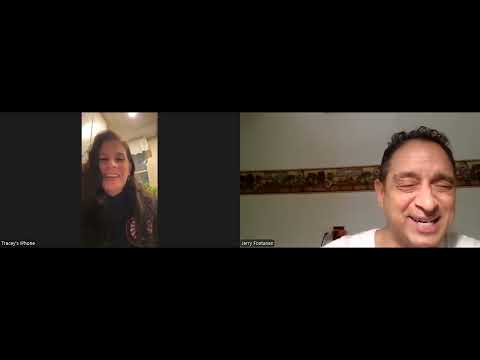
Master Tracy Seymour began her martial arts journey in 1980 at the age of 11, inspired by watching intense Kumite matches next to her family’s pizza shop. Training in Ensay Goju Ryu under Hanshi Raymond Fitzpatrick, she became part of a legendary lineage and community of fighters. Despite the male-dominated environment, her passion and dedication made her a memorable figure in martial arts history.
Grandmaster Jerry Fasy Fons introduces an exclusive interview with Master Tracy Seymour, a remarkable woman in the martial arts world. Unlike many women who have briefly participated in martial arts, Tracy Seymour stands out as a memorable and dedicated practitioner and competitor.
Tracy Seymour began her martial arts training in 1980 when she was just 11 years old. She describes herself as an angry kid with a lot of pent-up energy. Her journey started in an unusual way: her family often visited a pizza shop on North Avenue in Nursshell, which was located right next to a dojo owned by her future teacher, Hanshi Raymond Fitzpatrick.
While waiting for the pizza, young Tracy would run out to watch the men sparring in the dojo. The intensity and toughness of the Kumite matches ignited a fire within her. Despite the dojo being a "boys club" with very few women and no kids classes at the time, her excitement and desire to compete alongside men pushed her to pursue martial arts.
Tracy Seymour trained in Ensay Goju Ryu, a style she was raised in and deeply connected to. She was fortunate to train under Hanshi Raymond Fitzpatrick, a direct student of Master Frank Ruiz, Peter Urban, and Master Earl Monroe, who was considered the grandfather of their system.
Her training took place in the Mount Vernon Dojo, characterized by old-school practices such as hardwood floors and knuckle push-ups. The community was tightly knit, with regular training sessions and visits among the Mount Vernon Dojo, Nursshell Dojo, Sensei Espina's Brewster Dojo, and Hanshi Roan's Dojo.
Ensay Goju Ryu was known for producing some of the greatest fighters on the East Coast. Tracy mentions notable fighters such as Osato, O Watson, Ron Van Cleave, and Serrano, who were part of the Ensay lineage. The style traces its roots back to Okinawa through masters like Yamaguchi and Tomiyagi, then to mainland America.
Master Zulu also emerged from this school, highlighting the caliber of fighters and instructors within the Ensay community.
During the early 1980s, martial arts was predominantly male-dominated, and women often left the practice quickly. Tracy Seymour's determination to train and compete in such an environment was exceptional. She was a tiny girl eager to scrap with men, driven by her passion for Kumite.
Her story reflects the challenges and barriers women faced in martial arts but also serves as an inspiration for future generations.
Master Tracy Seymour's journey from an angry 11-year-old girl watching fights next door to becoming a respected martial artist is a testament to her dedication and passion. Her connection to the Ensay Goju Ryu lineage and the legendary fighters she trained with places her among the memorable figures in martial arts history.
Her story encourages martial artists, especially women, to pursue their passion despite obstacles and to honor the rich traditions and communities that shape their practice.