This blog post explores the pedal press technique, a crucial balance method in mountain biking that helps riders eliminate crashes. It covers five core elements of balance, including foot position, core strength, and movement anticipation, providing insights for improving riding skills and confidence.
Mountain biking can be an exhilarating yet challenging sport, especially for intermediate and advanced riders. One of the most critical skills that riders struggle with is balance, often without even realizing it. In this post, we will delve into a technique that can virtually eliminate crashes: the pedal press. This technique encompasses five core elements of balance that every rider should master.
Balance is defined as the ability to create movement while maintaining stillness. A prime example of this can be seen in professional riders like Loic Brunie, who navigate downhill trails with remarkable control. The key to achieving this level of balance lies in proper foot positioning and body mechanics.
Proper foot position is the foundation of balance on a mountain bike. Riders often make the mistake of leaning on the handlebars or pulling on them, which disrupts the balance mechanism. Instead, riders should aim to stand inside the bike, avoiding any forward, backward, or side-to-side lean. This allows the legs to take on the primary role in maintaining balance, rather than relying on weaker upper body muscles.
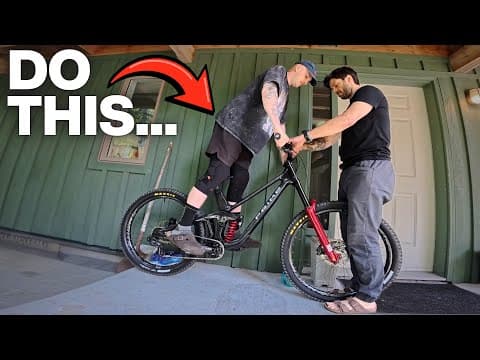
To achieve this, riders should practice the pedal press technique, which involves pushing the pedals away from each other while slightly dropping the front heel. This action creates a stable platform to counteract the forces that can cause a rider to fall forward, especially during braking or landing from a drop.
Once the foot position is established, riders can expand their understanding of balance through five key elements:
Core strength is essential for managing the forces encountered while riding downhill. A strong core allows riders to maintain stability and control, whether navigating rocky terrain or executing jumps. Riders should focus on engaging their core to prevent falling forward and to absorb shocks effectively.
The hinge movement is crucial for maintaining a low center of gravity while riding. Many riders mistakenly try to get low by simply bending at the hips without engaging their core, leading to instability. A proper hinge, combined with core strength, provides the necessary stability to navigate challenging trails.
Understanding the difference between squatting and triple extension is vital for balance. Squatting involves compressing the body to absorb forces, while triple extension is about extending the body to jump or gain height. Riders should utilize squatting to maintain a low position when approaching obstacles, allowing for better control and anticipation of the next feature on the trail.
Rotation and anti-rotation skills are about using the core to manage forces that push the body in different directions. This skill is particularly important when navigating turns or uneven terrain. By maintaining a strong connection with the bike, riders can stay in control even when the bike moves unpredictably beneath them.
Many riders incorrectly focus on pushing and pulling with their arms. Instead, effective movement should originate from the feet. For instance, when preparing to drop, a slight push with the feet can help control the bike's trajectory. This subtle movement is crucial for maintaining balance and avoiding unnecessary motion that can lead to crashes.
Mastering the pedal press technique and understanding the five core elements of balance can significantly enhance a rider's performance and confidence on the trails. By focusing on foot position, core strength, and the nuances of movement, riders can navigate challenging terrain with greater ease and style.
As you practice these techniques, remember that balance is not just about staying upright; it's about anticipating movements and responding effectively to the dynamic environment of mountain biking.
What are your biggest takeaways from this discussion? Share your thoughts in the comments below!