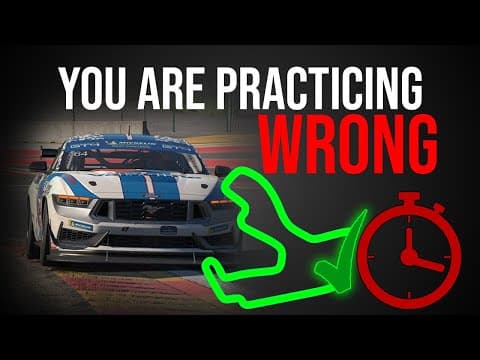
Sim racing can be an exhilarating experience, but many drivers struggle with inconsistent lap times and frustration during practice. This blog post will break down a structured approach to sim racing practice that can help you improve your skills and performance on the track.
The Problem with Hotlapping
Many sim racers load up a new track and immediately start hotlapping, hoping that with enough laps, they will magically get faster. However, this often leads to inconsistent lap times and growing frustration. The root of the problem lies in an unstructured approach to practice.
Imagine trying to carry a heavy box filled with ten items all at once; it’s overwhelming. Instead, you would take one item at a time. Similarly, breaking your practice into smaller, focused steps will save time, build consistency, and genuinely help you get faster.
The Complete Practice System
This practice system will guide you from learning a new track to being race-ready. A downloadable checklist for this system is available in the comments section of the original video.
Step 1: Track Familiarization
The first step is to familiarize yourself with the track. You need to know it like the back of your hand. At this stage, do not push for full speed; instead, focus on steady laps at about 60 to 70% pace. Here’s how to do it:
- Set Up Your Session: If your sim allows, set the same conditions you will race in, such as weather and track state. Create an offline session to avoid distractions from other players.
- Car Setup: Load the car with full fuel and a safe setup.
- Label the Corners: As you drive, mentally label the corners in a way that makes sense to you (e.g., tight left, long sweeper).
- Fixed Reference Points: Pay attention to fixed reference points like brake boards and curb markings, avoiding shadows as they can mislead you.
- Memory Lap: After a few laps, try a memory lap where you picture the next corner before reaching it and call it out loud. This trains your brain to focus on your position on the track.
Step 2: Mastering Braking Points
Braking is where most drivers lose significant lap time, making this step critical. Approach it in two stages:
- Finding Braking Markers: Run full laps at 70 to 80% pace, focusing on finding safe, repeatable braking markers. Complete around ten laps to warm up the tires.
- Gradual Adjustment: If your sim has active reset points, set the reset just before the braking zone and gradually move your braking point 5 to 10 meters later with each attempt. If not, run full laps and adjust your braking markers similarly.
Key Technique: Practice trail braking by applying the brakes firmly and easing off smoothly as you approach the apex. This technique keeps the front tires loaded, providing more grip and helping the car rotate through the corner.
Step 3: Practicing Sequences
Lap time is often gained in sequences of corners rather than individual corners. Here’s how to practice:
- Set a Reset Point: Before a sequence of corners, set a reset point and drive through it at a controlled pace, focusing on maintaining rhythm.
- Look Ahead: Train yourself to look further ahead through the sequence, understanding that the entry of one corner affects the exit of the next.
- Adjust Your Approach: Sometimes, sacrificing speed in the first corner can lead to a faster exit in the last corner, especially if it leads onto a long straight.
Step 4: Racing Line Consistency
To build consistency, focus on hitting the same turn-in point every lap:
- Precision: Aim to hit the apex exactly, allowing the car to run to the edge of the track on exit.
- Repeatability: If you can drive the same line five laps in a row within the width of a single tire, you have established a strong foundation.
- Gradual Speed Increase: Once the line feels automatic, start adding speed gradually.
Step 5: Sector Practice
Breaking the track into smaller chunks can make learning less overwhelming:
- Divide the Track: Split the track into three or four sectors and focus on one at a time until you can drive it cleanly.
- Linking Sectors: Once each sector feels solid, start linking them together until you can run a full lap.
- Five Laps Without Resetting: Drive five laps without resetting, focusing on completing the laps rather than chasing perfection.
Step 6: Understanding Grip Changes
After your initial laps, focus on how grip changes as the tires warm up:
- Observe Tire Behavior: Pay attention to how the car feels as the tires warm up and how grip changes over distance.
- Lap Time Consistency: Aim to keep lap times consistent across your stint, ideally within a second of each other.
Step 7: Review and Adjust
After your practice stint, review your performance:
- Watch the Replay: Analyze your laps for missed apexes or wide exits. Write down your observations.
- Focus on One Issue: Pick one issue to work on in your next session, and consider analyzing telemetry for deeper insights.
- Small Adjustments: Make small, deliberate adjustments after each stint to compound improvements over time.
Step 8: Race Simulation
Finally, bring everything together under pressure with a race simulation:
- Short Race: Look for a short race of 10 to 15 laps, going through the full start procedure and managing the chaos of lap one.
- Adapt to Traffic: Remember that traffic will affect your braking points, so stay predictable and trust your consistency.
- Post-Race Review: After the simulation, review the replay, noting mistakes to feed back into your next practice session.
Conclusion
By following this structured approach to sim racing practice, you can improve your skills and performance on the track. Remember, practice should be about progress, not perfection. With dedication and the right techniques, you can transform your sim racing experience and achieve better results. Thank you for reading, and happy racing!