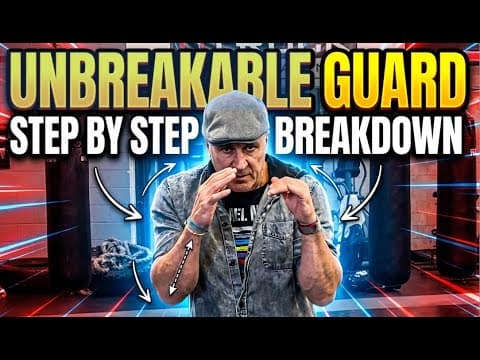
In the world of fighting, defense is as crucial as offense. The foundation of a strong defense lies in mastering the stance and guard. This comprehensive guide explores the three-point stance and defense, a fundamental training that every fighter must understand and perfect.
The three-point stance is a specific fighting position that optimizes defense and readiness. It involves precise foot placement and hand positioning to maintain balance and protect vital areas.
- The front foot is turned inward.
- The back foot is also turned inward.
- Both feet align on a center line, creating a bladed stance.
This positioning ensures stability and readiness to move or defend.
Hand and Elbow Placement
- Both elbows are kept close to the rib cage.
- The rear elbow is tucked to the body.
- The rear hand is raised to protect the chin.
- The front elbow is also close to the body.
- The lead hand is extended slightly forward, acting as the primary weapon closest to the target.
This setup forms the three points of the guard, creating a tight defensive posture.
The Importance of Maintaining Position
The fight game is essentially about creating and exploiting openings. Most fighters lose because they abandon their tight defensive position due to overreacting to feints or attacks.
- Minimal Movement: The less you move from your base position, the quicker you can return to defense.
- Avoid Overreaching: Extending hands or elbows too far creates gaps and exposes vital areas.
- Stay Relaxed: Drilling and repetition help fighters stay calm and not fall for every fake.
Defensive Techniques Against Common Attacks
Defending the Jab
- Use a parry to redirect the jab rather than absorbing it.
- The parry movement should be minimal, no more than four inches, and should not cross the center line.
- The hand movement is a quick pop to deflect the jab outside.
Defending the Right Hand (Cross)
- Use a catch technique by flexing the wrist outward and bracing the hand against the top of the head.
- Absorb the shot by turning slightly into it.
- This creates a four-point contact defense: wrist, elbow, and two points on the guard.
Defending Body Shots
- When a jab or punch targets the body, do not drop your hands.
- Instead, collapse the knees slightly and use the elbow to block.
- The elbow is a stronger defense than the fist and effectively protects the body.
Defending Hooks and Circular Shots
- Maintain the three-point guard without dropping hands.
- Tuck the chin and raise the hand slightly if the hook targets the head.
- Collapse the knee to protect the body without abandoning the guard.
Defending Kicks
- Bring the elbows in to cover the body.
- Use the same principles of minimal movement and tight guard to block or deflect kicks.
The Triangle: A Vulnerable Zone
Joe Lewis, a legendary fighter, described a vulnerable area called the "triangle" located just above the navel and extending two inches to either side.
- This area is difficult to guard without collapsing the body.
- Proper elbow placement and body rotation are essential to protect this zone.
- Squaring the shoulders up exposes this triangle, making it easier for opponents to land liver shots.
- Movement is used by attackers to create openings.
- Defenders should maintain their center line and use pivots to minimize movement.
- Small, controlled footwork adjustments help maintain the guard and prepare for counters.
The Importance of Drilling and Practice
- Perfect practice makes perfect; repetition ingrains the correct movements.
- Shadow boxing with focus on parrying, catching, and blocking helps develop muscle memory.
- Drills should emphasize minimal movement, tight guard, and quick counters.
Sample Drill
- From the guard position, parry a jab in the air.
- Step in with a one-two punch combination.
- Catch two imaginary punches.
- Repeat: parry, one-two, catch, catch.
This drill helps synchronize offense and defense while maintaining the guard.
Reading the Opponent
- Body positioning of the attacker often reveals the type of attack.
- Leaning or loading weight to one side indicates potential punches or kicks from that side.
- Defenders can adjust footwork and guard accordingly without abandoning position.
Summary of Defensive Coverage
The three-point guard effectively covers:
- Jab to the head and body.
- Right hand (cross) and right hook.
- Lead hook and liver shots.
- Body shots and kicks.
By maintaining tight elbows and hands, minimal movement, and proper foot positioning, fighters can defend against most common attacks.
Looking Ahead: Power Punching
The next phase of training focuses on power punching, teaching how to generate more force with less effort by applying physics principles.
- Power punching is a skill that can be learned and improved.
- Proper technique enhances punching power immediately.
Conclusion
Mastering the three-point stance and guard is essential for any fighter aiming to improve their defense. By understanding precise positioning, minimal movement, and effective blocking techniques, fighters can protect themselves from a wide range of attacks. Consistent drilling and practice are key to ingraining these skills, making the guard unbreakable and setting the foundation for advanced offensive techniques.
Stay tuned for the next installment on power punching to complete your fighter's blueprint.
This guide encapsulates the core teachings from the Fighters Blueprint series on the unbreakable guard, providing a detailed and practical approach to defensive fighting techniques.