
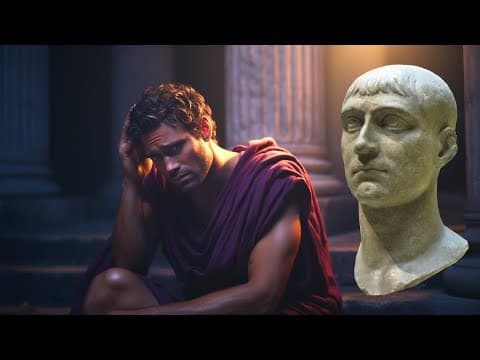
Maxentius, often vilified by history due to the propaganda of Constantine, may have been a significant and benevolent ruler who chose to restore Rome and its traditions. His legacy, overshadowed by his defeat, reveals a complex character who supported medicine and religious tolerance, challenging the narrative of tyranny.
History is often shaped by those who emerge victorious, and few examples illustrate this better than the case of Emperor Maxentius. Most of what we know about him comes from the propaganda of Constantine, who sought to erase Maxentius's memory and portray him as a tyrant. However, recent research suggests that Maxentius may have been a good emperor, perhaps even the last true Roman emperor, dedicated to the city of Rome and its traditions.
Maxentius was born in 283 A.D. to Maximian, one of the four emperors during Diocletian's Tetrarchy. After Diocletian and Maximian abdicated in 305, both Maxentius and Constantine were overlooked for the roles of junior emperors. In 306, Maxentius was proclaimed emperor in Rome, where he ruled for six years. His choice to govern from Rome, rather than from other cities like Mediolanum or Nicomedia, was a conscious decision to respect the Senate and the people of Rome, demonstrating a commitment to a balance of power that was increasingly neglected by other rulers.
During his reign, Maxentius achieved several military victories, defeating two emperors and quelling a rebellion in Africa. However, his most notable contributions were in architecture and urban development. He embarked on an ambitious building program, constructing significant structures in Rome, including:
Maxentius also undertook the reconstruction of the Temple of Venus and Roma, which had been destroyed by fire. His efforts to enhance the Aurelian walls of Rome made the city more defensible against attacks, showcasing his dedication to the city's security and grandeur.
Despite his accomplishments, Maxentius has often been misrepresented in historical accounts. For instance, a 2006 BBC docudrama depicted him as a foolish tyrant, a portrayal that aligns with the constantinian propaganda that has persisted for centuries. Most surviving sources about Maxentius come from later historians who were influenced by Constantine's narrative, leading to a skewed understanding of his character.
Recent studies, particularly by researchers like Marco Zetsini, reveal a more nuanced view of Maxentius. He was born to a Syrian mother and likely grew up in a culturally rich environment, which may have influenced his philosophical and religious perspectives. This background could explain his support for traditional Roman cults and possibly his interest in medicine, particularly after the tragic death of his son.
Maxentius's reign may have seen the establishment of a publicly funded body of state doctors, a precursor to later medical advancements in Rome. His choice to rule from Rome was not only a political statement but also a symbolic act of reverence for the city’s pagan traditions, which he sought to protect against the rising tide of Christianity.
The fate of Maxentius was ultimately sealed at the Battle of the Milvian Bridge in 312 A.D., where he faced Constantine. Contrary to the narrative that portrays Maxentius as a tyrant, evidence suggests that he had significant support from his troops, who fought valiantly. However, he was likely outnumbered and faced a well-trained army led by Constantine. The battle ended in defeat for Maxentius, leading to his vilification in history.
The legacy of Maxentius is one of tragedy and misunderstanding. His achievements as a builder and his potential as a ruler have been overshadowed by the negative portrayals propagated by his enemies. As historians continue to uncover the truth about Maxentius, it becomes clear that he was a complex figure who may have been more aligned with the ideals of tolerance and civic duty than previously thought.
In conclusion, Maxentius deserves a reevaluation of his legacy. He was not merely a tyrant but a ruler who sought to restore Rome to its former glory, a benefactor of medicine, and a supporter of religious tolerance. Understanding his true character allows us to appreciate the rich tapestry of Roman history and the complexities of its leaders.



















