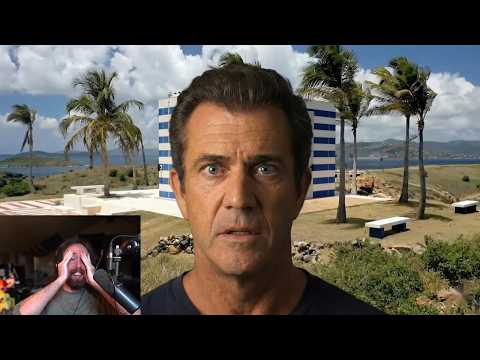
Mel Gibson, once a Hollywood megastar, warned about the industry's dark underbelly, including elitism, misogyny, and systemic abuse. Despite massive success, his outspoken nature and controversial projects like The Passion of the Christ led to his ostracization. His career and personal life unraveled amid scandals, yet recent revelations suggest he was right about many hidden truths in Hollywood.
Mel Gibson, a name synonymous with blockbuster hits and iconic roles, has long been a figure both celebrated and controversial in Hollywood. Beyond his cinematic achievements, Gibson has been vocal about the darker aspects of the entertainment industry—warnings that many dismissed at the time but now resonate with startling clarity.
Gibson's rise to fame was unconventional. Born in New York and moving to Australia at age 12, he had no Hollywood connections or industry parents to pave his way. His breakout role in Mad Max catapulted him to global stardom, followed by the Lethal Weapon series and the Oscar-winning Braveheart in 1996. Despite his success, Gibson saw Hollywood differently than most insiders.
In a 1998 Playboy interview, he controversially remarked on a producer's philosophy about women in film: "Women on film, either naked or dead. Both is better." This blunt observation hinted at the industry's troubling attitudes toward women.
Gibson also spoke about Hollywood's social contract, where betrayal and backstabbing were unspoken norms. He described the resilience needed to survive in the town, likening it to a "cockroach resilience."
In 2002, Gibson embarked on a deeply personal and controversial project: The Passion of the Christ. Filmed in dead languages like Aramaic and Latin, and initially rejected by every major studio, the film faced fierce criticism, particularly from the Anti-Defamation League, which accused it of promoting anti-Semitism.
Despite the backlash, Gibson self-financed the $30-$45 million production. Upon release in 2004, the film sparked massive protests but also drew huge audiences, grossing $612 million worldwide and becoming one of the most profitable films in history. Gibson personally earned between $400 and $475 million from the film.
This success, however, intensified Hollywood's animosity toward him, as he had bypassed the traditional studio system and challenged prevailing narratives.
Following The Passion of the Christ, Gibson's personal life and career began to unravel. His struggles with alcoholism worsened, and his marriage deteriorated. In 2006, he was arrested for DUI in Malibu and made anti-Semitic and misogynistic remarks during the arrest, which were widely publicized.
Further scandals followed, including leaked recordings in 2010 where Gibson made racist and threatening comments toward his then-partner. These incidents led to a restraining order and effectively blacklisted him from Hollywood for nearly a decade.
During this period, Gibson appeared in only one film, Edge of Darkness (2010), which eerily mirrored his own sense of being a truth-seeker against powerful conspiracies.
Gibson's downfall contrasted sharply with the industry's tolerance of other figures accused of far worse offenses. The documentary and public revelations about Harvey Weinstein's decades-long sexual abuse scandal, as well as allegations against other prominent filmmakers like Brian Singer and Victor Salva, exposed systemic abuse and hypocrisy within Hollywood.
While Gibson was ostracized for his public outbursts and controversial film, others with more severe allegations continued to work and receive accolades. This disparity highlighted Hollywood's selective morality, often influenced by politics and financial interests rather than ethical consistency.
By 2016, Gibson began a slow comeback with Hacksaw Ridge, an independently financed World War II film that earned him an Oscar nomination. His appearance on The Late Show with Stephen Colbert marked a moment of public rehabilitation, where he described his past as a "rough patch."
Though his roles since then have been smaller, Gibson has gradually regained a foothold in the industry.
In 2023, he served as executive producer for The Sound of Freedom, a film about child trafficking. The movie faced accusations of being blacklisted by Hollywood, with some alleging that major cinema chains canceled or sabotaged its screenings. The film's themes align with Gibson's long-held concerns about elite corruption and trafficking scandals, which have gained more public attention following the Jeffrey Epstein revelations.
Gibson remains a polarizing figure. Some view him as a martyr and truth-teller who exposed Hollywood's dark secrets, while others see him as a cautionary tale of personal demons and public downfall.
His outspoken nature, controversial statements, and personal struggles have made him a target of both criticism and sympathy. Notably, friends and colleagues like Robert Downey Jr., Whoopi Goldberg, and Jodie Foster have publicly defended him, emphasizing his complexity beyond the headlines.
Gibson once described Hollywood in one word: "survival." The industry demands navigating a complex web of relationships, power dynamics, and moral compromises. His experiences reveal the structural and institutional nature of Hollywood's darker side, where small, cowardly decisions by many enable systemic abuse.
The revelations about Hollywood's tolerance of abuse and misconduct, contrasted with Gibson's ostracization, underscore the industry's selective enforcement of morality.
Mel Gibson's journey through Hollywood is a story of extraordinary success, outspoken warnings, personal downfall, and gradual redemption. His early insights into the industry's elitism, misogyny, and systemic problems were largely ignored or ridiculed. Yet, as scandals and exposés have unfolded, many now recognize the truth in his warnings.
While his personal failings cannot be overlooked, Gibson's story invites a broader reflection on Hollywood's culture, the cost of speaking out, and the complexities of redemption in the public eye.
His legacy challenges us to look beyond the surface and confront uncomfortable truths about power, survival, and morality in one of the world's most influential industries.
This comprehensive look at Mel Gibson's career and controversies reveals a man who saw and spoke truths that many preferred to ignore, paying a heavy price for his candor and convictions.