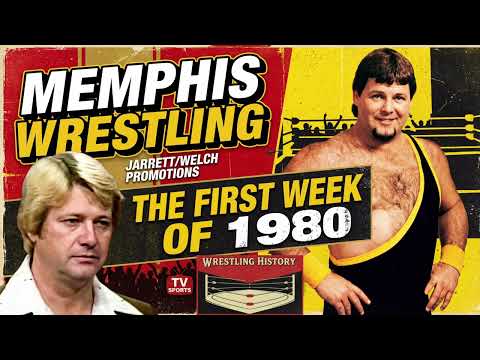
The final Memphis Wrestling TV broadcast of 1979 featured intense matches and storylines, including a Texas tornado death tag match and heated rivalries. The momentum carried into early 1980 with live events across the CWA territory, showcasing masterful booking, rising stars, and compelling narratives that engaged fans in multiple cities.
The final Memphis Wrestling television broadcast of the decade aired on December 29th, 1979, marking a significant moment in the Continental Wrestling Association (CWA) history. This broadcast set the stage for an intense and captivating start to 1980, with storylines and matches that would resonate across the territory.
Lance Russell and Dave Brown opened the show, but before they could reach the ring, Sunny King stormed the desk. His demeanor was intense and half-coherent, yet his message was unmistakable: he demanded a Texas tornado death tag match. The match was set as Sunny King and Buddy Wayne versus Big Red and Ricky Morton, with Jerry Calhoun as referee and Tojo Yamamoto, nursing a bad knee, sitting ringside.
Sunny King insisted on Memphis-specific rules:
The match opened with Sunny and Buddy dominating Ricky Morton for four minutes with crisp, believable offense. Morton sold the offense as if fighting for his life, while Tojo watched from ringside, ready to intervene.
However, when Big Red tagged in, the match's quality declined. His punches were awkward, timing off, and the overall performance rough. Tojo slipped in and hit Big Red with a shoe, followed by Sunny delivering two headbutts. Sunny and Buddy took the first fall.
The second fall was even sloppier, with Big Red's selling off and Sunny fatigued. Sunny finished Morton with his spear and headbutt.
The third fall revived the match's intensity. Sunny reminded the referee that anything goes. Morton and Sunny worked together with real intensity. Morton applied a sleeper hold on Buddy Wayne, who went out cold and couldn't recover after the rest period. Morton and Big Red took the third fall and won the match.
Sunny King then sat at the desk and delivered a strong interview, regaining the heat and setting the tone for future confrontations.
Next, the Assassins faced Paul Ellering and Pat Hutchinson. Randy Collie and Kurt Von Hess, the Assassins, were absolute pros, making Ellering look like a future star. When Hutchinson tagged in, the Assassins targeted his arm, working it like the Anderson brothers.
Guy Coffee stopped the match to prevent Hutchinson's arm from being broken. Billy Robinson followed with an interview, explaining that the Assassins injured his arm and promising revenge in February or March.
The show aired arena footage of Jerry Lawler versus Ricky Morton in a no disqualification match, the finals of the Louisville Battle Royal. Lawler controlled the early minutes with tight punches and perfect timing, while Morton sold everything as if hit by a truck.
The match turned when Lawler attempted a piledriver. Morton countered midair, landing on top and firing punches, igniting the crowd. Morton hit a theft press, and chaos ensued ringside with Jimmy Hart and Tommy Marlin involved.
Lawler pulled out a chain and swung at Morton, who blocked and retaliated with Lawler's own chain. Morton climbed the second rope and leaped, but Lawler rolled away. Lawler called for Jimmy Hart, who leaped from the top rope, but Morton dodged, causing Hart to hit Lawler's face. Morton pinned Lawler clean in the ring.
Lawler snapped, knocked Morton out cold with a second chain, and attacked referee Tommy Marlin. Jimmy Hart joined in until Steve Regal made the save. Morton was battered but made it through.
This television episode led directly into the New Year's card at the Midsouth Coliseum on January 1st, which drew an attendance of 6,093. The results were:
Notably, the rest of the circuit did not see this show immediately, as Memphis TV was always one week ahead.
Evansville, Lexington, and Tupelo received the December 22nd broadcast, which featured:
Lawler criticized Ken Lucas, claiming he was not a world-class wrestler and did not deserve a title shot. He recounted a previous match where Lucas won but was beaten badly. Lawler refused to put the World Heavyweight Championship on the line against Lucas, declaring any future match non-title.
Lucas challenged Lawler to put the belt on the line, proposing a contract deal where if Lucas won, he would become champion and Lawler would sign a new contract. If Lawler won, Lucas would sign Lawler's 1980 contract. Lawler declined, stating Lucas belonged in the preliminary matches.
The segment ended with a spirited back-and-forth, highlighting the tension and storyline development.
The show aired footage of Big Red and Ricky Morton vs. Sunny King and Tojo Yamamoto. Morton sold beautifully, fighting desperately to tag Big Red, who came in strong but missed the Holy Ghost splash. Sunny distracted the referee while Tojo reached for a bag of salt. Big Red threw salt in Tojo's face and hit the Holy Ghost splash for the win.
The show closed with a holiday message from Bill Dundee.
Following the broadcasts, live events took place in various cities:
From December 22nd through January 4th, Memphis Wrestling delivered a masterclass in territory booking. The heels gained heat, babyfaces fought from underneath, and rising stars were made. Every town received a different chapter of the same story, and every match served a purpose, engaging fans across the CWA territory and setting the stage for an exciting 1980.
This period exemplified the art of wrestling storytelling and promotion, with compelling characters, intense rivalries, and dynamic matches that kept audiences invested week after week.