Following the US-backed military raid that killed El Mencho, leader of the Halisco New Generation Cartel, Mexico faces unprecedented cartel violence across 28 states. The operation marks a turning point in reclaiming national sovereignty from transnational criminal empires, with US and Mexican cooperation intensifying efforts against cartels amid political tensions and power vacuums.
Mexico is currently experiencing a severe escalation in violence and chaos following a daring US-backed military raid that resulted in the death of Nemesio Cervantes, known as El Mencho, the most wanted drug lord on Earth and leader of the Halisco New Generation Cartel. This event has triggered a wave of terror across 28 Mexican states, with the cartel unleashing attacks that include killing 25 National Guard soldiers in a single day, bombing military installations, storming airports, and offering bounties for soldiers killed.
On the morning of February 22nd, Mexican special forces launched a raid on the mountain town of Palpa in the western state of Helisco. The operation targeted El Mencho, the supreme leader of the Halisco New Generation Cartel, which is considered the most powerful and ruthless criminal organization globally.
The intelligence for this operation was provided by the CIA and a new Pentagon-led joint inter-agency task force focused on counter-cartel activities. This task force, consisting of roughly 300 military and civilian personnel, operates near the Mexican border to map cartel networks on both sides.
El Mencho was located by tracking the movements of his girlfriend, which led intelligence officers to his mountain hideout. When Mexican forces moved in at dawn, cartel fighters responded with high-caliber weapons and rocket-propelled grenades, even hitting a military helicopter and killing nine soldiers instantly. Despite the fierce resistance, Mexican forces established a perimeter, tracked El Mencho into the woods, and found him critically wounded along with two bodyguards. All three were airlifted out, but El Mencho died in transit.
At the compound, authorities discovered an arsenal including rifles, grenade launchers, rocket launchers, mortar shells, and armored vehicles, indicating the cartel operated like a military base rather than a typical drug operation.
In retaliation for El Mencho's killing, the Halisco cartel, estimated to have nearly 20,000 fighters, waged total war on Mexico. Over 300 confirmed blockades were reported across 28 states, involving hijacked and burned vehicles, attacked gas stations and retail stores, and tire spikes deployed on highways, including in popular tourist destinations like Puerto Vallarta.
Cartel operatives also targeted cruise ship ports and hotels, with eyewitnesses reporting attacks on taxi drivers, including one who was murdered and his vehicle set on fire. In Guadalajara, Mexico's second-largest city and a host city for the 2026 FIFA World Cup, gunmen stormed the international airport. Military installations were bombed, schools shut down, and the US State Department issued shelter-in-place orders for Americans. Guatemala reinforced security on its border with Mexico.
The violence resulted in dozens of deaths, including upwards of 25 National Guard soldiers.
The military operation also eliminated El Mencho's right-hand man, known as El Tuli, the top financial and logistics operator of the cartel. El Tuli was killed after attempting to flee and firing on military personnel. Authorities found weapons, cartridges, nearly a million dollars in cash, and over 7 million pesos at the scene.
This decapitation strike targeted the cartel's highly centralized command structure. With both El Mencho and El Tuli gone, analysts warn of a massive power vacuum that could fracture the cartel into warring factions, potentially increasing violence as rival groups vie for control.
The crisis has sparked international attention and controversy. Elon Musk weighed in, criticizing the Mexican government's handling of the cartel situation and suggesting cartel influence within the government. His comments led to threats of legal action from Mexican officials.
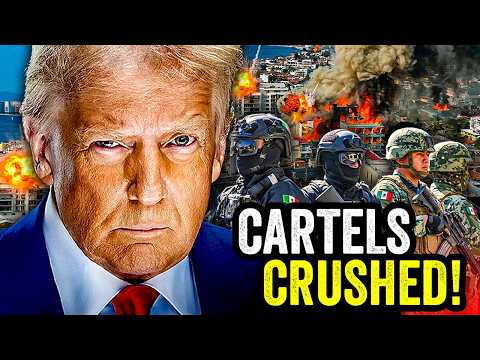
Meanwhile, former US President Donald Trump escalated the situation by urging Mexico to intensify its efforts against cartels and drugs. Trump's stance signals a clear message: Mexico must handle the cartels effectively, or the US will intervene militarily.
Mexican President Shinebomb responded with an aggressive anti-cartel campaign, deploying 10,000 National Guard troops, extraditing 92 high-level cartel leaders to the US, and conducting operations that led to the elimination of El Mencho. Despite these efforts, Trump and Musk emphasize that this crackdown is only the beginning and demand that cartel influence within the Mexican government be eradicated.
What is unfolding in Mexico is more than a drug war; it is a civilizational confrontation between sovereign nations and transnational criminal empires. The Halisco cartel operated as a de facto state within a state, with a presence in all 50 US states, Canada, and a narco army equipped with rocket launchers, armored vehicles, explosive drones, and landmines.
The recent military operations and cooperation between the US and Mexico represent a reassertion of national sovereignty against these criminal empires that have operated with impunity for decades.
While the violence and chaos following the decapitation of cartel leadership are expected, this moment marks a turning point. Rival factions and other cartels, such as the Sinaloa cartel, may attempt to exploit the power vacuum, but the coordinated efforts of the US and Mexico signal a new era of determination to reclaim control.
The elimination of El Mencho and his top lieutenant through unprecedented US-Mexico cooperation is a historic moment in the fight against drug cartels. It symbolizes the beginning of a broader campaign to restore national sovereignty and dismantle criminal empires that have deeply infiltrated governments and societies.
This operation and its aftermath will be remembered as the day when two nations decided they had enough and took decisive action. The road ahead will be challenging and violent, but the commitment to reclaiming control and security in the Western Hemisphere is clear.
The new civilizationalist world is rising, and with it, the hope for a safer and more sovereign future for Mexico, the United States, and the entire region.
If you want to stay informed about these developments and join a community of engaged patriots, consider joining discussions and exclusive content platforms dedicated to these critical issues.