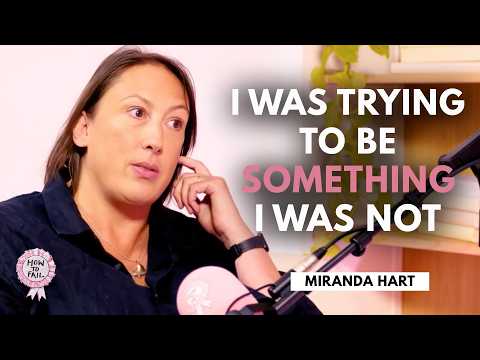
Miranda Hart opens up about her struggles with introversion, chronic Lyme disease, body image, and the challenges of being misunderstood by the medical community. She reflects on her beloved sitcom character Miranda, her failures as a farmer's wife and athlete, and the importance of self-compassion. Hart also shares the story of meeting her husband and embracing her true self after years of hardship.
Miranda Hart, the beloved British comedian and actress known for her semi-autobiographical sitcom Miranda, recently shared an intimate conversation about her personal journey through introversion, chronic illness, body image struggles, and love. In a candid discussion, she revealed how her experiences off-screen have shaped her understanding of herself and her approach to life.
The character Miranda, who starred in the BBC sitcom from 2009 to 2015, resonated with millions for her awkwardness and social ineptitude. Hart explained that Miranda was inspired by her 20-something self — a time when she was unsure of who she was and trying to fit in. The character's journey was about learning to accept and be herself, culminating in Miranda marrying her best friend in the series finale.
Hart reflected that while her on-screen character seemed to have found self-acceptance earlier, her own path to self-love took longer, especially through the challenges of illness and reflection.
Hart discussed how writing her book required her to dismantle the traditional British "keep calm and carry on" attitude. She embraced self-compassion and self-love, concepts often associated with American therapeutic culture, to find healing. This shift was crucial in managing her chronic health issues and emotional well-being.
A significant part of Hart's story involves her diagnosis with Lyme disease, a tick-borne infection that affects the immune and nervous systems, leading to chronic fatigue and neurological symptoms. She described the difficulty in obtaining a diagnosis and the frustration of being dismissed by medical professionals, a phenomenon known as medical gaslighting.
Hart recounted an encounter with a doctor who labeled her condition as "TAT" (tired all the time) and dismissed her symptoms, leaving her feeling invalidated and in tears. She highlighted the broader issue of women with chronic illnesses often being misunderstood or disbelieved by the medical establishment.
Hart humorously shared her "failures" which include:
As a child, Hart dreamed of being a farmer's wife, imagining a peaceful life collecting eggs and caring for animals. However, she acknowledged that she was never cut out for the hard work of farming and that her introverted nature made urban life challenging. She emphasized the importance of stillness and solitude for her well-being, something she lacked in her younger years.
In her youth, Hart was a talented athlete, excelling in sprinting and lacrosse. However, a traumatic experience during a scouting opportunity, where she was told she needed to "strap down her breasts," scared her away from pursuing athletics professionally. Later, illness and weight gain further distanced her from her athletic identity, which she mourns but has learned to accept.
Hart revealed her struggles with singing, including being rejected from middle school choir and experiencing a physical constriction in her voice box due to emotional repression. Despite these challenges, she found ways to express her musicality through character roles and singing lessons.
Hart discussed discovering her introverted nature later in life and how trying to be an extrovert in a noisy, demanding world contributed to her fatigue and health issues. She now values intentional socializing, small groups, and the need for regular stillness to recharge.
She also stressed the power of language and self-talk, sharing how she reframes her fatigue by calling it "gazelle" to reduce its negative impact on her mindset.
During her illness, Hart found solace in her dog Peggy, who provided unconditional love and presence without judgment. After Peggy's passing during the pandemic, she adopted another dog, Patty, continuing the healing bond with animals.
Hart shared the story of meeting her husband at age 51, a moment she had envisioned since her 20s. Their first date involved a humorous and authentic moment over a pizza mishap, where Hart chose to be unapologetically herself. This authenticity laid the foundation for their relationship.
She reflected on how this relationship and her journey toward self-love have been her greatest achievements.
Hart candidly spoke about not having children, noting that she never felt a strong maternal desire and found fulfillment in other roles such as godmother, stepmother, and through her work and friendships. She emphasized the importance of recognizing diverse paths to fulfillment beyond societal expectations.
After a decade away due to illness, Hart is excited to return to work with a clearer understanding of her limits and priorities. She is committed to being honest with herself, saying no to things that do not serve her well-being, and embracing her true self more freely than ever before.
Miranda Hart's story is one of resilience, self-discovery, and embracing imperfection. Through her candid reflections on failure, illness, and love, she offers a powerful message about the importance of self-compassion, authenticity, and finding joy in being oneself. Her journey inspires others to dismantle societal pressures, listen to their inner selves, and live with kindness toward themselves and others.
This conversation with Miranda Hart reveals the depth behind the laughter and highlights the human experience of navigating challenges with grace and humor.