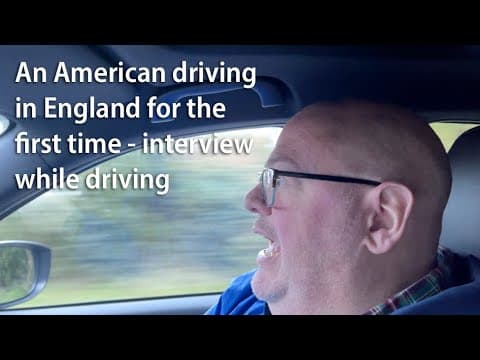
An American shares their experience driving in England for the first time, discussing the challenges and surprises of navigating on the left side of the road, understanding road signs, and the cultural differences in driving etiquette.
Driving in a foreign country can be a daunting task, especially when that country drives on the opposite side of the road. In this blog post, we explore the firsthand experience of an American named Eric, who recently drove in England for the first time. From understanding road signs to navigating narrow country lanes, Eric shares his insights and tips for anyone considering a similar adventure.
Before embarking on this driving adventure, Eric took the time to prepare himself by reading the 200-page English driver's manual. This manual was crucial for understanding the various road signs and markings that differ significantly from those in the United States. Eric emphasized the importance of familiarizing oneself with these signs, stating that spending an hour with the manual was well worth it.
Despite the preparation, Eric described the experience of driving in England as more terrifying than fun. Having spent a lifetime driving in the U.S., the switch to driving on the left side of the road required constant vigilance. He noted that the roads in England are generally narrower than those in America, which added to the challenge, especially when encountering larger vehicles like trucks.
Eric recounted his experiences on the narrow country roads, which often felt like a tight squeeze. In some areas, the roads were so small that they only allowed for one lane of traffic, necessitating pull-offs to let oncoming cars pass. This situation was particularly nerve-wracking, as drivers would sometimes speed around corners, making it essential to stay alert and aware of the surroundings.
One aspect of driving that Eric found surprisingly manageable was navigating roundabouts, which are common in England. He compared them to rotaries in New England, noting that they can be quite handy for making quick turns if one misses an exit. Eric appreciated the efficiency of roundabouts, which allowed for smoother traffic flow compared to traditional intersections.
Throughout his driving experience, Eric observed that English drivers tend to be more courteous than their American counterparts. He noted a lack of aggressive driving behaviors such as honking and tailgating, which contributed to a more pleasant driving atmosphere. This cultural difference made the experience less stressful, despite the challenges of driving on the left.
When it came to refueling the rental car, Eric discovered that the process was different from what he was used to in the U.S. The price of petrol was displayed per liter, which can be confusing for Americans accustomed to gallons. He estimated that filling up the tank cost around $80 due to the exchange rate, highlighting the expense of driving in England.
Eric also discussed the technological aspects of driving in England. He and his travel companion brought their own dashboard camera, but encountered compatibility issues with the rental car's USB ports. They managed to stay connected by using a local SIM card, which allowed them to access navigation and other online resources during their trip.
For anyone considering driving in England, Eric offered several tips:
Driving in England can be a thrilling yet challenging experience for Americans. With proper preparation, awareness, and a willingness to adapt to new driving norms, it can also be a rewarding way to explore the beautiful countryside. Eric's journey serves as a reminder that while the roads may be different, the adventure of travel remains the same.