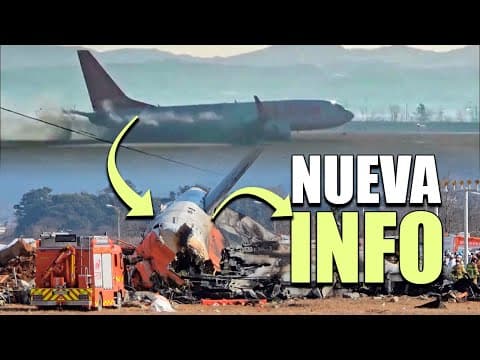
The Jeju Air accident in South Korea involved a plane that crashed after a bird strike led to engine failure. A detailed investigation revealed the sequence of events and the unfortunate timing that contributed to the crash, highlighting the pilots' efforts and the role of external factors.
In this blog post, we will revisit the tragic accident involving Jeju Air, which occurred in South Korea at the end of 2024. This incident has raised numerous questions regarding aviation safety and the factors that led to the crash. We will explore the timeline of events, the investigation findings, and the implications for future aviation safety.
The Jeju Air accident involved an aircraft that crashed after sliding off the runway and colliding with a wall. The critical aspect of this incident is not just the collision with the wall but the circumstances that led to the aircraft reaching the runway at high speed without its landing gear deployed. A preliminary investigation had been conducted earlier, but new video evidence has emerged that sheds light on the aircraft's trajectory and the events leading up to the crash.
The timeline of the accident is crucial to understanding what transpired:
The bird strike involved a flock of Bical Teal, a species commonly found in South Korea. The impact was significant, as the aircraft did not just collide with a single bird but rather a large group. This detail is critical because it explains the severity of the damage to the engines. The investigation revealed that the pilot's decision to initiate a go-around was made after the bird strike, which raises questions about the timing and the pilot's judgment.
The investigation, which included a detailed video analysis published by KBS, has provided new insights into the accident. The video compilation allowed investigators to trace the aircraft's path and understand the sequence of events leading to the crash. Here are some key findings:
The timing of the bird strike was particularly unfortunate. Had it occurred just seconds earlier, the aircraft might have successfully landed without incident. The pilots faced a series of challenges, including the loss of hydraulic power, which affected their ability to deploy flaps and landing gear. This compounded the difficulties they faced during the landing attempt.
The Jeju Air accident serves as a stark reminder of the unpredictable nature of aviation and the myriad factors that can contribute to a crash. The pilots demonstrated remarkable skill in attempting to land the aircraft under dire circumstances, but ultimately, a combination of bad luck and external factors led to the tragic outcome.
As investigations continue, it is hoped that the findings will lead to improvements in aviation safety protocols to prevent similar incidents in the future. The lessons learned from this accident will be crucial in enhancing the safety of air travel for everyone.