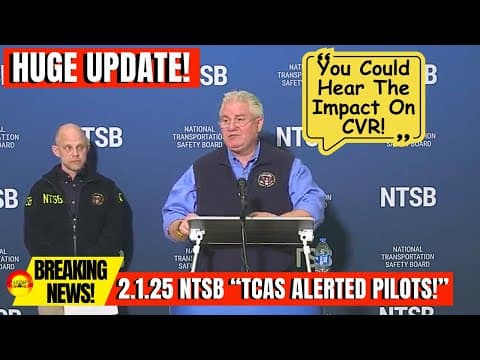
The NTSB has released critical updates regarding the investigation into the tragic mid-air collision in Washington, D.C., revealing details about the flight data and cockpit voice recorders, air traffic control communications, and the ongoing efforts to understand the circumstances surrounding the accident.
In a recent press conference, the National Transportation Safety Board (NTSB) addressed the tragic mid-air collision that occurred in Washington, D.C., offering condolences to the families of the victims and providing updates on the investigation. The NTSB emphasized its commitment to uncovering the facts surrounding the accident and preventing future tragedies.
The NTSB has been actively investigating aviation accidents, with 1,288 events reported last year, of which 124 were aviation-related. Currently, there are 1,145 open investigations in aviation, with 283 recommendations still pending. The team working on the D.C. crash has over 350 years of combined experience within the NTSB.
Bryce Banning, a senior aircraft investigator with extensive experience, has been leading the investigation team. Banning has been with the NTSB since 2012 and has handled numerous aircraft investigations. He is also a certified pilot and mechanic, bringing a wealth of knowledge to the investigation.
The flight data recorder (FDR) and cockpit voice recorder (CVR) from the aircraft involved in the collision were recovered by the FBI dive team. Both recorders are solid-state memory digital devices, and their data has been successfully downloaded for analysis. The FDR contains approximately 400 parameters, while the CVR holds about two hours of audio, which is currently being transcribed.
The investigation revealed a detailed timeline of the flight leading up to the collision:
The NTSB clarified the communication protocols between the aircraft and air traffic control. The DCA tower was using both VHF and UHF frequencies, which meant that while both the helicopter and the CRJ could hear air traffic control, they could not hear each other. This discrepancy is crucial in understanding the events leading up to the collision.
The Blackhawk helicopter involved was on a training flight utilizing night vision goggles. Investigators are currently determining whether the goggles were in use at the time of the accident. The helicopter's flight data is still being analyzed, and initial reports indicate that it was operating at a lower altitude than the CRJ.
Preliminary data indicates that the CRJ was at an altitude of 325 feet at the time of impact, while air traffic control radar showed the helicopter at approximately 200 feet. This 100-foot discrepancy is a significant focus of the investigation, as it raises questions about the situational awareness of both aircraft.
At the time of the accident, five controllers were present in the DCA tower, including local and ground controllers. The NTSB is conducting interviews with these individuals to gather more information about the operational environment during the incident.
The NTSB representatives expressed their deep sympathy for the families affected by the tragedy. Many families are struggling with grief and uncertainty as they await answers about the accident. The NTSB is committed to providing thorough and accurate information to the victims' families as the investigation progresses.
The NTSB is dedicated to uncovering the facts surrounding the D.C. mid-air collision and ensuring that recommendations are made to improve aviation safety. As the investigation continues, the NTSB will release further updates and findings to the public, aiming to prevent similar tragedies in the future.