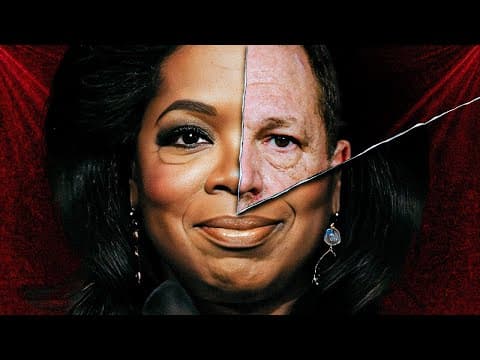
Oprah Winfrey's rise to fame as a beloved talk show host is marked by a series of controversies often reframed as misunderstandings. From platforming questionable figures to controversial charity efforts and media control, Oprah's career reveals a pattern of influence, power, and strategic narrative management that complicates her public image as a purely empathetic and charitable figure.
Oprah Winfrey is widely recognized as a deeply empathetic woman and a charitable billionaire. However, a closer examination of her career and the controversies surrounding her reveals a more complex and sometimes troubling pattern. Despite the official narrative portraying Oprah as innocent of wrongdoing and merely misunderstood, numerous incidents suggest a pattern of platforming dangerous individuals, exploiting victims for content, and managing narratives to maintain her image and power.
Oprah began her career as the youngest and first Black female news anchor at Nashville's WTVF TV at age 19. By 1984, she moved to Chicago to host the morning program AM Chicago, which quickly became the city's top daytime talk show. Within a year, it expanded to a full hour and was rebranded as The Oprah Winfrey Show, entering national syndication in 1986 and becoming the highest-rated talk show on television.
Her style combined excitement with deep, intimate conversations about serious topics, embracing guests with warmth and undivided attention. Oprah interviewed celebrities and ordinary people alike, discussing issues rarely covered on television, such as infertility, family dynamics, and drug use.
Despite her popularity, Oprah faced prejudice regarding her race, weight, and lack of formal education. Critics noted her lack of journalistic toughness but praised her empathy and humor. However, some criticized her approach for focusing on emotional storytelling rather than expert analysis.
Her personal journey, including a medically supervised liquid diet resulting in significant weight loss, was broadcast to millions, enhancing her authority on nutrition despite the risks and lack of medical context for viewers.
Oprah pushed boundaries by hosting controversial figures, including white supremacists, which she later regretted but did not entirely cease. She also capitalized on the "satanic panic" of the late 1980s and early 1990s by platforming unverified claims of satanic ritual abuse, contributing to national hysteria despite debunked evidence.
Her show balanced between meaningful discussions and sensationalism, often blurring lines. She interviewed individuals with complex personal issues, sometimes aggressively probing celebrities about private matters, as seen in her interviews with Michael Jackson, Tony Braxton, and the Olsen twins.
Oprah exercised significant control over her show's content, including editing interviews to favor her narrative. Rapper Ludacris alleged that his rebuttals were cut, making him appear silent. This gatekeeping power meant guests had to navigate her rules carefully, as the show's massive audience could influence their reputations.
In 1988, Oprah founded Harpo Studios, becoming one of the few women to own a studio. She launched Oprah's Book Club in 1996, significantly impacting book sales, and Oprah's Angel Network in 1997, raising over $80 million for charity.
She co-founded Oxygen Media with Geraldine Leborn, whose name appeared on Jeffrey Epstein's private jet logs, raising questions about Oprah's associations.
Oprah faced a major lawsuit from the Texas Beef Group after an episode titled "Dangerous Foods," where she criticized beef industry practices and declared she would not eat hamburgers again. The lawsuit highlighted the consequences of platforming controversial opinions without expert challenge.
During this period, Oprah partnered with Dr. Phil McGraw, a trial consultant turned TV psychologist, who brought a veneer of authority to her show. Dr. Phil's advice style was criticized as simplistic and sometimes harmful, and he lost his clinical license in 2006 but continued to dispense advice on television.
Dr. Phil's success led to his own syndicated show, produced by Oprah's company, which became one of the top daytime talk shows despite allegations of verbal abuse and unethical treatment of guests.
Similarly, Oprah introduced Dr. Oz, a cardiothoracic surgeon who initially opposed supplements but later promoted questionable products like green coffee bean extract, which was debunked. Dr. Oz's show, co-produced by Oprah's company, became a platform for infomercials rather than evidence-based health advice.
Oprah promoted John of God, a Brazilian spiritual healer later exposed as a sexual predator with nearly 600 abuse allegations. Oprah's endorsement helped popularize his healing center internationally, raising concerns about her vetting process and the consequences of platforming such figures.
Oprah's large-scale giveaways, such as "Oprah's Favorite Things," became iconic but sometimes caused unintended harm, like audience members facing unexpected gift taxes on cars given away.
Her Oprah Winfrey Leadership Academy for Girls in South Africa, funded with $40 million, aimed to educate disadvantaged girls but faced criticism for extravagance and strict, isolating policies. More seriously, employees were arrested for abusing students, and allegations of missing children and connections to Jeffrey Epstein's associate surfaced, though no direct evidence linked Oprah to wrongdoing.
Oprah's connections to powerful and controversial figures like Harvey Weinstein, Bill Cosby, and Diddy have raised suspicions. While she denies involvement in their misconduct, her reluctance to denounce Weinstein publicly and her presence in their circles have led to criticism.
Oprah owns over a thousand acres in Maui, Hawaii, where devastating wildfires in 2023 caused significant destruction and loss of life. She and Dwayne "The Rock" Johnson pledged $5 million each to aid survivors but faced backlash for perceived insufficient contributions relative to their wealth and for encouraging public donations.
Conspiracy theories emerged accusing Oprah of closing roads during the fires and exploiting the disaster for land acquisition, reflecting public distrust fueled by her history.
Oprah has maintained control over her media presence and narratives, often reframing controversies as misunderstandings or lessons learned. Her ability to own her voice and distribution channels has allowed her to avoid accountability and continue benefiting from her influence.
While she has helped millions discuss pain, healing, and growth, her career also reveals a pattern of opportunism, platforming questionable individuals, and managing public perception to maintain power and wealth.
Oprah Winfrey's legacy is multifaceted. She revolutionized daytime television and created platforms for important conversations. However, her career is also marked by controversies, questionable associations, and a strategic control of narratives that complicate her image as a purely empathetic and charitable figure. Understanding this complexity is essential to critically engaging with her influence and the media she controls.
This comprehensive look at Oprah Winfrey's career and controversies reveals the intricate balance between empathy, influence, and power in modern media.