This article recounts a detailed interaction between Oregon State Police and a driver stopped for speeding and suspected street racing. Despite the initial allegations, the officer investigates thoroughly, communicates with the reporting party, and ultimately issues only a warning. The story highlights the importance of clear communication, the role of law enforcement discretion, and the impact of speeding tickets on drivers.
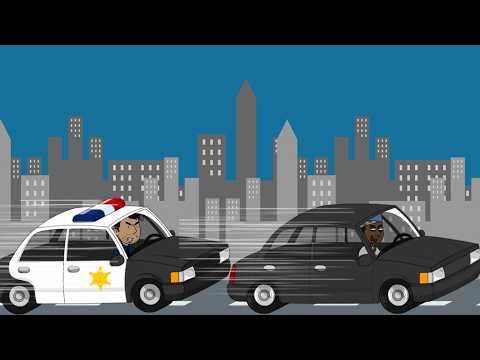
In a recent encounter on the Oregon freeway, a driver was stopped by Trooper Pelts of the Oregon State Police for speeding and suspected street racing. This detailed account reveals the interaction between the officer and the driver, the investigation into the complaint, and the eventual resolution that avoided a harsh penalty. The story sheds light on the complexities of traffic enforcement and the human side of law enforcement.
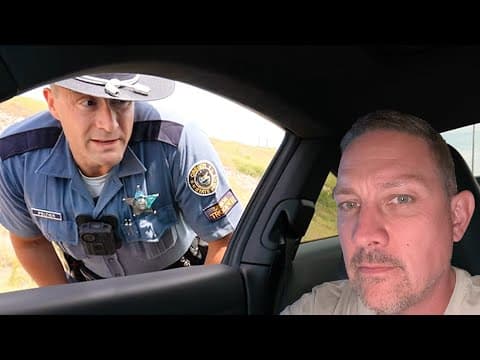
The incident began when Trooper Pelts pulled over a driver for speeding. The officer introduced himself and informed the driver that the stop was being recorded. He asked if the driver was in a hurry and requested the driver's insurance, registration, and license.
The driver complied, providing the necessary documents promptly. The officer then mentioned that there was a driving complaint about the driver's behavior, which was the reason he was looking for the vehicle.
The officer explained that the complaint described the driver as speed racing with an unknown color Jaguar near Milepost 1. The driver denied any racing activity, stating he was not racing down the freeway.
When asked about his speed, the officer confirmed he had clocked the driver at 90 mph. The driver acknowledged this but did not provide any specific reason or emergency for driving at that speed.
The driver reflected on the situation, noting how driving slowly in the left lane and then accelerating to catch up to normal freeway speeds could be misinterpreted by other drivers. He mentioned that his car was very loud, which might have contributed to the perception of racing.
He emphasized that despite the loud car and the speed, they were definitely not racing.
The driver discussed the broader implications of receiving a speeding ticket. Beyond the immediate fine, tickets can lead to points on a driver's license, increased insurance premiums, and in some cases, difficulty obtaining insurance altogether.
He highlighted the importance of having legal support, such as through services like Auto Allies, which can cover ticket-related expenses for a monthly fee.
After the initial stop, Trooper Pelts contacted the reporting party to clarify the complaint. The caller described the incident as the Jaguar passing trucks on the shoulder and driving parallel to the driver's vehicle before overtaking.
The officer noted that the other vehicle was a Bentley, which belonged to the driver's business partner.
Based on the investigation and the clarification from the reporting party, the officer decided to issue only a warning for speeding. He acknowledged that he did not witness any racing behavior.
The officer requested the driver to inform his business partner about the situation to prevent future misunderstandings.
The driver expressed appreciation for the officer's professionalism and understanding. The officer acknowledged the difficulty of his job and emphasized that he was not there to give the driver a hard time.
The driver described the officer as "super cool," noting that the officer could have issued a speeding ticket but chose not to.
An interesting point in the interaction was the misidentification of the driver's car as a Jaguar, when in fact it was a Bentley. This confusion contributed to the initial complaint.
The officer also mentioned that the reporting party thought the driver was on the shoulder of the road, which was not the case.
This encounter between the Oregon State Police and the driver illustrates the importance of thorough investigation and communication in traffic enforcement. It shows that officers can exercise discretion and understanding, leading to fair outcomes.
The story also highlights how perceptions on the road can lead to complaints and how drivers should be mindful of their speed and behavior to avoid misunderstandings.
Ultimately, the interaction ended on a positive note, with mutual respect between the officer and the driver, and a reminder of the responsibilities shared by all road users.
This detailed account serves as a valuable lesson for drivers and law enforcement alike, emphasizing fairness, understanding, and the importance of safe driving practices.