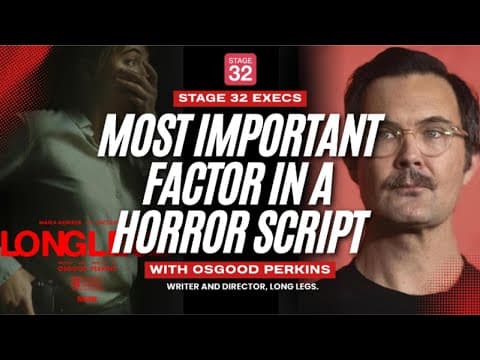
Osgood Perkins, writer and director of Longlegs, shares insights on crafting horror scripts, emphasizing the importance of well-placed surprises and integrating sound design into the script. He discusses the evolution of a script through shooting and editing, highlighting how scenes often transform to enhance narrative impact and maintain audience engagement.
Osgood Perkins, the writer and director of the horror film Longlegs, offers valuable insights into what makes a horror script truly effective beyond just scares and kills. His perspective sheds light on the creative process behind horror storytelling and the integral role of sound and editing.
Perkins emphasizes that the most important factor in creating a horror script is the inclusion of well-placed surprises and unforeseen turns of events. This element is crucial because today's audiences are highly knowledgeable and quick to anticipate typical horror tropes. Without genuine surprises, it becomes challenging to engage and frighten viewers effectively.
He notes that crafting these surprises is difficult but essential. The unpredictability keeps the audience invested and prevents the story from becoming stale or predictable.
Another key aspect Perkins highlights is the importance of writing sound into the script. Many writers overlook this, but sound—or the deliberate absence of it—is fundamental to the cinematic experience, especially in horror.
Perkins writes sound cues in every scene, including moments without dialogue but rich in sound design. This approach provides a roadmap for the sound team, allowing them to understand the intended atmosphere and rhythm of each scene. For example, the sound designer for Longlegs appreciated that Perkins included detailed sound descriptions, enabling them to mic locations so that sound itself becomes a form of dialogue.
The collaboration between Perkins and the sound team resulted in a compelling auditory experience that significantly enhanced the film's tension and mood.
Perkins also stresses the power of silence in horror. He writes the word "silence" on its own line in the script to emphasize its importance. The placement and formatting of sound and silence cues contribute to the rhythm of the movie, which ideally translates into the final cut.
This technique helps create moments of tension and release, which are vital in horror storytelling.
When asked about his writing process for Longlegs and how he determined what to reveal to the audience, Perkins explains that a script is a living document that evolves through shooting and editing.
He shares an example of a pivotal scene where the lead character, Lee, visits her mother's house. Originally, the scene consisted of over seven pages of dialogue between Lee and her mother, who is dressed in a nun's habit and holding a shotgun. However, during editing, this lengthy dialogue was cut down significantly to maintain urgency and narrative flow.
The essential elements of the scene were transformed into a "story time" segment, where the mother tells her daughter a story to shield her from the truth. This change enhanced the storytelling by making it more concise and emotionally impactful.
Perkins likens the script to a highway sign pointing to a hospital—the script itself is not the final destination but a guide. The true film takes shape during shooting and editing, where the story is refined and reshaped.
Osgood Perkins' insights reveal that successful horror scripts rely on more than just scares. They require carefully crafted surprises, thoughtful integration of sound and silence, and a flexible approach to storytelling that embraces change throughout production.
For aspiring horror writers and filmmakers, these lessons underscore the importance of collaboration and adaptability in creating a compelling cinematic experience that resonates with modern audiences.