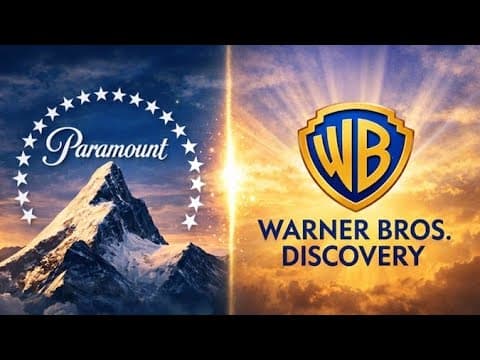
Paramount's surprising $111 billion bid to acquire Warner Brothers outbid Netflix, reshaping Hollywood's media landscape. Led by billionaire David Ellison, this merger consolidates vast entertainment and news assets, potentially ending the era of identity politics in film and TV. While raising concerns about media monopolies, it opens a new chapter focused on traditional, action-driven content targeting middle America.
Hollywood has witnessed a dramatic and unexpected turn of events that could redefine the entertainment industry for years to come. In a bidding war that seemed to favor Netflix, Paramount has emerged victorious with a staggering $111 billion offer to acquire Warner Brothers. This deal not only reshapes the balance of power in Hollywood but also raises important questions about the future of filmmaking, theatrical releases, and media influence.
Initially, the sale of Warner Brothers appeared to be heading towards Netflix after an intense bidding war. The deal was seen as a $100 billion mega acquisition that would signal a shift away from traditional studios and theatrical releases towards streaming giants dominating the industry. However, Paramount unexpectedly upped their bid to $111 billion, a move Netflix was unwilling to match, leading them to withdraw from the competition.
This last-minute play by Paramount pulled victory from the jaws of defeat, showcasing raw financial power and determination. But what does this mean for the future of Hollywood and the vast array of intellectual properties (IPs) and divisions under Warner Brothers?
At the helm of this massive media consolidation is David Ellison, billionaire owner of Paramount Sky Dance and son of Larry Ellison, the world's third richest man with a net worth nearing $250 billion. David Ellison began his career in the industry by founding Sky Dance Media in 2006, leveraging both his entrepreneurial spirit and significant financial backing from his father.
Over the years, Ellison expanded his business empire by acquiring Paramount Pictures, a studio rich in valuable IPs but weakened by years of mismanagement and corporate restructuring. This acquisition transformed Paramount into Paramount Sky Dance, a powerhouse controlling not only entertainment IPs but also news networks like CBS.
Mergers of this scale, especially involving news networks, typically face intense scrutiny from regulatory bodies like the Federal Communications Commission (FCC). However, Ellison's close relationship with the White House reportedly eased the approval process. This political alliance facilitated the merger's green light, allowing Paramount Sky Dance to proceed without significant regulatory obstacles.
With Paramount now controlling a substantial portion of the media landscape, Ellison set his sights on Warner Brothers, another studio with a treasure trove of IPs and a news network in need of restructuring—CNN.
Warner Brothers boasts some of the most beloved franchises in entertainment, including Lord of the Rings, Game of Thrones, Harry Potter, and the entire DC Universe. The acquisition by Paramount means these properties will remain under a single corporate umbrella rather than being absorbed by Netflix.
This outcome has sparked mixed reactions. While some lament missing out on what a Netflix adaptation of these franchises might have looked like, others see Paramount's control as a potential safeguard against the dilution of these IPs.
David Ellison's track record as a producer suggests a preference for action-oriented, male-driven properties featuring traditional heroes. Paramount Plus is increasingly becoming a platform for content that appeals to middle America—a demographic perceived as underserved by recent Hollywood trends.
This strategic focus indicates a shift away from the identity politics and messaging that have dominated pop culture over the past decade. Instead, Ellison appears to be targeting a market that values straightforward, action-packed storytelling.
While the merger consolidates two major studios into a media giant, it raises concerns about reduced competition and creativity in Hollywood. The homogenization of content under a single corporate vision could stifle diverse voices and innovative storytelling.
However, this consolidation might also mark the end of an era characterized by politically charged content, potentially paving the way for a new phase of rebuilding and creative exploration.
Paramount's acquisition of Warner Brothers for $111 billion is a landmark event that signals a significant shift in Hollywood's power dynamics. Led by David Ellison, this merger consolidates vast entertainment and news assets, potentially ending the dominance of identity politics in mainstream media.
While the deal raises valid concerns about media monopolies and creative diversity, it also opens the door to new opportunities focused on traditional storytelling and underserved audiences. The entertainment industry now stands at a crossroads, with the age of rebuilding poised to begin.
As this story continues to unfold, the world will be watching closely to see how Paramount Sky Dance shapes the future of film, television, and media influence.
That's all for today. Stay tuned for more updates on this evolving story.