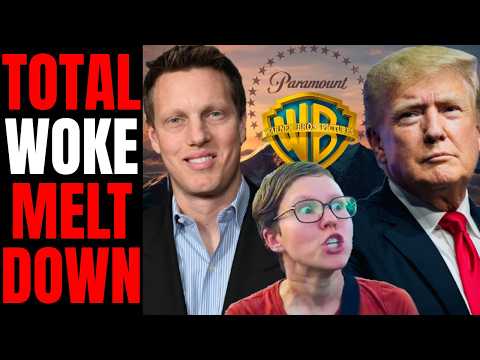
Paramount's successful bid to acquire Warner Bros, outbidding Netflix, has triggered significant backlash and debate. While some fear a political shift in media ownership, others highlight ongoing 'woke' content under Paramount. The deal raises concerns about media consolidation's impact on competition and entertainment, with polarized reactions reflecting broader cultural tensions.
The recent bidding war for Warner Bros has been a rollercoaster over the past few months, culminating in Paramount's surprising victory over Netflix. This acquisition has not only reshaped the entertainment landscape but also ignited a wave of political and cultural debates.
Several companies showed interest in acquiring Warner Bros or parts of its properties, with Paramount emerging as the persistent contender. Despite an existing agreement between Warner Bros and Netflix, Paramount presented a superior bid that Warner Bros could not refuse. This triggered a window for Netflix to match the offer, but Netflix quickly withdrew, effectively conceding the deal to Paramount.
Interestingly, Netflix's stock rebounded following the announcement, buoyed by the billions they received from the broken deal. This suggests that Netflix may not be as disappointed as some might expect.
The acquisition has sparked a spectrum of reactions. Many people have expressed outrage, largely rooted in political perceptions of Paramount. Critics argue that the Ellison family, who are closely associated with former President Trump, might steer Warner Bros towards a conservative or "fascist" media agenda. This fear has led to accusations that Paramount will monopolize media to push right-wing propaganda.
However, these claims overlook Paramount's recent content choices. For example, Paramount secured a massive deal with South Park, which has openly criticized Donald Trump in its latest season. Additionally, Star Trek: Starfleet Academy, known for its progressive themes, continues to air on Paramount Plus. These examples suggest that Paramount's content strategy remains diverse and not strictly aligned with conservative politics.
The sale of Warner Bros to another major entertainment company raises concerns about reduced competition in the industry. While the merger is generally seen as detrimental to the entertainment ecosystem, some argue that Paramount's acquisition might be less harmful than Netflix's, particularly regarding theatrical releases.
The political dimension of the backlash is notable. Many on the far right fear losing media dominance, while others lament the perceived left-leaning control of Hollywood and mainstream news media over the years. Paramount's attempt to appeal to a broader, more middle-American audience has unsettled some who are accustomed to media catering primarily to coastal urban centers.
Mainstream media outlets have played a significant role in framing the narrative around Paramount's acquisition, often emphasizing the Ellisons' political ties. This has fueled social media meltdowns, with some users predicting a conservative media takeover that threatens free speech and democracy.
Yet, these panics often ignore the complexity of media ownership and content diversity. For instance, despite the Ellisons' political affiliations, Paramount continues to produce content critical of conservative figures and themes.
The acquisition comes at a critical time for Warner Bros' properties, especially the DC Universe (DCU). Recent underperformance of films like Superman and mixed reactions to Peacemaker season 2 have already cast doubt on the DCU's future.
Fans and critics worry that Paramount's takeover might further destabilize the DCU, potentially affecting upcoming releases such as Supergirl. The uncertainty has led some fans to express frustration and even consider abandoning their support for DC-related content.
In response to the upheaval, some suggest that consumers should reconsider their subscriptions to Paramount and Warner Bros services. Redirecting funds to support independent media outlets could help foster a more balanced and democratic media ecosystem.
Paramount's acquisition of Warner Bros is a landmark event with far-reaching implications for the entertainment industry and media politics. While fears of a conservative media takeover are prevalent, the reality appears more nuanced, with Paramount continuing to produce a range of content across the political spectrum.
The deal highlights ongoing tensions around media consolidation, political influence, and cultural representation. As the situation evolves, it will be crucial for audiences to stay informed and critically engage with the changing media landscape.
What are your thoughts on Paramount's acquisition of Warner Bros? Share your views and join the conversation.