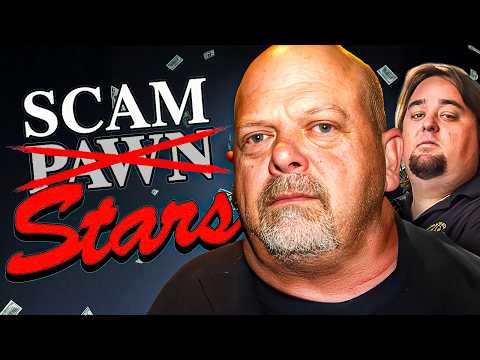
Pawn Stars, a popular reality TV show, is largely staged with fake customers, scripted conversations, and controlled environments. The Harrison family’s blue-collar image is manufactured, and the experts verifying items often have questionable backgrounds. The show’s success was built on a calculated system to secure low prices from sellers, many of whom are unaware of the manipulation.
Pawn Stars is arguably the fakest reality show in television history. Despite this, it managed to captivate millions of Americans, airing over 700 episodes across 15 years. The show features fake customers, scripted conversations, a fabricated store environment, and items that are often not genuine. Even the portrayal of the Harrison family as humble, hardworking blue-collar folks is mostly a constructed image.
This blog post exposes the layers of fakery behind Pawn Stars, revealing how the show was a calculated distraction designed to prevent sellers from realizing they were being borderline scammed.
The original cast of Pawn Stars was so unlikable in real life that producers initially did not want to work with them. Brent Montgomery, the show’s producer, recalled his first visit to the pawn shop, saying he never wanted to return due to the cast’s repetitive jokes and unpleasant behavior. Pawn shops themselves are not treasure troves but primarily serve as lenders to desperate people, offering loans at 25 to 60% of an item's resale value with short repayment windows.
Rick Harrison, the main character and owner of Gold and Silver Pawn in Las Vegas, explained that about 20% of American adults lack bank accounts or credit cards, making pawn shops a vital source of credit for emergencies. However, a show about struggling Americans pawning possessions for small amounts was not initially appealing to networks, leading to the pilot being rejected multiple times.
Rick Harrison was determined to have his own TV show and eventually partnered with producer Brent Montgomery. To work with the History Channel, the show had to be family-friendly, which led to the creation of a cast centered around three generations of the Harrison family:
The show’s success was not due to the characters but the fascinating items brought in, ranging from ancient swords to vintage firearms and rare collectibles.
By 2012, the original pawn shop had become a tourist trap, with only about 1 in 100 visitors actually there to sell items. To film the show, a separate showroom was created, inaccessible to the public, and heavily controlled with studio lighting and sets.
A seller named Andrew Wilson secretly recorded his experience selling a vintage 1985 Rambo lunchbox, revealing that producers gave strict instructions on how to behave and what could be said. Sellers were told not to mention the show and to act as if the transaction was normal. The customers seen on camera were often extras, and interactions were awkward and heavily edited.
Producers admitted that the cast members were not true experts but were fed scripted information by smart writers to make their knowledge appear organic.
The show’s cast often pretended to be experts or admitted ignorance, then called in "buddies" who specialized in the item category. These experts, however, were not neutral third parties but individuals coordinated by production, often benefiting from the show’s exposure.
For example, Bob Usos, an expert on antique toys and automobiles, appeared on other reality shows and was incentivized to give appraisals favorable to the pawn shop. Similarly, Shawn Rich, a master antique gunsmith, revealed he was pressured to sign exclusivity agreements limiting his business freedom.
Other experts, such as Jeremy Brown (sports memorabilia) and Jesse Amaroso (vintage guitars), faced accusations of selling fakes, overcharging, or providing poor service. Even the professional sports authenticator Steve Grad was sued for approving forgeries and admitted to lacking formal training.
This system ensured that sellers were often convinced to accept offers far below their items’ true market value, with the experts’ appraisals and the pawn shop’s arguments about risk and overhead used to justify lowball offers.
Pawn Stars’ golden era was seasons 1 through 6, when the show appeared more authentic and small-scale. The History Channel successfully portrayed the Harrisons as honest, hardworking underdogs, winning the hearts of middle America.
However, by the mid to late 2010s, fans began to see the Harrisons as calculated scammers. The death of Richard Harrison (The Old Man) in 2018 was a major blow, and the family’s personal issues started to surface publicly.
Rick Harrison revealed in his book that Cory and Chum Lee had battled meth addiction before joining the show full-time. Chum Lee was arrested in 2016 on felony weapon and drug charges but continued working on the show after probation.
In 2022, Rick’s mother, Joanne Harrison, sued him over ownership shares and alleged financial mismanagement. Cory faced DUI suspicions, and Rick’s other son, Adam, tragically died from a fentanyl overdose in 2024.
These personal tragedies and scandals contributed to the show’s decline, leading to its cancellation in 2025. Although a return was announced without Cory, the show’s legacy as a staged and manipulated reality series remains.
Pawn Stars was never the authentic reality show it appeared to be. From the manufactured blue-collar image of the Harrisons to the scripted interactions, fake customers, and controlled environment, the show was a carefully crafted production designed to maximize profits and entertain viewers.
While it brought fascinating items and stories to the screen, the underlying system ensured the pawn shop always got the best deals, often at the expense of unsuspecting sellers. The personal struggles of the cast members and family disputes further revealed the gap between the show’s facade and reality.
Pawn Stars’ story serves as a reminder to viewers to approach reality TV with a critical eye and understand that what appears on screen is often far from the truth.