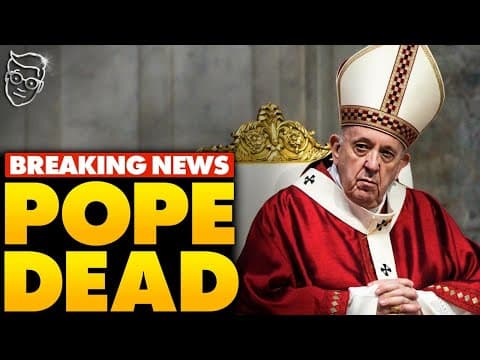
Pope Francis, the spiritual leader of millions, passed away at 88 after a long battle with health issues. His final moments were marked by an Easter blessing, and his death raises questions about the future leadership of the Catholic Church. This post explores his legacy, the reactions to his passing, and the process of selecting the next pope.
Pope Francis, the spiritual leader to billions of Catholics around the world, has passed away at the age of 88. His death occurred in the early hours of the morning following Easter Sunday, a day on which he officiated a ceremony at the Vatican and met with JD Vance. Despite his significant contributions to the Church, his health had been declining for some time, and he was wheelchair-bound and unable to speak due to a respiratory illness.
Pope Francis had been in and out of the hospital, suffering from pneumonia in both lungs. Just 20 hours before his passing, he had taken to social media to commemorate Easter, wishing everyone a happy holiday. His final public words were reportedly delivered during the Easter blessing, where he expressed his wishes for a joyful Easter to the faithful gathered at St. Peter's Basilica.
During the ceremony, he appeared weary and fatigued, requiring assistance from aides to drink water and adjust his papal robes. Notably, he did not celebrate the Easter mass himself, delegating that responsibility to a cardinal instead.
Pope Francis's papacy was marked by controversy, particularly regarding his statements on immigration and climate change. While many have differing opinions on his political stances, it is essential to recognize the impact he had on the Catholic Church and the world. As a non-practicing Catholic, I aim to present a balanced view of his legacy, allowing readers to form their own opinions.
In the wake of his death, various leaders and public figures have expressed their condolences. JD Vance, who met with the Pope shortly before his passing, shared his respect for the pontiff, recalling the beauty of his homily during the early days of the COVID-19 pandemic. The White House also issued a respectful statement, acknowledging the Pope's influence and contributions.
With the passing of Pope Francis, attention now turns to the process of selecting his successor. The famous white smoke will signal the election of a new pope, and speculation is rife regarding the ideological direction the next pontiff may take. Many believe the next pope will likely fall somewhere between moderate and conservative, reflecting a blend of the Church's diverse perspectives.
The papal conclave, where cardinals gather to elect a new pope, is a highly secretive and solemn event. Approximately 120 cardinals will participate, surrendering their technology and entering a locked-down environment to ensure confidentiality. The process involves several rounds of voting, with a two-thirds majority required to elect a new pope. Black smoke indicates no decision has been made, while white smoke signifies a new pope has been chosen.
As discussions about potential candidates for the papacy begin, names like Cardinal Sarah have emerged as possible successors. The ideological makeup of the next pope will be crucial, as many hope for a leader who can address contemporary issues facing the Church and the world.
Pope Francis's passing marks the end of an era for the Catholic Church. His legacy, characterized by both admiration and criticism, will undoubtedly shape the discussions surrounding his successor. As the world reflects on his contributions and the future of the papacy, it is essential to approach this transition with respect and an open mind. The next few weeks will be pivotal as the Church prepares for a new chapter in its history.